HP bets on AI as it seeks a PC-powered rebound

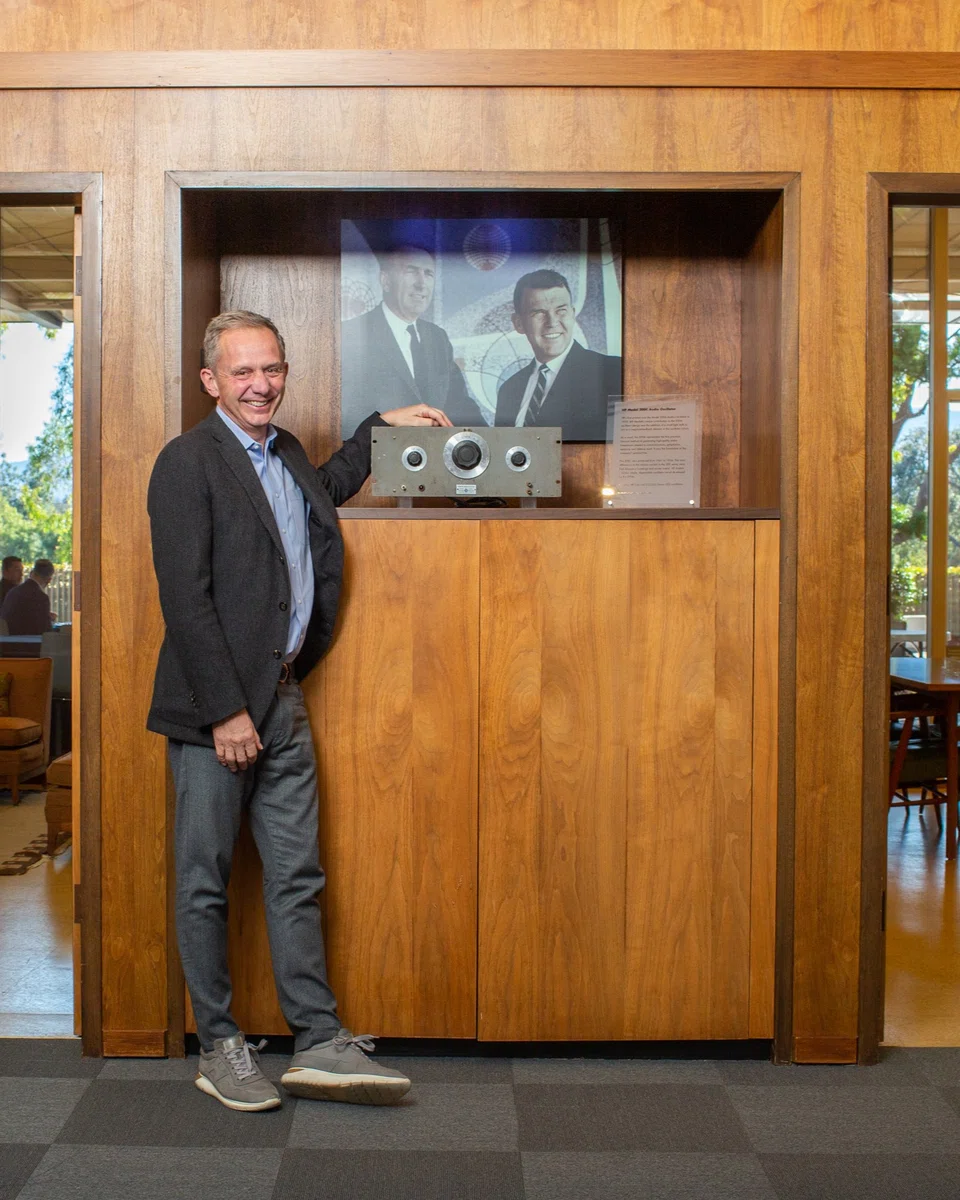
AFTER more than a year of lower revenue and earnings, American information technology company HP is ready to make a comeback in 2024, the company’s top executive said.
“We think that the core businesses will return to growth,” chief executive officer Enrique Lores told The Business Times during a visit to HP’s Singapore office.
For FY2021, the company’s net earnings more than doubled to US$6.5 billion as it rode on the post-pandemic rebound. The following financial year, however, net earnings just about halved to US$3.2 billion, and revenue dipped 0.8 per cent to US$63 billion. (*see amendment note)
Most recently, the Silicon Valley giant reported a 32 per cent drop in third-quarter net earnings to US$0.8 billion, with revenue down 9.9 per cent to US$13.2 billion.
Lores, who is based in Palo Alto, blamed tough macroeconomic conditions that have prevailed since the second half of 2022, marked by inflation, higher interest rates and uncertainty.
“We don’t expect the overall market situation to improve dramatically in 2024 than it was in 2023 – we don’t expect it to get much better, we don’t expect it to get much worse,” he said. “In this environment, we think that our core markets will grow, and the company will grow with them.”
His optimism about the company’s future stems from having “used the pandemic to build a stronger company”. This includes diversifying its portfolio and investing in improving internal processes as well as digital technologies.
One core segment of the business poised for growth is personal computers (PCs), he said, noting that the “trajectory is starting to change”, with a larger user base looking to replace their devices following the anticipated release of Windows 12.
By the end of 2024, HP is hoping to unveil its line-up of artificial intelligence (AI)-based PCs, capping off a “super exciting year”.
Most people already experience AI in the cloud, Lores said. “If you want to use ChatGPT or any other large language model, and you want to combine it with your own personal data or with your business data, you need to upload the data to the cloud and then run the model.”
What is different about AI-based PCs is that the model will run locally. “Therefore, it will be able to access your information and combine it with a model to do the inferring locally,” he said.
Besides better security, Lores said running the process locally also ensures faster speed.
“Many applications, for example games, will start using AI next year,” he said. “If you do the work locally, the game will run faster, and you will be a better gamer.”
Another advantage is cost, as running these models in the cloud is “fairly expensive”, compared with having them local.
“Basically, the only cost is the cost you’ll pay when you buy your PC, and this has major advantages for consumers, but also for the application developers that will not have to carry the cost of running the models in the cloud.”
Lores said the company is “very optimistic” about the penetration these products will have over time, but remains realistic that it will take time for any new technology to be adopted at scale. Still, AI-based PCs could begin to make an impact on the company’s topline by 2025, and especially in 2026.
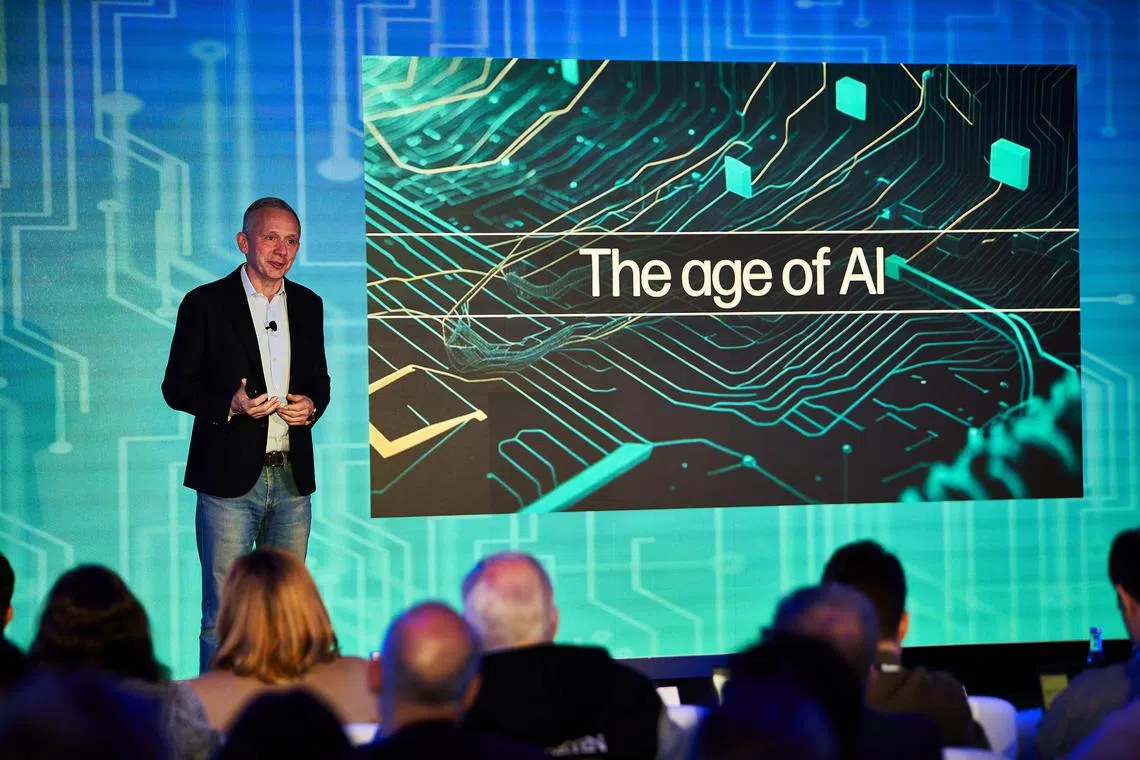
Early adopters are likely to be businesses, and this means AI-powered PCs could potentially change the future of work.
AI will make everyone more productive, said Lores, and “all of us are going to have a technology assistant that is going to help us to be extremely more productive in anything we would do”. Imagine summarising meetings, analysing spreadsheets and capturing the essence of articles “rather than reading 20 pages” to build speeches or reports more quickly.
Asked if this could hasten the much-feared scenario of AI replacing jobs, Lores acknowledged that the big leap in productivity will have “implications on certain areas”.
“We need to help them to embrace new technologies and go to different types of jobs and different types of skills,” he said, adding that the company is striving to do as well.
“We provide programmes to reskill, to train. We cannot cover everybody, and sometimes, yes, there are groups that are impacted, but our role needs to be to continue to improve the talent of our workforce to make sure they are ready to manage the next technology changes,” he said.
Another core business for HP is helping people to work both at home and in the office, now that hybrid work is here to stay; Lores believes the company already has what it takes to do so. “This is why during the last years, we have expanded our portfolio in a significant way into video conferencing systems, into headsets, into cameras, to really enable that type of work.”
At the same time, as more people return to the office, Lores said the company sees an opportunity in its office printing businesses, even as it continues to grow its industrial printing and 3D businesses.
On the whole, HP is now making a transition towards becoming a more “service-oriented, solutions-oriented company”, he said, referring to its HP Workforce Solutions programme.
Singapore, he said, plays an important role in the company’s plans for the region, first by being a base for manufacturing activities that have been stepped up in recent years.
HP’s research and development activities in Singapore mostly relate to its printer business. “We are exploring whether to extend that to PCs,” Lores said, adding that the “stability, support and talent” in the city-state makes this possible.
Beyond that, as manufacturing activities ramp up in the region, he believes Singapore can play a key role in “orchestrating that change” by building and developing suppliers.
He noted that economic growth in South-east Asia is much faster than other parts of the world, and sees a promising virtuous circle of economic growth driving investment, which in turn drives economic growth in the region.
“This is why for us, understanding the opportunities that we have here is very important,” he said.
“The real objective of the trip this time is to understand better what are our opportunities to accelerate our growth in this part of the world, and spending time not only in Singapore, but in many other countries,” he said, adding that he also visited the company’s Indonesian office.
In South-east Asia, HP also has offices in Malaysia, Thailand, the Philippines and Vietnam.
Lores took the helm in November 2019, 30 years after he began his career with HP as an intern in San Diego.
In that time, what has not changed is his belief that “anything is possible”, he said, adding: “If you put (in) the right energy, investment and people, anything is possible for this company.”
What has changed, though, is his approach and understanding that “people and culture are many times more important than strategies and plans”.
“If you have the right culture, if you have the right team, and you empower them, and you make sure that they have the resources they need, then they will make it happen,” he said. “That balance is probably different now from the one I had many years ago.”
Still, that’s not to say strategies and plans are taking a back seat.
Asked what keeps him up at night, Lores said it is the “need to continue to move faster”.
“A company as large as HP is like a big boat, and my role is to find ways to make the boat move faster and change faster, adapt faster to change. There are many things we don’t control, and by making sure we stay (in) control of the things that we think are important long term and that we make progress as fast as possible on them – I see this as my No 1 priority.”
*Amendment note: An earlier version of this story stated that HP’s FY2022 revenue slipped to US$6.3 billion. It should have been US$63 billion.