Understanding geopolitical risk key in business strategy, says Rolls-Royce exec, SICC chief
Wearing multiple hats, Bicky Bhangu makes inroads in aviation, international commerce and academia

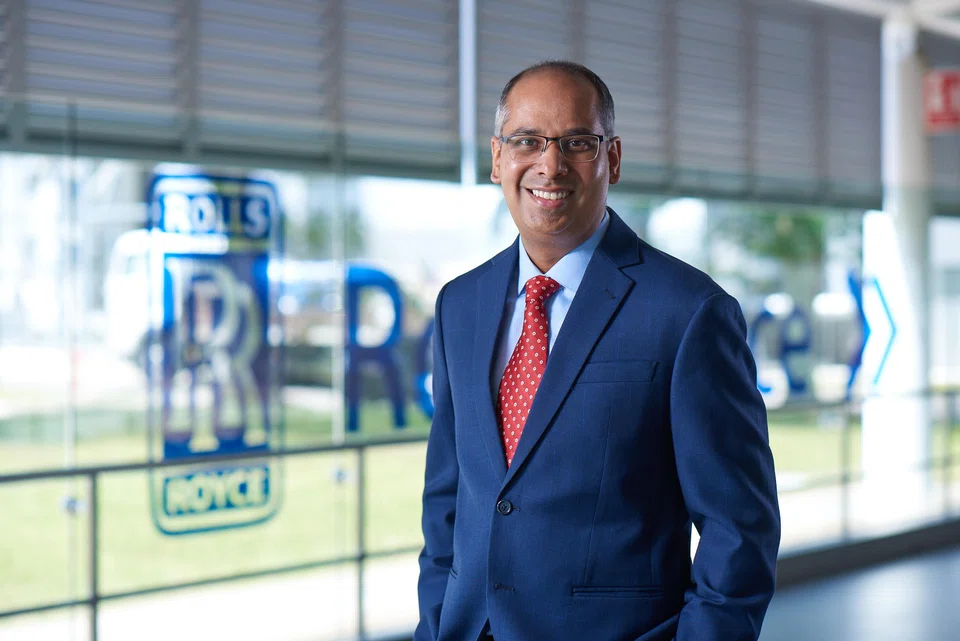
AS COMPANIES race to meet post-pandemic demands, it is also important that they understand the risks posed by heightened geopolitical challenges like the Ukraine war, supply chain disruptions, and the energy crisis.
“The world around is rapidly evolving. We’ve got geopolitical tensions, we’ve got policies and regulatory frameworks that are moving at a record pace,” Bicky Bhangu, president of South-east Asia, Pacific (Australia and New Zealand) and South Korea at Rolls-Royce Singapore, tells The Business Times.
“Businesses need to understand the world… to be able to project and incorporate into their strategic planning process and take into account the costs of doing business in the geographies and markets that they operate in.”
Much of Bhangu’s international ambit comes from his 15 years of experience in Rolls-Royce, the British multinational aerospace, defence and power systems group that operates in more than 50 countries with customers in over 150 countries.
Of the five business units within the Rolls-Royce group, Bhangu now oversees the strategy and business development unit that feeds into corporate strategy, governance of its compliance and legal entities across the region he heads, government relations and policies that inform the strategic directions that the company takes, as well as communications for internal and external engagements.
No stranger to geopolitical issues in his line of work, Bhangu is also well aware of how concerns around risk drive all business leaders’ decisions, in his capacity as chairman of the Singapore International Chamber of Commerce (SICC), a position he took on in June this year.
The SICC holds events almost on a weekly basis, Bhangu says, recently having had talks on the impact of sustainability on businesses with Minister for Sustainability and the Environment Grace Fu and on manpower issues with Minister for Manpower Tan See Leng.
Celebrating its 185th anniversary this year as the longest-serving trade association in Singapore, SICC consists of 12 interest groups that see subject matter experts driving conversations in areas like Asean, collaborative innovation, human capital, and sustainability.
Dialogues are important for members to have accessibility and hear first-hand about policy changes that might impact their business, Bhangu says.
“I think the near-term opportunity for us is to bring to our members and to take the members’ voice into the policies on the regulatory framework that directly impact the business of doing business in Singapore and with Singapore,” he says. “The growth within Asean is another opportunity we’ll be looking to strengthen.”
Engineering to entrepreneurship
Bhangu’s own career grew out of an early run in engineering. From the age of seven, he knew he wanted to be an engineer and now has four university degrees to prove his mettle – including a PhD in electrical power and control systems, and an MBA in technology management.
In the initial part of his career, Bhangu worked in academia as a researcher and part-time lecturer. In 2000, he ventured into industry joining Ricardo, an automotive company in Cambridge, UK, where he worked on developing the next generation of electrical drives for electric vehicles.
Coming through Rolls-Royce’s doors as an electrical systems engineer in 2007, he was involved in the area of electrification and development of the technology and capabilities for future products and services.
In 2009, Bhangu came to Singapore and set up a core team to look at some of the control architectures that power electronics and energy storage systems for the aerospace industry. He then moved to different roles at Rolls-Royce, such as the sales and marketing team and the marine part of the business.
“At heart, I am an engineer,” Bhangu says. “Over a decade ago I started going more towards strategy and business development, and I picked up my current role of bringing together the coupling of Rolls-Royce within the region of South-east Asia, Pacific, and (South) Korea,” he adds.
The region Bhangu now leads is positioned to be the fourth-largest economy in the world and Rolls-Royce has a “large customer base” here, he points out.
Not wanting to give up his academic persona, he has also been an adjunct professor at the Nanyang Technological University for close to 13 years.
Flying past the pandemic
In the region Bhangu oversees, some 80 per cent of business activities lie in the civil aerospace sector, which was of course hit hard during the Covid pandemic.
“International borders and airports were all impacted and our revenues are linked to engine flying hours and the opening of airports,” he says. “What we have seen this year is a strong global recovery where demand and pent-up demand are starting to increase. In the markets of the US and Europe, we’re above 100 per cent of the 2019 pre-pandemic levels.”
In the Asia-Pacific (excluding China, Taiwan, and Hong Kong), the group works with 500 wide-body aircraft which equate to some 1,100 engines flying in the skies.
Of the group’s civil large engines in service now, 24 per cent are in the South-east Asia, Pacific, and South Korea region. The business in the Asia-Pacific and Japan region has 44 per cent of the overall group’s market share and serves 15 countries now. (*see amendment note below)
“One of the key advantages I see in the way we are positioned is that our fleet within the Asia-Pacific is a young fleet, and it also has the most fuel-efficient engines to power the aircraft,” Bhangu notes.
Closer to home in Changi Airport, which has reopened for business as usual, it is projected to reach about 80 per cent of pre-pandemic demand levels by end-2022. Coupling this with the opening of Hong Kong, Japan and Taiwan, the business ramp-up is taking shape, he adds. (* see amendment note below)
Going green through efficiency
As it starts to nose up and pull away from the pandemic, Rolls-Royce faces a monumental task – cutting its own carbon footprint and improving on sustainability in a business that trades heavily in the carbon-bogged universe of aerospace and air travel.
Rolls-Royce has pledged to reduce carbon emissions from its own operations to net-zero by 2030, and enable the sectors in which it operates to reach net-zero by 2050.
Globally, by 2023, all Rolls-Royce commercial aero engines in production along with the most popular diesel engines will be compatible with sustainable fuel. The group is also investing in the low-carbon economy with the right technologies and investments in its engine programmes, Bhangu says.
For example, Rolls-Royce is now developing its next generation of Trent engines called the Ultra Fan. The new version will be 25 per cent more efficient than the first generation of such engines, which is currently already the world’s most efficient large aero-engine.
Also on its track to sustainability is a partnership with Singapore Airlines in a joint venture, Singapore Aero Engine Services (SAESL).
Among other things, SAESL looks into improving the efficiency and productivity of aircraft engine maintenance, repair, and operations systems. Already hiring an additional 120 staff this year, it will increase its headcount by another 120 people next year, Bhangu notes.
A joint lab, set up by the Agency for Science, Technology and Research (A*Star), Rolls-Royce, and SAESL in a S$60 million investment, was opened in 2017 to develop smart manufacturing technologies.
In the past five years, the lab has launched 43 projects, of which 12 have directly translated into output at the Rolls-Royce factories in Seletar, bringing productivity improvements of 160 per cent to the Singapore facility.
“People want to be connected, people want to fly, but our opportunity here is to do it sustainably,” Bhangu says. “We are able to work within the ecosystem of Singapore where we invest in technologies with the universities. We pull through the technologies and industrialise through the testbed provision Advanced Remanufacturing and Technology Centre and with A*Star, and then we are able to take the output of that and put it into our facilities to improve efficiency and productivity.”
*Amendment note: A previous version of this story incorrectly stated that South-east Asia, Pacific, and South Korea region business held 44 per cent of the overall group’s market share and serves 15 countries, when in fact, it was the Asia-Pacific and Japan region. Also, in reference to Changi Airport, the 80 per cent projection is not for Rolls-Royce, but a projection for Changi Airport.