

When hush-hush leads to lose-lose – why business leaders need to be psychologically savvy
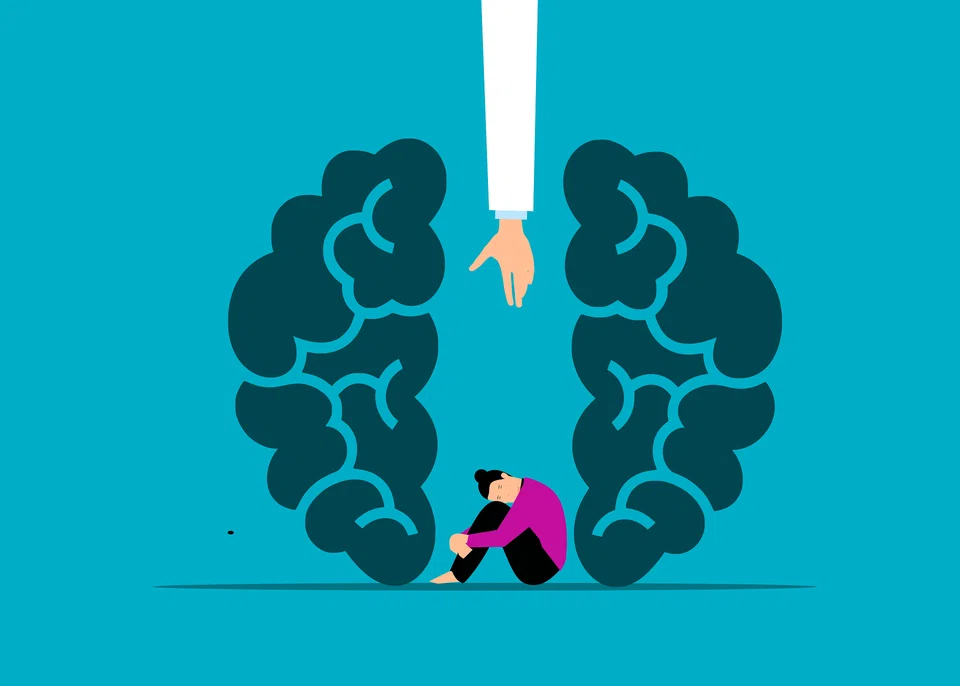
PSYCHOLOGICAL counselling and psychotherapy have become part and parcel of today’s Western society, as reflected by a slew of TV shows, jokes, memes, and the rise of “therapy speak” in a colloquial language.
It is most visible in North American culture where high-profile athletes, celebrities, and corporate leaders are talking openly about their psychological disorders and diagnoses, breaking the silence and alerting the general public to the importance of seeking mental healthcare when faced with emotional distress.
In technologically advanced but culturally traditional and conservative Singapore, anything with the “psycho” prefix still raises eyebrows and fears rather than awareness.
Myths and stereotypes persist, and stigma prevents Singaporeans from seeking psychological help, which is too often misunderstood as admission to the Institute of Mental Health. Even expats working in the Lion City think twice about divulging their mental health conditions to their local employers in fear of being shunned or given the boot.
The very real costs of ignorance and entrenched stigmas
As a practicing psychology counsellor in Singapore, I have learnt this firsthand from my therapy sessions.
One of my Singaporean clients struggled with his own family when he expressed his wish to seek professional help for what turned out to be depression and generalised anxiety disorder. His relatives insisted that he simply “snap out of it”, telling him not to waste money on the “psycho-mumbo-jumbo” of talk therapy.
Such deep-seated misunderstandings of what psychological help is, coupled with ignorance of how detrimental mood disorders and other mental conditions can be, are unfortunately typical for the majority of any population.
Another client of mine is a neurodivergent Caucasian expat who lost her high-paying job here about a year ago. Despite her genius-level IQ, relevant university degrees, and an extremely rare and sought-after specialisation, she was let go for failing to be a good team player and for not following the rules of the company’s hierarchy.
Pushed into the conventional Procrustean bed of neurotypical thinking and behaving, she felt unhappy and misunderstood. Equally unhappy and resentful was her boss, whom she would keep on tenterhooks for months before finally submitting her project, albeit impeccably rendered, in the dead of night, mere minutes before the deadline. Her boss misinterpreted her behaviour as disrespectful and noncompliant, when it was in truth the result of her atypical brain’s functioning.
My client admits that getting fired was partially her fault because she chose not to inform her employers about her diagnosis, out of fear she would not be hired. And from where I’m standing, this is, regrettably, a reasonable assumption because Singapore is only now slowly starting to embrace neurodivergence as part of today’s reality.
Both parties have ended up worse off. My client was unemployed for a year and eventually had to leave Singapore. There weren’t many positions here that required her level of seniority and specialised skill set. Her ex-employer has still not been able to fill her position.
It didn’t have to end this way. My client could certainly have told her bosses about her condition. But a more psychologically savvy boss might have managed to pick up signals, and would have been able to retain in his employ a brilliant and value-adding senior member of staff. .
Today’s leaders must be aware that their employees’ diversity is not limited to race, culture, age, sex, gender, religion, and physical handicap, but also includes their psychological and neurological makeup. The World Health Organisation estimated last year that one in every eight, or 970 million people, was living with a mental disorder in 2019, but after the Covid-19 pandemic, this group grew significantly. In April, the US Centres for Disease Control and Prevention reported that more than one in five adults in America live with a mental condition.
Society’s journey towards a greater understanding and appreciation of the importance of mental health literacy as well as destigmatising of counselling and psychotherapy starts with our leaders. They can be parents, mentors, or CEOs. The position “on top” and “in charge” offers the the best chance of change happening and propagating further.
If leaders learn the connections between the human mind, body, and work performance, they will be able to kickstart the long-overdue change in how mental health and neurodiversity are viewed, understood, and handled.
Creating a mentally healthy corporate culture
By prioritising mental health and creating a supportive environment, company leaders can help their employees thrive both personally and professionally. One way they can do this is through Employee Assistance Programmes (EAP), which create safe and empowering environments for staff to seek mental help and support.
One of the best EAP examples is American chemicals company DuPont. Its EAP team ran a campaign called “ICU” (or “I See You”), which uses the intensive care unit analogy to explain how to recognise emotional distress in coworkers.
Employees are then taught to offer assistance following three steps:
- Identify (the signs),
- Connect (with the person), and
- Understand (the way forward together).
These actions are depicted in a five-minute animated video shown to DuPont’s 70,000-strong global workforce in seven languages, accurately translated to fit local cultural contexts for the concepts to remain clear. In pre- and post-implementation questionnaires, the ICU campaign was found to have been helpful in removing the stigma of mental or emotional distress and encouraging help-seeking behaviour.
Over at American Express, employees have access to free face-to-face counselling sessions as part of its “Healthy Living” programme introduced in 2009, covering lifestyle, safety, and disease management. In 2012, the company hired a PhD psychologist specially to focus on employee behavioural health, and started a project focusing on employees’ mental health.
Breaking the stigma
Wouldn’t it be fantastic if other corporates followed suit? One does not have to be a CEO of a corporate giant or invest millions in comprehensive EAPs to bring about change in his or her company or organisation. Simpler steps can be taken by psychologically savvy leaders, such as:
- Leading by example – prioritising their own mental health, and demonstrating healthy work-life boundaries. When employees see their leaders taking care of themselves, they are more likely to see it’s acceptable, and follow suit.
- Building a culture of empathy, where employees feel comfortable discussing mental health concerns without fear of judgement.
- Providing mental health resources such as free counselling and workshops on stress management and resilience.
- Offering flexible work hours or remote work options when possible, to reduce stress and accommodate employees’ individual needs.
Psychologically savvy leaders understand and ensure that their employees are aware that seeking support is a sign of strength, not weakness. If leaders are able to break the stigma of seeking counselling and therapy, they will not only make their own companies safer and more humane places, but also contribute to shifting a wider community’s stance on the issues of mental health.
The writer is an independent psychology counsellor and freelance journalist
TRENDING NOW

Singapore tech stocks plunge as Nasdaq bloodbath spills into region

S$3 billion money laundering case: Rare Pateks and Rolexes, diamond-covered Hermes and more head to auction

OCBC wealth clients turn defensive amid market volatility as Q3 profit rises 3%

From legacy to launch: Francis Yeoh and Yeoh Pei Xien on family unity and YTL’s next‑gen ventures

