

Looking to connect better with your team? Try writing a user guide – on how to work with you

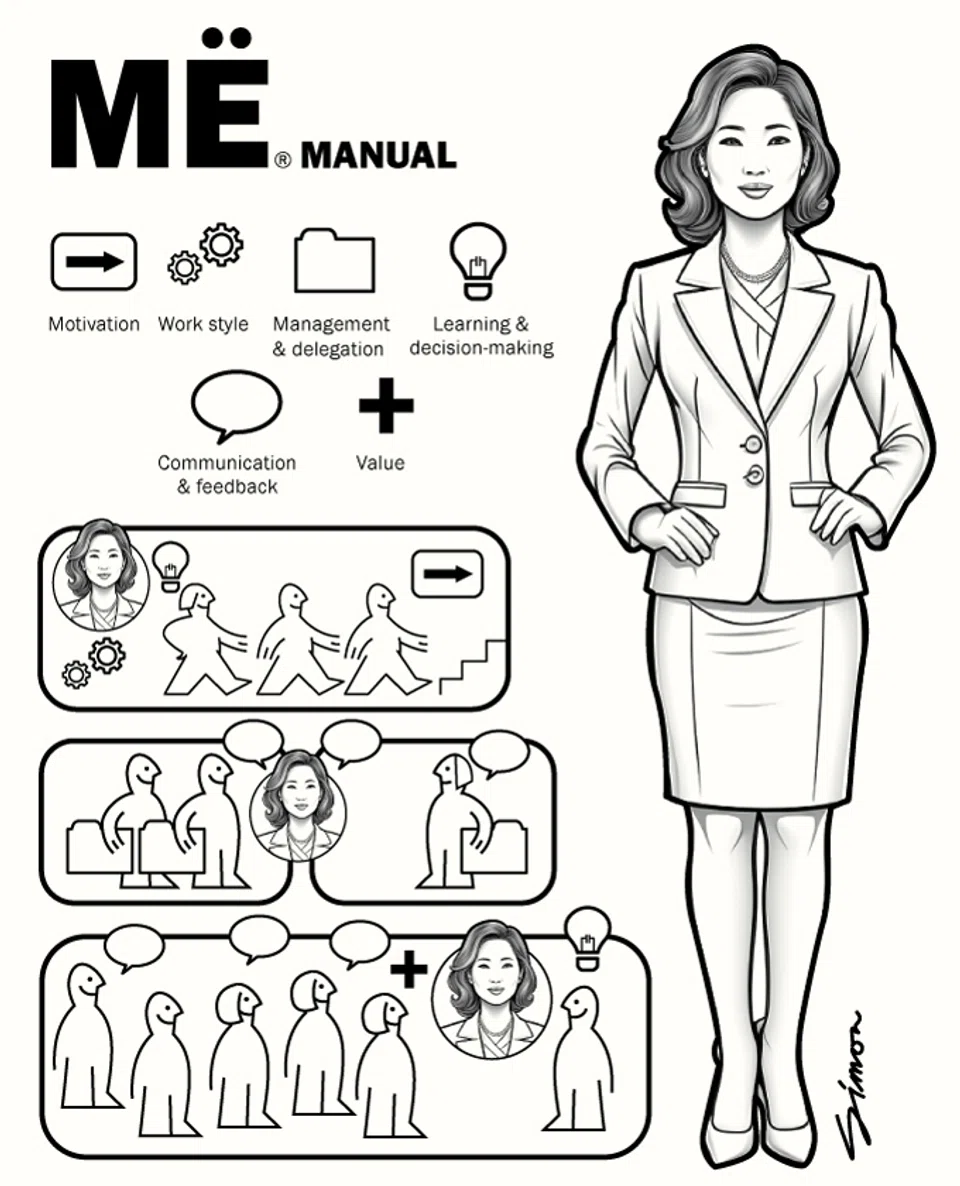
A FRIEND of mine from university posted something on LinkedIn last week that caught my eye: a user guide – for her.
I had to read what she said a couple of times before I understood what she meant. This friend, who runs a corporate communications team, had created a guide teaching her staff how to “use” her. It explains how she works, and how to work well with her.
When you think of a user guide as a go-to before using a product or appliance, to make sure you use it well and take good care of it, it makes perfect sense to have one for people, too.
If you’re a manager, it will save those reporting to you the time needed to observe and question.
New York University adjunct professor Ben Dattner, an organisational psychologist and consultant, offers some tips for managers seeking to do the same.
“By writing a user’s manual in which one conveys valuable information about oneself, the risk that negative interactions will occur can be greatly reduced,” says Dr Dattner.
How to write a user guide
Here’s Dr Dattner’s suggested structure for a user manual.
Motivation: First, he suggests breaking down your thoughts on motivation into three parts: what motivates you, what demotivates you, and how you try to motivate others. He recommends offering suggestions for how staff or team members can apply this knowledge in their interactions with you.
Work style: Then, talk about your approach when it comes to day-to-day work. This could include how you manage deadlines, whether you get annoyed when you’re interrupted, and what your approach is to problem-solving.
Management and delegation: Here, talk about your leadership style, and how you divide work among your team members. Perhaps you like to specify goals but not how to achieve them, and prefer staff to find the best way on their own. Perhaps you might struggle with delegation, and would appreciate someone proactively assisting with certain things on your plate.
Communication and feedback: Do you like doing frequent check-ins with your team members? Do you expect daily morning updates? Do you prefer to be sent notes in advance, so you can ask questions immediately in a meeting, or would you rather hear from presenters on the spot?
Also, how much should people read into the things you say or do? What do you struggle to express? Do you work best with e-mails, chats (online or over the phone) or in-person conversations? Is it okay for people to contact you after work hours?
What’s the best way for others to give you feedback? And how do you usually give feedback?
Learning and decision-making: You may like asking lots of questions, but this is sometimes misconstrued as scepticism. If this sounds like you, you may benefit from direct reports anticipating these questions and preparing for them.
Also share what’s important to you when making decisions. If you need more context, your staff could help by sending you the necessary data to build a more complete picture.
Values: Here, you can share your take on the company’s values. How seriously do you take them, and how do you apply them to your work and the manner that you run your team? If you have other principles or values that pertain to work – perhaps that the trust customers place in the business is sacrosanct – they’re worth sharing, too.
Personal style and others: Are you generally approachable, or do you cut small talk short in order to facilitate better focus? Perhaps you prefer to formalise interactions by scheduling chats, lunches and coffees instead.
There may also be exceptions to your rules, such as if one of your staff has a personal or family crisis you might be able to help with.
Dr Dattner’s suggested structure ends with a reminder: Resist the temptation to rationalise or justify yourself; focus on explanations and suggestions instead.
To the above items, I would add one that appears in another boss’ guide – this time by Abby Falik, founder and chief executive of non-profit Global Citizen Year.
How I can help you, and how you can help me: What are you good at, and what do you enjoy doing most at work? How best do you think you can help your teammates? What are your blind spots; what are you working to improve? What can others help you do better?
Leah Fessler, an editorial fellow at business news site Quartz, found this particularly helpful when she and her editor participated in this exercise:
“As a chronically anxious person, I shared that I’m bad at compartmentalising, so occasionally, personal struggles overwhelm and distract me at work,” she writes. “One way to help me is to create an environment where it’s okay for me to admit I’m anxious and ask for some space. Flexible deadlines are also useful, as is knowing that I can occasionally leave the office early to rest.
“Upon reading this, my editor validated these feelings, saying she too struggles with anxiety. She gave me permission to step out whenever things get over my head. Simple as this sounds, I felt a massive weight lift.”
Making it work both ways
A user guide can, however, inhibit good working relationships if your team feels obliged to work according to your style and preferences. One way to avoid this is to make writing guides a team activity – each member writes their own guide, answering similar prompts.
Another suggestion is to pair manuals with personality tests, so everyone understands and can play to each other’s strengths.
Dr Dattner and other leaders who have written guides also recommend updating them frequently.
“A user’s manual should be an evolving, living document; managers and executives should solicit ongoing feedback from staff and colleagues about how accurate and useful their user’s manual is, and should update it as they progress in their careers,” explains Dr Dattner.
“Leaders should also endeavour to build on their strengths and remedy their development areas on an ongoing basis, so that both their user interface and their operating system improve over time. Used intelligently, a user’s manual can be an invaluable antidote against toxicity.”
TRENDING NOW

Once staunchly pro-China, Malaysian Chinese businesses are now distancing themselves from Beijing

Looking beyond looming CEO succession, should UOB potentially pursue a transformative merger?

Could stablecoins be the future of money?

Grab CEO’s wife Chloe Tong on life with Anthony Tan and finding her purpose

