

Why is it so hard to say ‘I don’t know’ at work?
Whether it’s something we impose on ourselves or a product of our culture, it’s a problem worth examining.

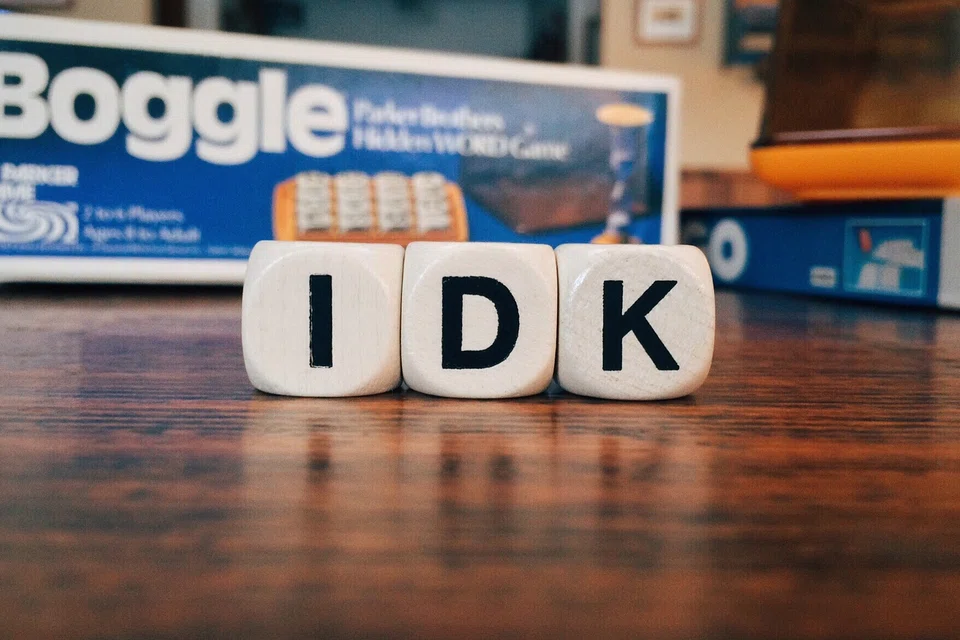
THE first time Tobias van Schneider said “I don’t know”, he “almost enjoyed it”.
The lead product designer and art director at streaming service Spotify was responding to questions at a conference.
His answer was “followed by an awkward silence that got deep to my bones. But it felt so good and refreshing”, van Schneider said in a blog post.
His post hints at how difficult it is for most people to admit they don’t know something.
Insead associate professor of organisational behaviour Andy Yap – who teaches MBA programmes, leadership communication and managerial psychology – told me this tendency arises from the fact that, throughout our lives, we are rewarded for knowing.
We may even be penalised for admitting to not knowing something we are expected to know.
“In high power cultures such as Singapore, people tend to impression-manage in front of their superiors and are less likely to admit that they do not know,” he said.
“People are less likely to say they don’t know if they are afraid that others think they are less competent. This is always affected by norms and culture, and also happens more often when people feel powerless or if they feel they are being evaluated.”
Yap also referenced the Dunning-Kruger effect, which is a cognitive bias that leads people with limited competence in a particular domain to overestimate their ability in it.
This is why subject experts are more likely to tell you they don’t know something, he said, adding: “The more you know, the more you know what you don’t know.”
Is there harm in failing to acknowledge your shortcomings? Freakonomics co-author and economist Steven Levitt thinks so.
In a 2012 podcast, he said: “I really have come to believe in teaching MBAs that one of the most important things you learn as an MBA is how to pretend you know the answer to any question, even though you have absolutely no idea what you’re talking about.
“And I’ve found it’s really one of the most destructive factors in business – that everyone masquerades like they know the answer, and no one will ever admit they don’t know the answer – and it makes it almost impossible to learn.”
When to say it
Insead’s Yap offers two contexts in which it is beneficial to practise being upfront about not knowing the answer to something.
First, when working in teams – because it becomes an invitation for help.
“The team may come up with more accurate solutions if one shares more accurate data (ie that one doesn’t know), so that the strategy can take into account this unknown or uncertainty,” said Yap.
Second, when predicting things outside one’s control – such as trying, at the start of the pandemic, to project implications Covid-19 might bring to your industry.
“That’s because it’s hard to predict; and even if you can, there is a good likelihood that one may be wrong. Saying ‘I don’t know’ in this case is useful so that governments can take into account this unpredictability in their policies. Being confident... (but) wrong has serious consequences.”
How we say we don’t know is equally important.
“When you say ‘I don’t know’, your facial expressions and body language must signal that you are saying these three words from the position of humility and competence,” said Yap.
This can be a tough balance. You need to signal that you are saying “I don’t know” because you are an expert and you know what you don’t know. At the same time, you need to signal humility so others will be gracious enough to acknowledge that it is fine.
When is it not a good idea to say you don’t know? When you’re making an important presentation or pitch to a client, potential client or investor.
“In some situations, and if you think that the question asked by your client may require more research or data, I think that it is okay to inform your client that you will collect the data they ask for and follow up with them,” he said.
“But you must follow up and not just pay lip service. Clients respect you more when you do so. This builds trust.”
Leaders must also be careful of when to admit they do not know.
“As an example, leaders of governments can say: ‘We don’t know for sure when Covid-19 will end, but we have plans for every scenario; and we will see the light at the end of the tunnel.’”
How to enable it
One other reason people don’t say “I don’t know” is that they don’t feel psychologically safe doing so.
Psychological safety is the feeling and belief that one is free to speak up, be honest, disagree and take risks without the fear of negative repercussions from the leader or other team members.
Here are some ways Yap suggests managers can build a safe environment and culture to facilitate this:
- Build a culture that indicates you are brainstorming, and don’t be too fast to criticise.
- Do not speak up before your subordinates, especially in high power distance cultures. If you do, your team will just follow your suggestions.
- Allow equal air-time so the more dominant and agentic teammates do not dominate the discussion.
- Facilitate the air-time by asking low-ranking and less-extroverted teammates to speak up.
- Get teammates who are afraid to speak up to play the role of the devil’s advocate. This gives them the feeling of the “right” to critique, especially when it comes to your ideas.
By creating psychological safety, managers allow employees to be honest about what they know and what they don’t – creating better outcomes for all.
TRENDING NOW

Grab CEO’s wife Chloe Tong on life with Anthony Tan and finding her purpose

HDB reviewing ‘jumbo’ flat scheme after Telok Blangah unit listed for sale at S$2.18m

He built the Vingroup empire. Now South-east Asia’s richest man is handing some key roles to his sons

Singapore judge raises doubts iron ore trader Radiant World is owed US$1 billion

