
How should a business bro dress?
Trading hoodies at the home office for hard pants, we take a snapshot of the finance bros in their native habitat
 Add BT as a preferred source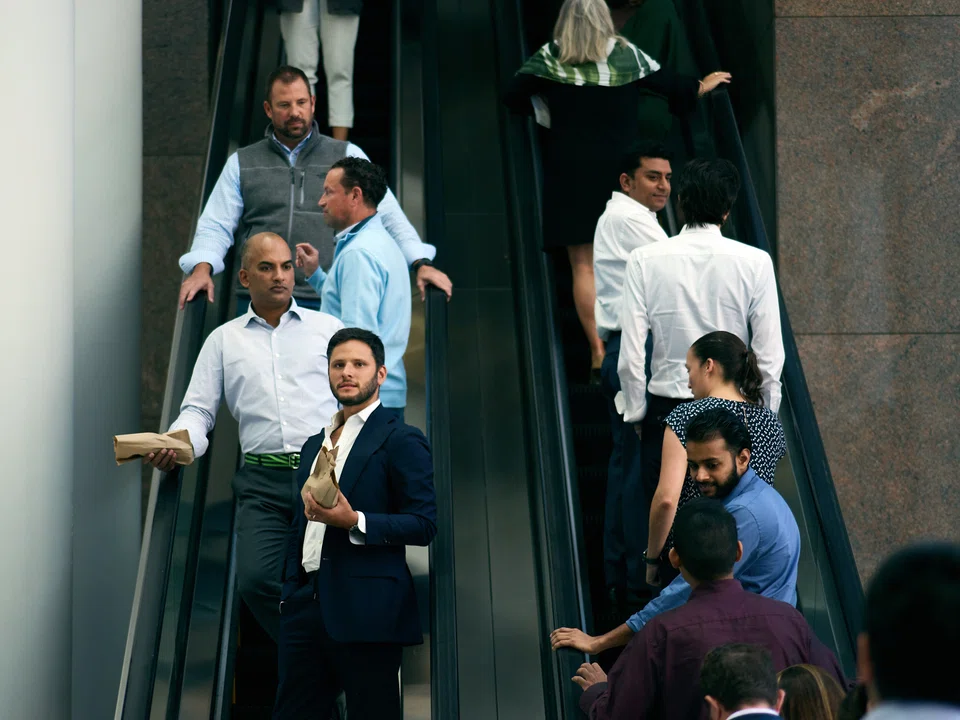
REPORTING here from the Hot Tub Time Machine, dial set to 2010. Business analysts and those with even a passing interest in menswear will remember that as the year when Suitsupply became a worldwide phenomenon. It was also when, for the first time, novel technology enabled men to customise suits online without having to submit to pesky nuisances like tailors or the bother of going into a store.
As it happens, 2010 also coincided with certain other shifts in the evolution of fashion, and this may be the place to note a fact about menswear that is generally too little appreciated. As a masculine uniform, the suit has changed remarkably little in 400 years, historians of costume say. (Regarding which: Harry Styles in a dress would have been no big whoop to inhabitants of preindustrial eras, when men and women alike wore tunics and aristocratic boy children were attired in frocks until graduating to two-legged garments in a rite of passage known as “breeching”.)
In other words, while suits have always been with us, their proportions shift constantly along with tastes, and by the second decade of this century, the influence of American designer Thom Browne had crept into every corner of an industry floundering for direction. For anyone unaware of Browne’s influence, let’s put it this way: Honey, he shrunk the suit.
Browne made jackets snugger and shorter, billboarding the male posterior. He designed skinny trousers so short that suddenly men had ankles again.
Mainstream fashion may have sidestepped the more extreme manifestations of the shrunken suit, and yet it got the memo. Guys of all kinds and varied anatomical types – from “giraffes” to “short kings” – embraced tight suits, made them a business wear default and stuck with them. Then, of course, the pandemic happened, and no one needs to read another story about what that did to hard pants and blazers.
Now, of course, a great many workers are back in the office. A surprising number have already been toiling in corporate ant farms for months or even, in the case of some investment banks, as much as a year.
Navigate Asia in
a new global order
Get the insights delivered to your inbox.
In terms of return-to-office dressing, then, it is finance bros who are leading the way. And for anyone looking to observe these people in their natural habitat, the ideal viewing platform is the atrium at Brookfield Place, a vast office-mall complex in Manhattan’s financial district. There, this menswear critic parked himself on three lunch hour afternoons last week to grab a snapshot of what men in business are wearing to the office. If the intel gathered was in some sense random, it was also in every case surprising.
Far from dressing much differently than they had before Covid-19 sent workers scattering to the security of bedroom workspaces, finance bros, as it turns out, were dressed much as people holding those same jobs might have been when Barack Obama occupied the White House. Unlike the former president, whose sartorial tastes were often slightly passe, the men riding the escalators down from the Royal Bank of Canada, financial services companies like American Express or the Jones Day law firm, or picking up Le District jambon baguette sandwiches to brown-bag it at nearby financial behemoths like Goldman Sachs, looked right up to date. That is, if the date in question were 2010.
“What am I wearing?” said David, a 30-year-old Goldman employee who, like many interviewed for this story, cited company policy in declining to provide his full name. “Who wants to know?”
It turns out that David’s manner of dress could serve as a template for every finance bro in the official, we-really-mean-it phase of RTO. (David Solomon, the CEO of Goldman Sachs, has been a staunch opponent of the trend toward hybrid work, repeatedly stating that he views remote work as an aberration and expects employees to return to the office full time.)
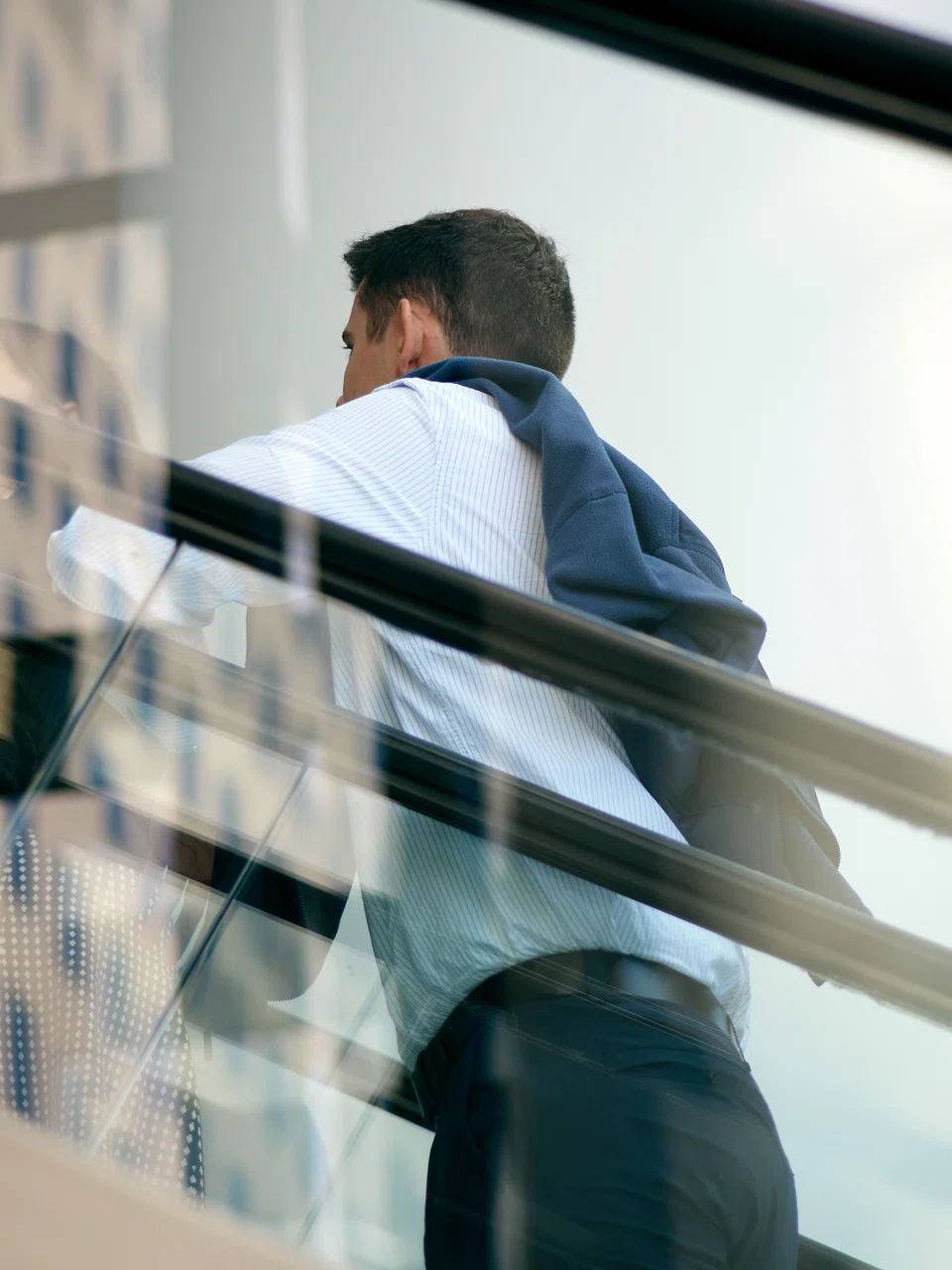
Like almost every person interviewed, or even spotted, at Brookfield Place, David had on a crisp white shirt with an open spread collar. His happened to be a US$99 Leeward dress shirt from Mizzen+Main. It fit his muscular torso snugly. And so, too, did his US$148 slim-fit, navy side-pocket polyester and “elastomultiester” New Venture stretch pants from the Lululemon business casual line. His lace-up Oxfords came from Bruno Magli, he said. They were black.
It is true that some people sported shorts and flip-flops at the office during the tumbleweed times, when intrepid employees insisted on working at corporate headquarters so vacant they were like supersize WeWork cubicles. At banks like Goldman Sachs and JPMorgan Chase, insiders say, top-level executives continue to hang on to certain pandemic customs as signifiers of elevated status. “Unlined cashmere blazers, dark jeans and Allbirds are symbolic vectors of seniority,” an investment banker at a blue-chip firm said last week.
In a stretch, “you could wear jeans on a Friday”, said Arjun Menon, 33, a Goldman Sachs employee. Menon quickly added that he was not permitted to talk to the press, although not before disclosing that the navy side-pocket trousers he was wearing with a crisp, white open-collar shirt and a pair of lace-up Oxfords – the Michael Bublé ballad of footwear – were purchased at Suitsupply.
Based on the available evidence, Suitsupply, Lululemon, Club Monaco and Brooks Brothers (although not the revitalised, trend-conscious iteration of the venerable clothier’s offerings produced under the creative direction of Michael Bastian) remain the go-to labels for a lot of white-collar workers. This is particularly true of bankers in the bullpens, guys newly out of MBA programmes, still making a mark and not yet so jaded that they secretly yearn to burn their corporate logo fleeces.
(Things are different, one insider explained, for tech sector specialists. Showing up in a suit for a client meeting in Silicon Valley, where the novelty sock trend never went away, “would look downright weird”, he said.)
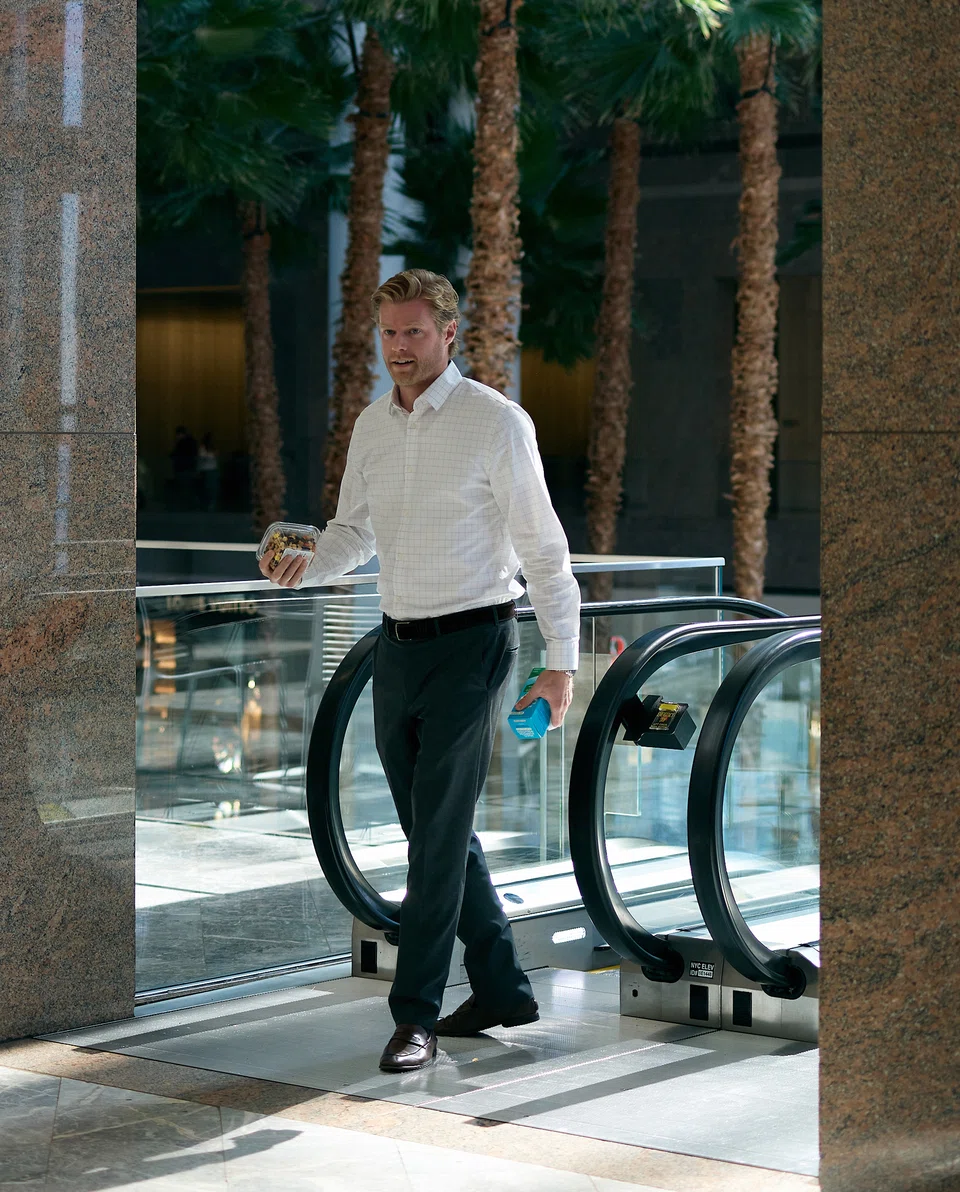
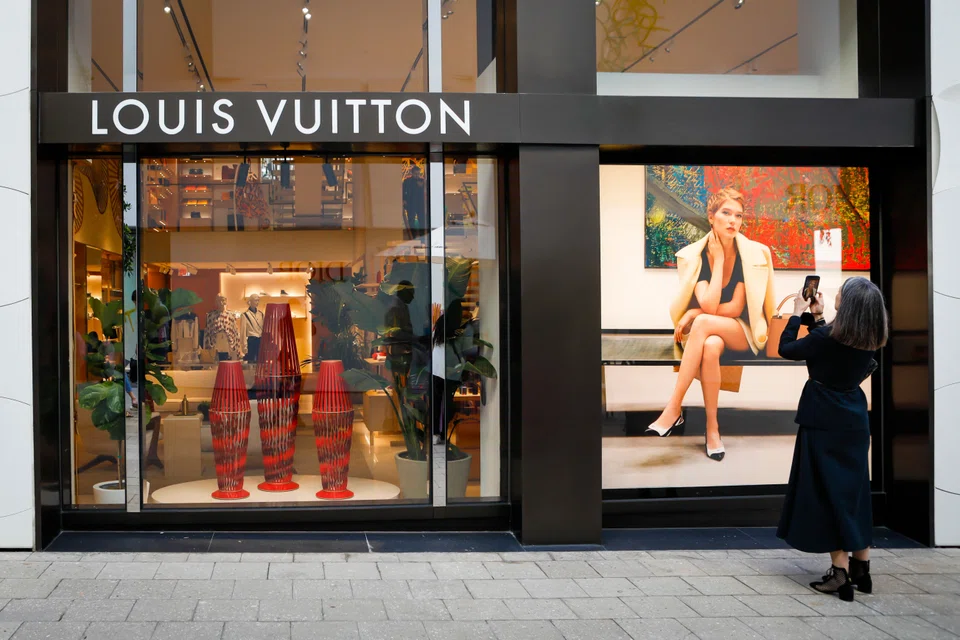
As for shoes, the preferred brands run to mid-price offerings from labels like Johnston & Murphy, To Boot and Allen Edmonds, a Wisconsin manufacturer founded to supply soldiers in World War II. Although there was not much luxury footwear to be seen on men at Brookfield Place – its atrium-level shopping mall, with its sentinel palm trees, is anchored by glossy boutiques selling Bottega Veneta, Louis Vuitton, Ferragamo and Gucci – that may owe as much as anything to a bear market.
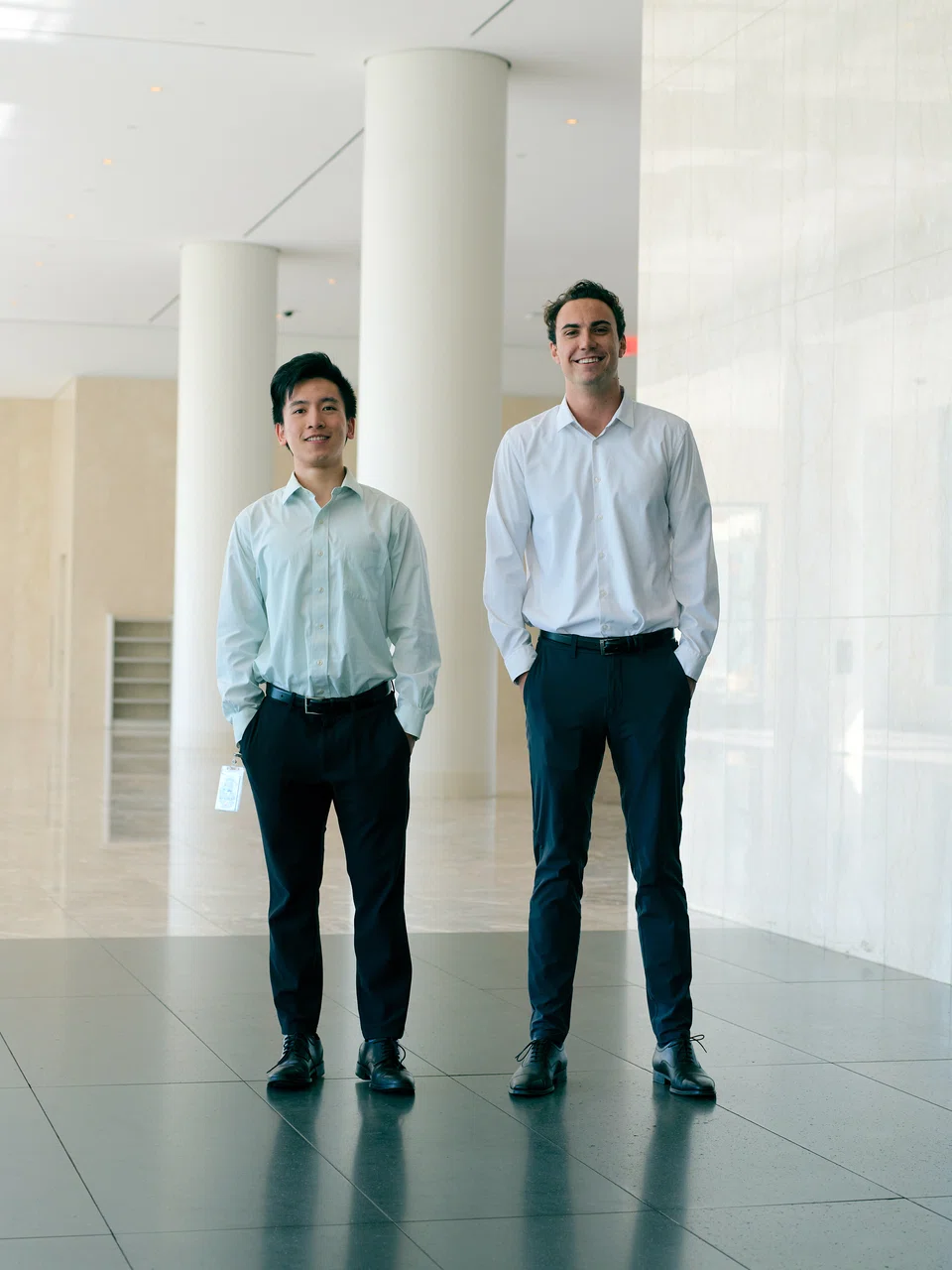
“Maybe if we get a bonus, I’ll buy some Gucci,” said Charles Li, 26, an employee at Scotiabank. Li was wearing neatly tailored basics (blue trousers, white shirt, Oxfords) from Suitsupply, whose Brookfield Place store is conveniently located on the mezzanine level. A colleague of Li’s, Allan Bossard, 23, was dressed in an almost identical manner.
For Ryan Meiser, 31, an investment analyst at Royal Bank of Canada, the return-to-office phase signalled little real change in his morning routine. “You do want to have your own mind about dressing,” said Meiser, who wore a white Giorgio Armani shirt, a pair of gray Zegna trousers and shoes by a maker whose name he had forgotten.
But in the end, what one chooses to wear to the office may be a less relevant question than where exactly that place may be. “Three days a week in the office is mandatory, with Monday and Friday optional,” Meiser said.
“Weekends,” he added with a laugh, “we’re free to work from home.” NYTIMES
Decoding Asia newsletter: your guide to navigating Asia in a new global order. Sign up here to get Decoding Asia newsletter. Delivered to your inbox. Free.
Share with us your feedback on BT's products and services

