

Nearly half of Singapore workers put in at least six unpaid hours a week: survey
This figure is higher than the global average of 38%
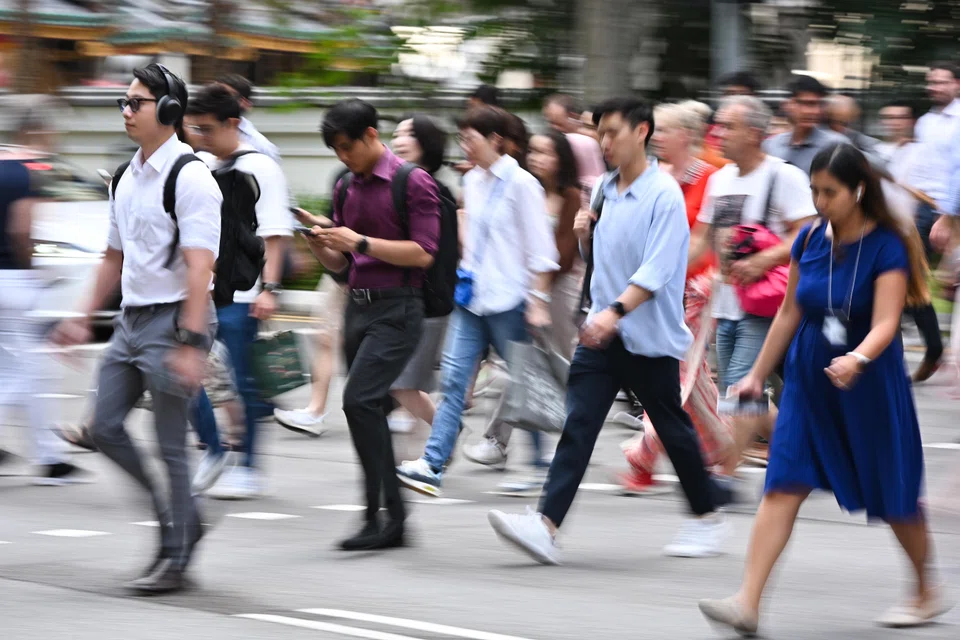
[SINGAPORE] Nearly half of workers in Singapore, or 45 per cent, put in at least six unpaid hours a week last year, according to a survey released on Monday (Oct 19) by human resources and payroll services provider ADP.
This figure is higher than the global average of 38 per cent.
Of those surveyed in Singapore, 35 per cent reported working six to 15 unpaid hours weekly, while another 10 per cent put in 16 hours or more.
Unpaid work includes time spent working through lunch breaks or beyond scheduled work hours.
The findings were based on ADP Research’s annual Global Workforce Survey, which polled more than 39,000 adult workers across 36 markets, including more than 13,000 respondents across Asia-Pacific, between Jul 21, 2025, and Aug 4, 2025. The survey appeared in ADP’s People at Work report.
Unpaid work more common among knowledge workers
In Singapore, employees at medium-sized organisations with 250 to 999 workers were the most likely to report working beyond paid hours.
Some 56 per cent reported working at least six unpaid hours a week, compared with 42 per cent at large organisations with at least 1,000 employees and 40 per cent at smaller firms with fewer than 250 employees.
Knowledge workers, who use their expertise to create new output, were also more likely to report significant unpaid hours.
About 51 per cent of knowledge workers in Singapore put in at least six unpaid hours weekly. This is a higher proportion than skilled task workers who apply their expertise to solve similar problems daily, and repetitive task workers who perform similar tasks each day.


Asia-Pacific ranks second for unpaid work
Across Asia-Pacific, 40 per cent of respondents reported working at least six unpaid hours weekly, the second-highest proportion among the five regions surveyed.
The Middle East and Africa recorded the highest share at 52 per cent, followed by North America at 39 per cent, Europe at 32 per cent and Latin America at 31 per cent.
Within Asia-Pacific, India had the highest proportion of workers putting in at least six unpaid hours weekly, at 64 per cent. This was followed by Indonesia at 54 per cent.
China recorded a lower proportion at 42 per cent, while Australia stood at 38 per cent and Japan at 21 per cent.
Globally, India also had the highest share of workers reporting 16 or more unpaid hours weekly, at 24 per cent. The Czech Republic had the lowest at 4 per cent.
Hidden costs of unpaid work
While workers who reported 16 or more unpaid hours were more likely to be fully engaged in their jobs, they were also more likely to experience stress, feel less productive and seek other employment opportunities, ADP’s global findings showed.
“Working longer hours should not be mistaken for working more effectively,” said Yvonne Teo, ADP’s vice-president of human resources for Asia-Pacific.
She warned that consistently putting in unpaid hours could contribute to increased stress, lower perceived productivity and a greater risk of turnover, even among committed employees.
Globally, senior employees were more likely to work unpaid hours, with half of C-suite executives and 49 per cent of upper managers reporting at least six unpaid hours weekly, compared with 26 per cent of individual contributors.
One in five C-suite executives also reported putting in at least 16 unpaid hours a week, more than double the 9 per cent of individual contributors who did so.
Younger employees were also more likely to work longer unpaid hours, with 42 per cent of those aged 18 to 26 reporting at least six hours a week, followed by 41 per cent of workers aged 27 to 39.
Decoding Asia newsletter: your guide to navigating Asia in a new global order. Sign up here to get Decoding Asia newsletter. Delivered to your inbox. Free.
Copyright SPH Media. All rights reserved.
TRENDING NOW

Far East Organization’s The Serra Residences sells less than a quarter of units released at average S$3,460 psf
Singapore to use ‘every legal and regulatory lever’ against companies linked to haze: Shanmugam

Could stablecoins be the future of money?
The middle power moment arrives in South-east Asia – but not for Asean

