Return to Office enters the desperation phase
The next stage of getting workers back at their desks includes incentives like US$10 to the charity of their choice — and consequences like poor performance evaluations if they don’t make the trek in
 Add BT as a preferred source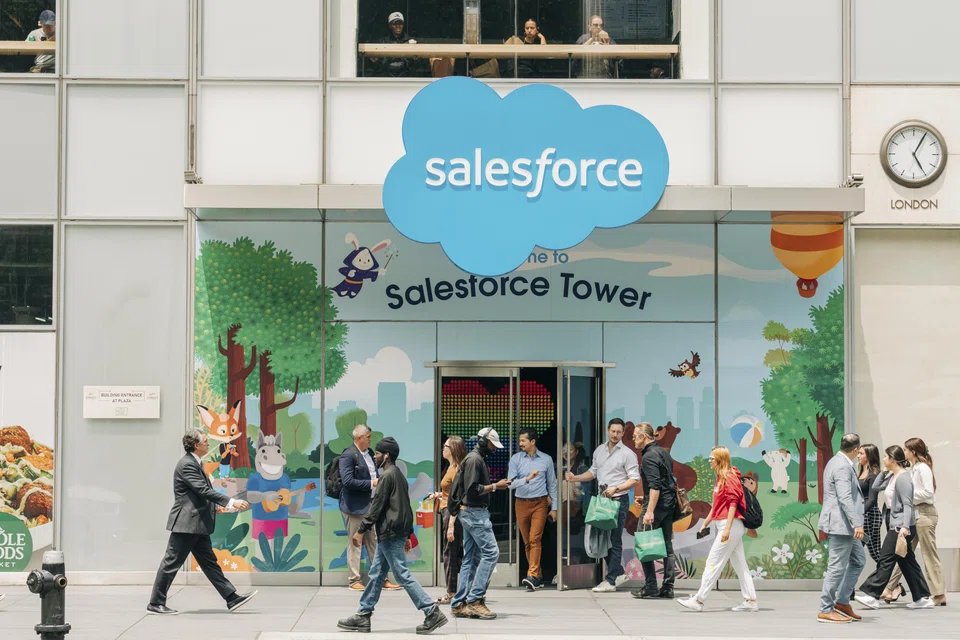
Manny Medina, the CEO of a Seattle-based artificial intelligence sales company, doesn’t mind repeating himself. It comes with the territory, after all. That tolerance proved convenient this year as he faced the same question innumerable times.
Wait, so why was it you wanted us back in the office?
The engineers reminded him of their commutes. The working parents reminded him of school pickup times. Medina replied with arguments he has delineated so often that they have come to feel like personal mantras: Being near each other makes the work better. Medina approached three years of mushy remote-plus-office work as an experiment. His takeaway was that ideas bubble up more organically in the clamour of the office.
“You can interrupt each other without being rude when you’re in person,” said Medina, whose company, Outreach, is now in the office on a hybrid basis. “In a Zoom conversation, you have to let somebody finish their thought.”
For tens of millions of office workers, it’s been three years of scattershot plans for returning to in-person work – summoning people in, not really meaning it, everybody pretty much working wherever they pleased. Now, for the umpteenth time, businesses are ready to get serious.
A wave of companies called workers back to the office this spring and summer: Disney said four days a week, Amazon swung with three (prompting a walkout from corporate workers), Meta and Lyft are aiming for September deadlines for many of their employees.
Others devised new tactics to ensure their return-to-office policies stuck. Google, which has asked most workers to be in the office three days a week, announced that performance reviews could take into account lengthy unexplained absences from the office, and badge records could be reviewed to identify those consistent absences, said Ryan Lamont, a company spokesperson.
Google employees will be granted the ability to work remotely only on an extremely rare basis. “We want to see Googlers connecting and collaborating in person, so we’re limiting remote work to exception only,” Lamont said.
These new policies come as business leaders accept that hybrid work is a permanent reality, with just over one-quarter of full workdays in the country now done at home, and offices still at half their pre-pandemic occupancy (though that 50 per cent occupancy metric combines Tuesdays and Wednesdays, when offices are bustling, with Fridays, when they tend to be ghost towns).



Salesforce, a business software behemoth, announced that for a 10-day period, it will give a US$10 charitable donation per day on behalf of any employee who comes into the office (or for remote employees who attend company events). A spokesperson said it was only natural the company would want to find moments for “doing well and doing good”.
But to some employees, it might feel like a tonal shift, given that the company’s previous workplace plans were announced with fanfare for a future in which much of its staff could be fully or partially remote forever (the company emphasised that this remains the case).
“An immersive workspace is no longer limited to a desk in our Towers,” the company wrote in a February 2021 memo. “The 9-to-5 workday is dead.”
It was very much alive on a recent Monday at Salesforce Tower in New York, as a hum of activity filled the 41-story building looming over Bryant Park. Desks and conference rooms were filled with employees, some of them visiting from San Francisco for the company’s AI-focused day. In the top-floor lounge, workers stood in line waiting for coffee, as Salesforce’s catering team prepared shrimp tacos for an office event that week.
Scattered throughout the office were the company’s animal mascots. Brandy the fox represents marketing. Astro the astronaut sat behind a piano in the 41st floor lounge. Codey the bear stood guard near the developers.
“It’s the impromptu-ness of in-person – so for example, I was at the office and there was somebody from Chicago, she was in the San Francisco office – ‘Oh, do you have time to go and chat and have a meeting about a strategy that we’re rolling out?’” said Nathalie Scardino, Salesforce’s global head of talent strategy. “Inevitably, as a high-tech company, you have to keep changing to meet the needs of the business, of the customer.”
It’s not often that the entire white-collar business world gets thrown into an impromptu experiment – executives left to discern how to make multimillion-dollar decisions in between bursts of “you’re on mute”, employees figuring out how to forge friendships and nudge mentors for advice while sitting next to piles of their laundry.
And for the past three years, some office decision-making has come to feel like parents scrambling to impose rules on an unruly home:
“Do this.” “Why?” “Because I said so.”
But now some business leaders say that the results of their remote work experiment are in. They feel emphatically that they need some in-person time. After months of layoffs, especially in tech, their next business moves feel particularly consequential.
“When the economy was warm, executives thought, ‘I’d really like to have people back but it’s OK because I have this margin of error,’” said Mark Ein, chair of Kastle, a security firm whose “back to work barometer” made it a pandemic celebrity. “Now that things are tougher, they want to hunker down and have their people in the office.”
DocuSign, which has more than 6,500 employees spread across the globe, became a poster child for the lurching back-and-forth over return-to-office planning. The company had hoped to call employees back in May 2020, then August 2020, then October 2021, then January 2022. Then the plans disintegrated altogether.
But this month, much of the company finally came back to the office. Since February, executives have evaluated every role at the company and decided roughly 70 per cent were hybrid, meaning people would be partly in the office and partly remote, 30 per cent were fully remote and under 1 per cent were fully in the office. Jennifer Christie, the company’s new chief people officer, absorbed dozens of questions from concerned employees.
“This can be a very polarising subject,” she said, adding that she views this summer as a period of experimentation in which she and other company leaders will evaluate what parts of their hybrid plan need changing. “We’re running water through pipes that haven’t had water run through them in a long time. So where are there going to be leaks?”
But DocuSign’s leaders were ready, she added, to stop talking about how to get people back in the office and start making their plans real. “We could debate it forever, we could speculate about what’s going to happen forever, but the best way for us to understand how this will impact our culture and productivity and collaboration is to just start doing it.” NYTIMES
Decoding Asia newsletter: your guide to navigating Asia in a new global order. Sign up here to get Decoding Asia newsletter. Delivered to your inbox. Free.
Share with us your feedback on BT's products and services