

Australia signs deal for first batch of warships from Japan
It represents a breakthrough in Tokyo’s ambitions to become a major defence exporter
 Add BT as a preferred source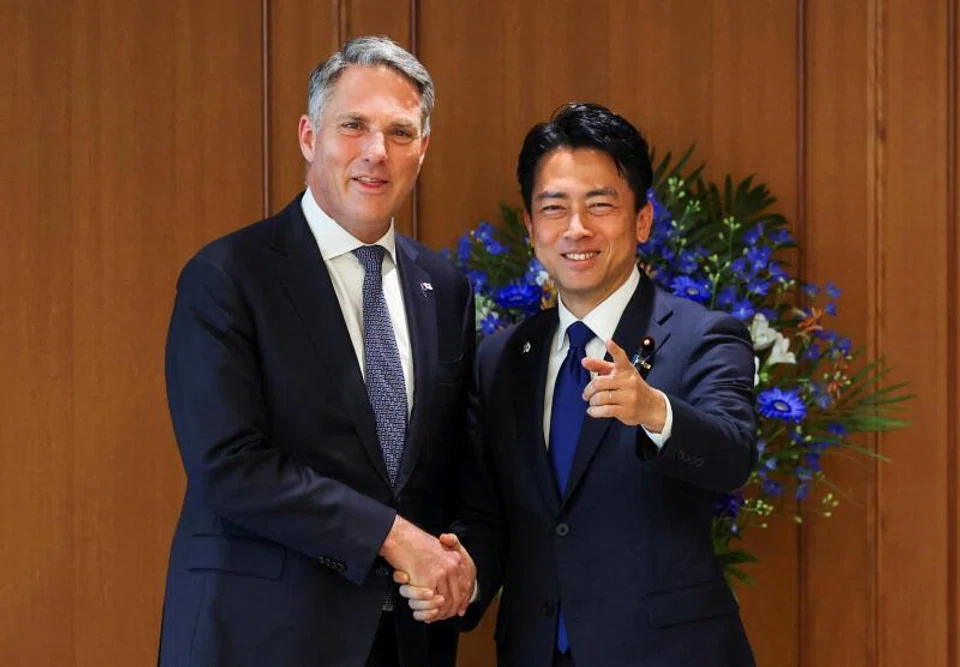
本文由AI辅助翻译
[MELBOURNE] Australia completed a contract for the first three of 11 advanced warships it plans to buy from Japan, a landmark deal to bolster the Royal Australian Navy that also represents a breakthrough in Tokyo’s ambitions to become a major defence exporter.
Australian Defence Minister Richard Marles and Japanese Defence Minister Shinjiro Koizumi took part in a signing ceremony in Melbourne on Saturday.
“Our surface fleet is more important than at any time in decades,” Marles said aboard an existing Japanese-owned version of the same frigate. “These general purpose frigates will help secure our maritime trade routes and northern approaches as part of a larger and more lethal surface combatant fleet.”
The first three upgraded Mogami-class frigates will be built in Japan with a budget of A$15 billion (S$13.64 billion) to A$20 billion. Delivery of the first vessel is expected in 2029. Plans call for eight more ships to be built later in Western Australia.
Mitsubishi Heavy Industries is the lead contractor on the project for frigates optimised for undersea warfare and air defence that will replace Australia’s Anzac-class warships. The deal is only Japan’s second major defence export contract since World War II.
MHI was selected as the preferred bidder in August last year over Germany’s Thyssenkrupp Marine Systems, a vote of confidence in Japanese defence equipment as the government of Prime Minister Sanae Takaichi looks to build a larger, more profitable defence sector. BLOOMBERG
Decoding Asia newsletter: your guide to navigating Asia in a new global order. Sign up here to get Decoding Asia newsletter. Delivered to your inbox. Free.
Share with us your feedback on BT's products and services
TRENDING NOW
Simba ordered to pay S$700,000 in damages to indoor skydiving operator Altitude Xperience for trespass
Malaysian tycoon Vincent Tan’s sell-downs point to pruning rather than an exit plan

The bright side to the CSE Global clash

StarHub deputy CEO Matthew Williams to succeed Nikhil Eapen as chief executive

