

Italian banks avoid meltdown, reining in systemic risk
Milan
NOW that worries over Italian banks suffering a meltdown have subsided, lenders need to persuade investors that they can make money.
Both optimistic buyers and more sceptical investors, gathered on the shores of Lake Como for the annual Ambrosetti Forum, agree that momentum for bank shares will depend mainly on an acceleration of economic growth and higher interest rates, while poor governance and business-model sustainability have become the main risks for the industry.
"The perception that systemic risk is over has supported shares in recent months and, looking forward, the ability of the country to exit from a sluggish path of recovery and expectations of higher interest rates will be a trigger to buy bank securities," Davide Serra, chief executive officer of Algebris Investments, said in an interview on the sidelines of the event in Cernobbio, Italy. "We are very positive on Italian banks."
London-based Algebris, which has 10 billion euros (S$16 billion) of assets under management has committed about 20 per cent of its portfolio into Italian bank equity and credit, including holdings in lenders such as UniCredit SpA, Intesa Sanpaolo SpA and Banco BPM SpA.
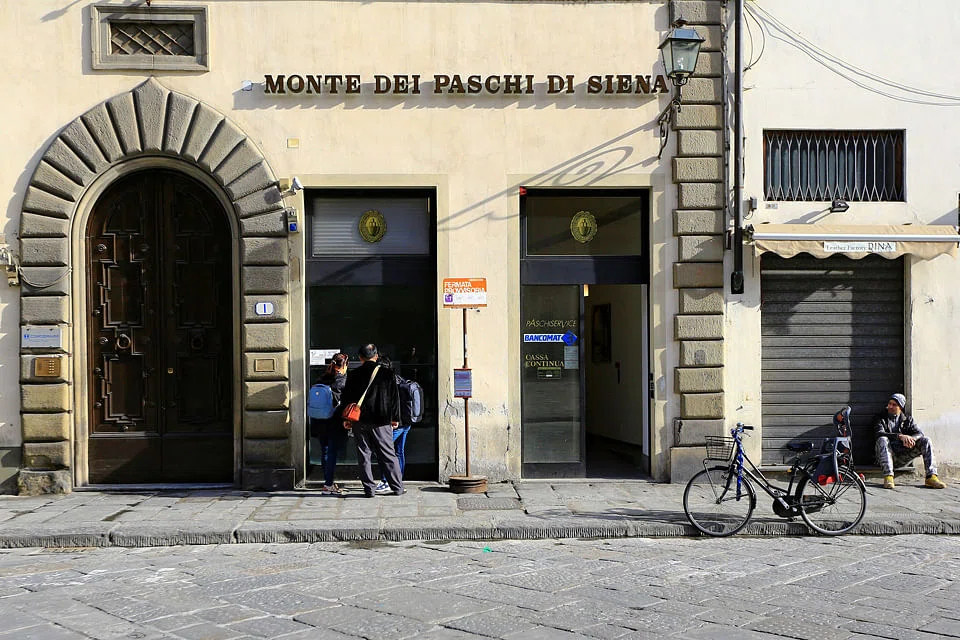
In June, the government committed as much as 17 billion euros to wind down Banca Popolare di Vicenza SpA and Veneto Banca SpA, and a month later got EU approval to give 5.4 billion euros of aid to recapitalise Banca Monte dei Paschi di Siena SpA, thus addressing what were considered the main systemic risks for the banking industry.
Since then, shares of Italian banks have jumped almost 8 per cent compared with a one per cent uptick in the Europe STOXX 600 Banks Index.
Though still lagging behind euro-area peers, Italian economic recovery looked more convincing this year with gross domestic product expanding 0.4 per cent in the second quarter and a rise in exports of Italian goods over the same period despite a stronger euro. GDP could expand 1.5 per cent this year if the current pace of growth is confirmed for the rest of 2017, Italian statistics institute Istat said in August.
Banks' operating profit for 2016 was down by 27 per cent, mainly owing to a drop in income, Bank of Italy data shows.
Italian banks' operating profit should rise this year helped by continued growth in economic activity and the slight increase in the slope of the yield curve, the central bank said in its stability report published in April. The report also pointed out that the number will remain below 2015 levels unless action is taken to stop an increase in costs.
"The traditional commercial banking sector is not yet attractive for private investors," Giancarlo Aliberti, a partner at Paris-based private equity firm Apax Partners said.
"Recent restructurings have solved the short-term problem of lack of capital and are very positive for the banking system, but banks still have an infrastructure and business model that generates profits below what a private equity investor needs, which means that only selected opportunities where short-term restructuring is feasible might be attractive."
Italian banking association data shows subdued loan growth for the private sector, with loans to Italian residents up one per cent at the end of June at 1.5 trillion euros. Banks have only increased lending to households, which as a whole have a low level of indebtedness, and to firms with high credit ratings, according to Bank of Italy reports.
While Italian banks have raised almost 30 billion euros of fresh money since 2014 to strengthen their balance sheets, they continue to be burdened with more than 170 billion euros of net non-performing loans.
The European banking system as a whole has a questionable level of capital and that could lead to problems in the next economic slowdown, said Jim McCaughan, CEO of Principal Global Investors, whose firm oversees more than US$420 billion in assets.
"For many banks, prosperity is very dependent on continuity of the economic momentum," said McCaughan, who recommends staying underweight on the European banking sector. BLOOMBERG
TRENDING NOW

He built the Vingroup empire. Now South-east Asia’s richest man is handing some key roles to his sons

Grab executives buy back shares after stock hits 3-year low on Atome deal
US dollar falters after Iran’s offer to reopen Hormuz sends oil lower

Martin Modern, Wallich Residences properties linked to money laundering case sell for S$16.3 million at auction

