Japan’s extra Budget to include funding from fresh debt, source says
It will further strain the country’s worsening finances and may accelerate rises in long-term interest rates
 Add BT as a preferred source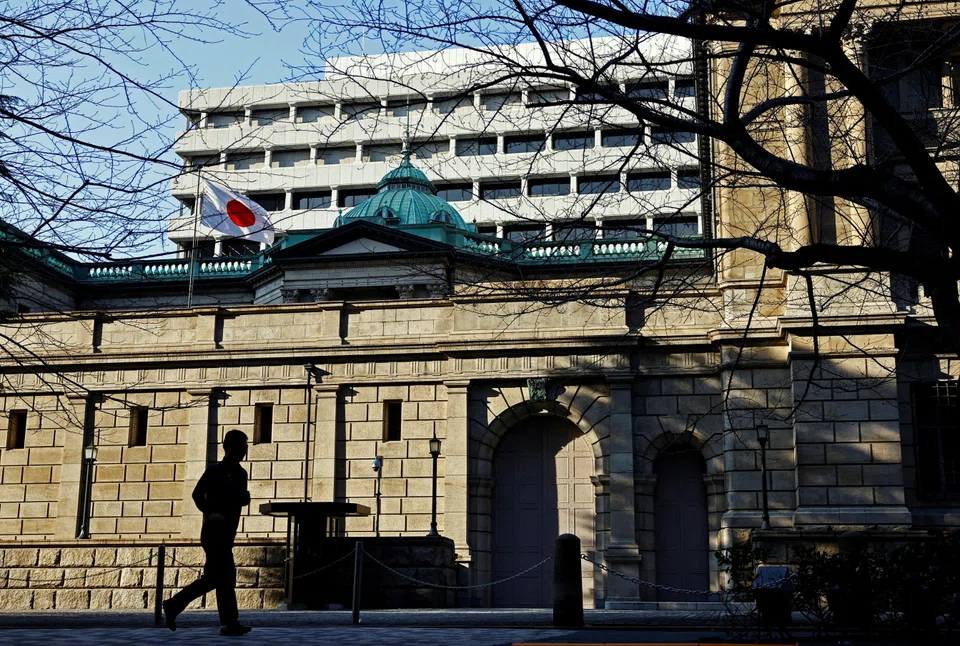
[TOKYO] Japan’s government is likely to issue fresh debt as part of the funding for a planned extra Budget to cushion the economic blow from the Middle East war, a government source with direct knowledge of the deliberations told Reuters on Monday (May 18).
Any additional debt issuance would further strain Japan’s already worsening finances and might accelerate rises in long-term interest rates.
Such concerns pushed the yield on the benchmark 10-year Japanese government bond (JGB) to 2.8 per cent on Monday, its highest since October 1996, and the 30-year yield to a record top.
On Monday, Prime Minister Sanae Takaichi said she had told Finance Minister Satsuki Katayama last week to start work on compiling a supplementary Budget, a shift from previous remarks ruling out the chance of an extra Budget.
It will focus on funding government subsidies to curb petrol and utility bills, as surging oil prices caused by the Middle East conflict cloud the outlook for an economy heavily reliant on fuel imports from the region.
While the size of spending has yet to be worked out, the decision could cast doubt on the administration’s pledge to pursue a “responsible, proactive” fiscal policy.
Navigate Asia in
a new global order
Get the insights delivered to your inbox.
Katsutoshi Inadome, senior strategist at Sumitomo Mitsui Trust Asset Management, said: “The about-face by Takaichi, who had been ruling out an extra Budget all along, is making markets jittery and triggering a JGB sell-off across the curve.
“There’s a host of reasons to sell JGBs, but very few to buy.”
He added that markets are starting to price in the chance of an extra Budget to the scale of five trillion to 10 trillion yen.

In a proposal to the finance ministry, opposition party leader Yuichiro Tamaki called for an extra Budget of about three trillion yen (S$24.2 billion) on Friday.
This may serve as a benchmark for future debates on the size of spending.
Japan already curbs petrol prices with subsidies. It is eyeing tapping existing funds to revive subsidies for utility bills.
An extra Budget would come on top of a record Budget of 122 trillion yen – making up the core of the dovish premier’s expansionary fiscal policy – for the fiscal year that began in April.
Critics warned that more spending plans, coupled with slow interest-rate hikes by the Bank of Japan (BOJ), could fan inflationary pressure in an economy with rising energy costs from the Middle East war and higher import prices from a weak yen.
Japan’s Nikkei stock average fell on Monday, and the yen hit 158.97 per US dollar – the weakest level since Apr 29.
Daisuke Uno, chief strategist at Sumitomo Mitsui Banking, said: “When countries such as Japan and Britain contemplate fiscal stimulus, there’s a tendency for that to trigger a triple selling of shares, currencies and bonds – because their economic growth is weak and inflationary risks are high.”
The extra Budget will be compiled around June or July, when the administration will lay out plans to boost investment and details for a two-year freeze on an 8 per cent levy on food.
BOJ in a tough spot
The bond sell-off would also complicate the BOJ’s decision on whether to raise its short-term policy rate from 0.75 to 1 per cent at its next meeting in June.
At the June meeting, the central bank will review its existing bond-tapering programme and unveil a new plan for FY2027 and beyond.
The war-induced spike in energy prices, coupled with rising import costs from the weak yen, pushed Japan’s wholesale inflation to a three-year high of 4.9 per cent in April.
It bolstered the case for the central bank to raise rates as soon as next month.
While the BOJ tends to avoid shifting policy when markets are volatile, delaying rate hikes further could stoke already mounting fears that it is behind the curve in addressing the risk of too-high inflation, analysts said.
Markets have priced in roughly a 70 per cent chance of a June rate hike after a slew of recent hawkish signals from the BOJ – and a split vote to the central bank’s decision to keep rates steady in April.
Nearly two-thirds of economists polled by Reuters expected the BOJ to raise rates in June.
Mari Iwashita, executive rates strategist at Nomura Securities, said: “If inflationary risks heighten, there’s a chance the BOJ could raise short-term rates to 1.5 per cent by the March end of the current fiscal year.”
The 10-year yield could head towards 3 per cent, she added. REUTERS
Decoding Asia newsletter: your guide to navigating Asia in a new global order. Sign up here to get Decoding Asia newsletter. Delivered to your inbox. Free.
Share with us your feedback on BT's products and services