

Boosting infrastructure in Asean with 'patient capital'
Investing in basic- to mid-level infrastructure in the region entails a long-term stance and a sound knowledge of local operating environments.
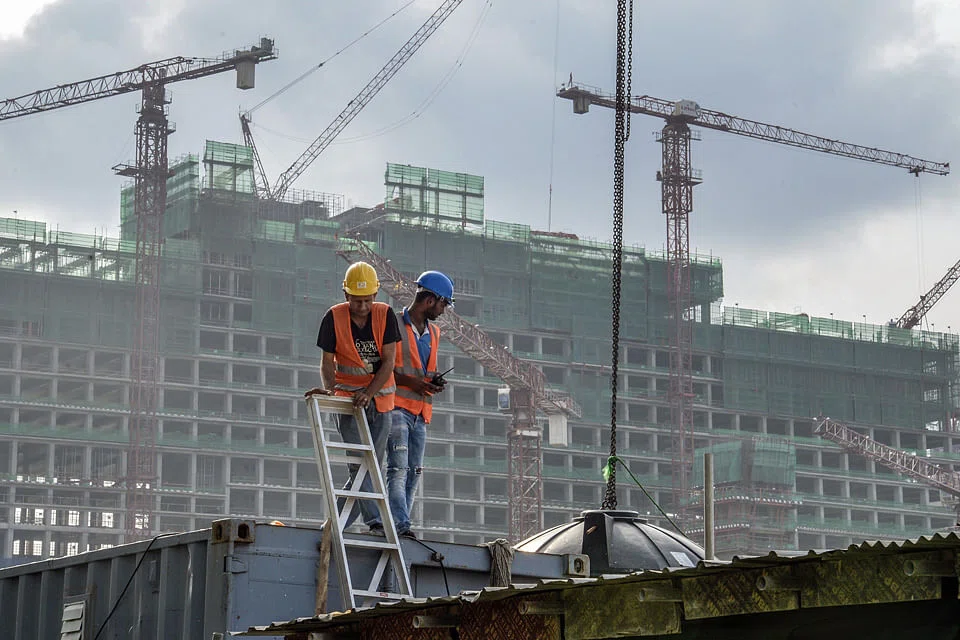
THE crucial role infrastructure plays in socioeconomic progress is not difficult to understand. Inadequate sanitation, blackouts and traffic gridlock adversely affect the social well-being and economic development of a nation. The McKinsey Global Institute suggests that "a dollar of infrastructure investment can raise GDP by 20 cents in the long run by boosting productivity".
Some categorise infrastructure requirements along the lines of humanist psychologist Abraham Maslow's hierarchy of needs - beginning with basic infrastructure, including water and power plants and road networks, progressing to ports, airports and metros, and advancing to the likes of smart grids and autonomous vehicles.
Borrowing from that framework, much of the demand in developing economies of the Association of Southeast Asian Nations (Asean) relates to basic- to mid-level infrastructure developments, namely energy, sanitation, transportation and telecommunications - what some define as economic infrastructure.
According to the Asian Development Bank (ADB), the estimated annual infrastructure spending from seven of the larger developing economies in Asean was US$55 billion in 2015. ADB also projects that the average annual infrastructure spending requirement for these markets, in aggregate, to reach US$157 billion (including climate-proofing investments) between 2016 and 2020. This translates into a potential funding gap of US$102 billion per year.
For Indonesia, Asean's largest economy, it means a potential average annual funding gap of about US$50 billion if it maintains its 2015 estimated infrastructure spend of US$23 billion
Many parties have thus made the case for increased private sector participation, as it is not possible for public sector funds, historically the largest funding source for infrastructure investments, to bridge the gap alone. It must, however, be noted that funding gaps do not always translate into business opportunities.
From a banker's perspective, the following three developments give me cause for optimism that investment opportunities are there for the capital that is patient.
POSITIVE POLITICAL MOMENTUM
The CAGR of infrastructure investments for the period 2012-2016 in Indonesia, the Philippines and Vietnam have exceeded their GDP growth. This implies an improving infrastructure-investment-to-GDP ratio, an often used barometer that measures sufficiency of investments for economic growth. While the actual ratios may still be low, we should take comfort that they are moving in the right direction.
This trend syncs with the stated intent of Asean leaders to prioritise infrastructure development, in particular from the leaders of Indonesia and the Philippines.
Complexities involved in the delivery of quality infrastructure demands effective co-ordination and a whole-of-government approach. A push from the very top is crucial.
COMPETITION FOR INVESTMENTS
Early significant contributors to Asean's infrastructure projects include the Japanese decades ago. Other waves followed, notably from the Koreans and the Taiwanese with their "Go South" policy. The current wave is from the Belt and Road initiative of the Chinese. Given the activity observed, it is evident that Asean, given its geographical proximity and cultural similarities, is an attractive market for the Chinese. As a result, Chinese investments have "upped the ante" for other incumbents to differentiate their product and financial offerings. The momentum this drives, if managed well by Asean leaders, can channel much needed resources to the infrastructure requirements of the region.
ENERGY TRANSITIONS AND TAPPING INTO CAPITAL MARKETS
DBS concluded a US$580 million green bond issue for Star Energy Geothermal Wayang Windu Limited a few weeks ago. This comes on the back of another project bond we arranged last year for Paiton Energy for US$2 billion. Both involved operating power projects in Indonesia which refinanced bank debt. While two deals do not establish a trend, it shows promise of a potential liquidity pool that could reduce the heavy reliance that Asean places on bank and Export Credit Agency (ECA) infrastructure financing.
If established, these alternative fundraising solutions can unlock re-capitalisation opportunities for project sponsors and help reduce bank debt tenors - thereby expanding the pool of liquidity available for projects and lowering costs.
The willingness of project sponsors to take a view on such "take-out" financing solutions, at the inception of a project, is a key element to developing a healthy project bond market. Traditional players have preferred the tried-and-tested way of ECA and bank financing, which remains ample in a region that suffers from a lack of bankable projects.
But that could change with the energy transition. DBS currently has 16 renewable projects in its pipeline, albeit mostly in developed markets. And we have noticed that the identities and risk appetites of renewable players are markedly different from that of traditional power players. There is a predominance of funds and new entrants that display an openness towards capital market solutions. As these investors develop an appetite for projects in Asean, I believe that we will see more capital market activity to support more infrastructure financing projects.
While the above are encouraging developments, much remains to be done. The following are three areas which I believe attention and effort could yield meaningful results, namely:
Given available research by Moody's regarding the relative resilience of project finance assets and recovery rates, there is room for regulators to consider a certain amount of capital relief for qualifying project finance loans that, in aggregate, do not exceed a prescribed proportion of the total asset book. This can unlock liquidity pending alternative financing solutions. The prescribed cap also limits a bank's exposure to mismatched assets and liabilities.
As we contemplate turning the Asean infrastructure funding gap into sustainable investment opportunities, the advice I once heard from an established real estate developer in Vietnam may prove instructive. He summed up the key success factors for infrastructure development in an emerging economy as follows: Patient Capital, Local Partnerships.
As the phrase suggests, it requires a long-term commitment to the region and a strong understanding and appreciation of local operating environments.
TRENDING NOW

Fed hike throws Singapore banks a margin lifeline; UOB most likely to feel impact

He built the Vingroup empire. Now South-east Asia’s richest man is handing some key roles to his sons

Real-estate veteran Desmond Sim quits from CEO roles at Realion, ETC

Chagee, Mixue and Luckin won the market. Sustaining their edge is the harder part

