

No excuses
Glass ceilings are no barrier for the indomitable Linda Tsao Yang
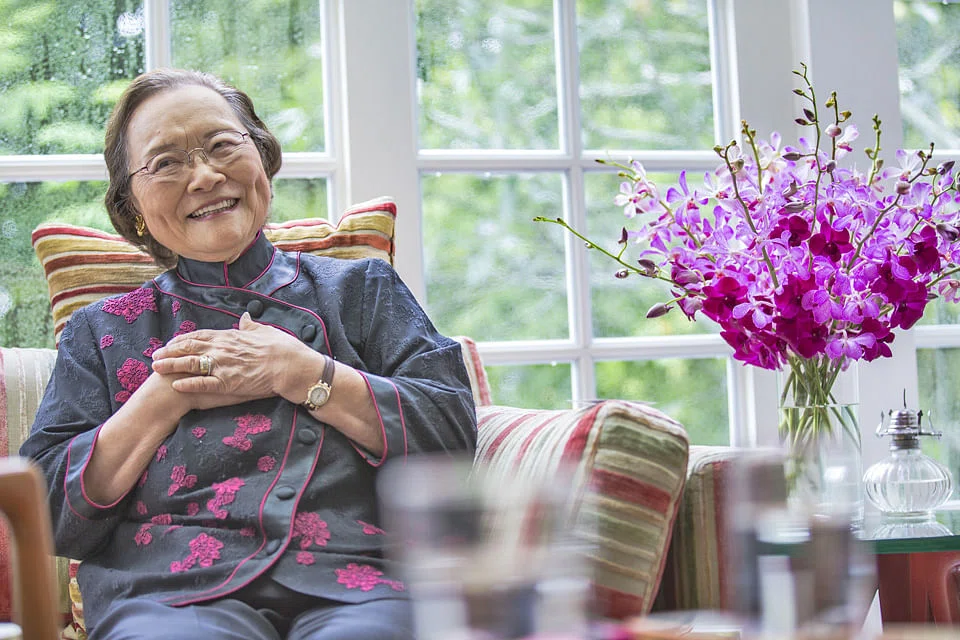
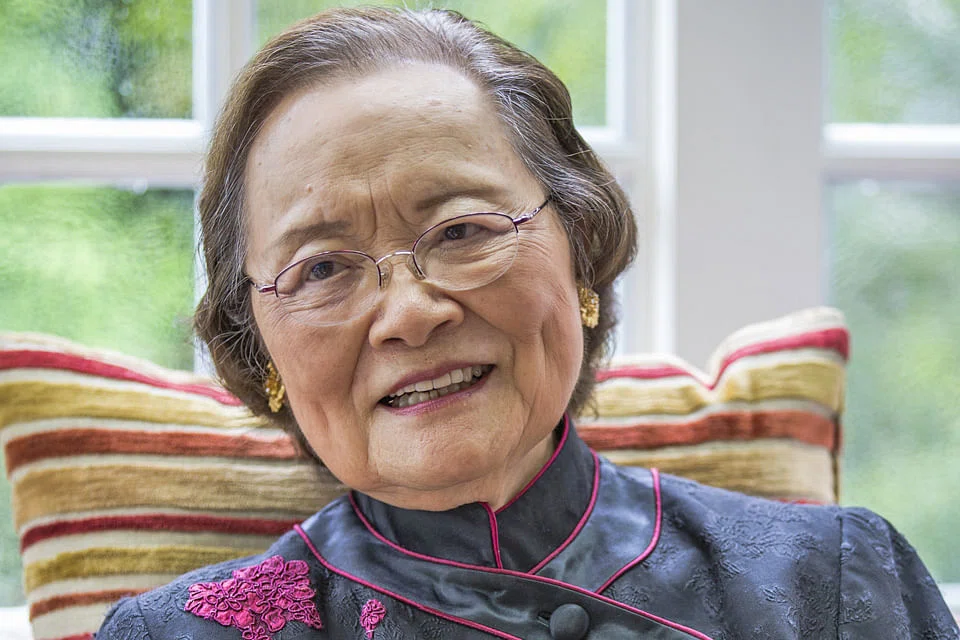
IT is a subdued, rainy Monday afternoon in November, the week after the 2016 United States presidential election, and 91-year-old Linda Tsao Yang is musing about the vote. Not so much about the results - a topic on which she clearly prefers to demur - but on history, Chinese proverbs and things worth struggling for. "It's been almost a hundred years since the US passed a law that allowed women to vote, which was in 1920," she says, reflectively.
"We've waited almost a hundred years to have a woman be a candidate for a major party... many suffragettes over the years worked very hard, fought very hard to pave the way for my generation and the younger generation. So yes, especially women who have the benefit of a higher education... needless to say, I think they feel crushed."
But Mrs Tsao Yang, who is visiting Singapore from her home in Davis, California in the US, remains stoic, citing the Chinese idiom yu gong yi shan, or the story of an old man who tried to level a hill with a shovel. "His neighbours said, 'what a stupid man, why do you do that?' And he said, 'well, you know, I may only be able to level the hill just that much but my children will, their children will and one day the hill will be levelled.' We learn a lesson this time, we'll do better next time... Don't be discouraged."
Coming from Mrs Tsao Yang, that's not just talk. After moving from pre-Communist Shanghai to New York at a time when discrimination against women and minorities was open and rampant, she spent her career breaking glass ceilings and clearing a path for others to follow in her footsteps. That career, as she tells it, in fact began at a point where others might be content to start winding down.
"My life started at age 50," says Mrs Tsao Yang, now the chair emeritus of the Hong Kong-based Asian Corporate Governance Association, in an interview at the Tsaos' Singapore home, a leafy bungalow along the quiet Swiss Club Road in Bukit Timah. She speaks gently, and walks with the help of a slim cane following a serious car accident a few years back that crushed half her body, but a steely resolve shines through.
Age 50 was when she became the first non-white person to serve on the board of the California Public Employees' Retirement System (Calpers), the biggest public pension fund manager in the US. She was later unanimously elected vice-president of the board and also became vice-chair of the board's investment committee.
She followed up on that by becoming the first woman to serve as California's Savings and Loan Commissioner, which for three whole years involved a weekly schedule of taking the first flight out Monday mornings from her house in Davis, California, to an office in Los Angeles; catching the last flight on Tuesday nights to another office in San Francisco; taking the Greyhound bus - "well, that was the only way to go" - 120 miles to a "tiny room" in Sacramento on Friday and then heading home for the weekend, only after dinner.
To cap it off, when when she was 67, she moved to Manila alone, leaving her family behind in California, to represent the US at the Asian Development Bank (ADB) for six years. "My husband came to visit once and stayed for one week - couldn't stand the place. But one thing, he respected my decision. He understood that it was something I really wanted to do," she recalls.
"I worked in the office, needed to get there at 8 o' clock; I would stay at least until 7... And I did go back to Washington to brief Congress, the Treasury, the White House and so on at least four to five times a year. Of course, being a government official I had to travel on American-flag flights. So I would pick up a flight in Manila, change plane in Seoul, get to Detroit, change plane in Detroit. By the time I got to Washington it was usually past midnight. But 8 o' clock, I was right at the Treasury, and nonstop for three or four days going different places and then flying back."
Ask her how she kept that up for so long and she says, right away: "I don't consider that punishing, that comes with the job. You want the job, you do it well and put your 120 per cent into it and do the best you can. No excuses."
Lean on your own knee
'No excuses' can be said to sum up her approach to life, a philosophy Mrs Tsao Yang says she learned from her mother. "I remember my son - when he was a kid my mother happened to be visiting, staying with me for a while - one day he came and said, mum, what does grandma mean by 'When you're tired you rest on your own knee'? And I said, where did you hear that? He said, I heard her telling you. What does that mean?"
"And I said look, if you're tired, don't lean on anybody. Cross your leg, put your arm on it and you rest on it. Be self reliant. Don't try to lean on somebody or have somebody solve the problem for you. That's what my mother is."
For instance, she had wavered on whether to take the ADB job in Manila, but speaking to her mother swiftly solved that. "When the crunch came to say yes or no I kind of hesitated a little bit. One, I was already 67, my husband would never go to Manila with me, I know that... Then, you know, I'd never done any economic development, I'd never lived in a developing country... and so I called my mother."
"She said, I don't know what you are hesitating about. You were born in Asia, it's about time you came back to do something for Asia."
"Later on I said, you know mother, I've never done this before, I don't know. She said, didn't I tell you? If it's something you can do well with your eyes closed it's not worthwhile working at it anymore. You've got to get in a situation where you really have to stretch yourself, that's how you grow."
She adds: "But she always said nothing will come easy... you'll get there but you must persevere. And it's a lesson I never forgot in my life."
Clearing a path
Her mother never restricted her activities because of her gender. "When I got to college I had a choice of economics or home economics. I said, I'm going to study economics."
She graduated with that economics degree from St John's University in Shanghai. Later, both she and her brother Frank Tsao - who became a shipping magnate in Hong Kong - managed to pass a national exam to get a passport to qualify to go to the US to study.
"My brother got married and decided he really should work, so I told my mother I'm going and mother said, yeah why not? And when of course her friends said, 'Oh your son did not go and you allow your daughter to go?' - I was 20 at that time - mother said, 'She wanted to go and she got admitted to a pretty good school, why not?'"
Mrs Tsao Yang went on to the graduate school of business at Columbia University in New York, earning a masters of philosophy in economics in 1949. But back then women in the finance industry were a rare sight, and she could not find a job after graduating. "My professor of banking wrote some very nice letters of recommendation for me. I got turned down everywhere." The common sentiment in those days were, "Oh we don't have women for that kind of job", she recalls. "It was perfectly legal... Or someone would tell me, we don't hire Chinese."
Her lucky break came when she ran into her professor near the Columbia University campus and he asked where she was working. She told him she was still pounding the pavement.
"And he said, Chase Manhattan just asked me to advise them to expand their research department. Why don't you come round to be an intern or something? So I jumped at it." She snagged a permanent job there, paying US$45 a week for five and a half days of work a week. "So I got my step up."
She spent some years working in banking then gave that up to become a full-time homemaker for about a decade to raise her two sons. "In one's life, some things are more important at certain stages in life than others... The first day your kid comes back home from school excited, it'll never be repeated. It's precious. So I more or less became a full-time homemaker."
But even then, she would always "leave a little time to follow up" on what was happening in finance and economics and keep up contact with her friends, she says. "I got back into the workforce by easing into it. Calpers was not a 9 to 5 kind of job. I worked more than 40 hours a week just to prepare for that once-a-month meeting, but it was not 9 to 5."
The effort she put into re-entering the workforce might put many a younger person to shame. "I did a lot of homework. It got to the point where I got a reputation. No matter where I go I'm known as the board member who reads every word in the thick volume," she says. "Yes, I do."
"And I carefully mark my questions, put little Post-it notes on the side... So people would say the volume becomes, all these little wings around. And I would single out a few I think I really need to dig into. Sometimes for a half-day meeting I probably spend at least three days (preparing)."
Championing women
Though there were challenges, "if I say something (where) I know that I have done all the research, I know what I'm talking about, and they yell at me, I won't let them go", she says. "I will stand there."
While she was vice-chairman of the Calpers investment committee, a Texas utility firm wanted to meet the committee. They sent three men to the meeting, she recalls, "and I was as usual sitting there with a notebook, stack of papers".
"They came round, shook hands with the other four (committee members) and the chairman, took a look at me and they made their presentation. And I did my homework about what they were asking for. Of course, the chairman led with questions, and then said, 'Now, Mrs Yang, do you have any questions?'. You could see their faces just dropped," she says, chuckling.
"And I know they were just fooling around and I really was merciless in pinning them down. At the end of the meeting they fell over themselves. 'Oh Mrs Yang, glad to meet you!'" She laughs.
"I felt good. I taught them a lesson. Don't think you walk into a conference room and see a woman sitting, necessarily it's a secretary taking notes."
Later, when she was on the ADB board in Manila, she got herself appointed to the budget committee.
When unit heads came to ask for more money to hire, she would say, "You know best, I honour your judgment. But tell me by the way, a lot of our projects touch women. How many women are on your professional staff? I know he had zero but I just asked."
"Word got out that I would ask that... The second year, before I opened my mouth - 'Mrs Yang, we got two (women) and we're going to add a few more," she says.
At the ADB, the head of human resources (HR) also one day asked for a bigger budget and said he was going to hire more people. "I said, good, I hope you will cast your net wider to include women... And this guy who represented South Korea was way on the other side of the big board table (said): 'Mrs Yang, make sure they're qualified'."
"And I just stared at him. I said look, I think we've talked about HR many times, I never heard you say 'make sure they're qualified'. I said, I respect our HR people, they know what they're doing."
"Well, after the board meeting he came all the way from the other side and stared at me. 'Mrs Yang, I thought you were Asian'," he said. "You know you're an Asian woman, you dare to talk back to an Asian man?"
"I looked at him and said 'so what?' He walked away. That's it," she adds, eyes twinkling behind owlish glasses. "He walked away."
LINDA TSAO YANG
Chair emeritus, Asian Corporate Governance Association (ACGA)
1926 Born in Shanghai, China
1945 Graduated from St John's University, Shanghai with a degree in economics
1948 Earned MSc from Columbia University Graduate School of Business
1977-1980 Vice-chairman of investment committee at Calpers
1980-1982 First woman to serve as California Savings and Loan Commissioner
1993-1999 United States ambassador and executive director at Asian Development Bank in Manila
2001-2014 Chairman of ACGA
2003-2010 Independent non-executive director at Bank of China (Hong Kong)
TRENDING NOW

Once staunchly pro-China, Malaysian Chinese businesses are now distancing themselves from Beijing

Looking beyond looming CEO succession, should UOB potentially pursue a transformative merger?

Could stablecoins be the future of money?

Grab CEO’s wife Chloe Tong on life with Anthony Tan and finding her purpose

