DBS Private Bank sees wave of interest in ESG among clients
Assets under management in its ESG funds more than tripled as at May this year, as the pandemic drives ESG agenda.
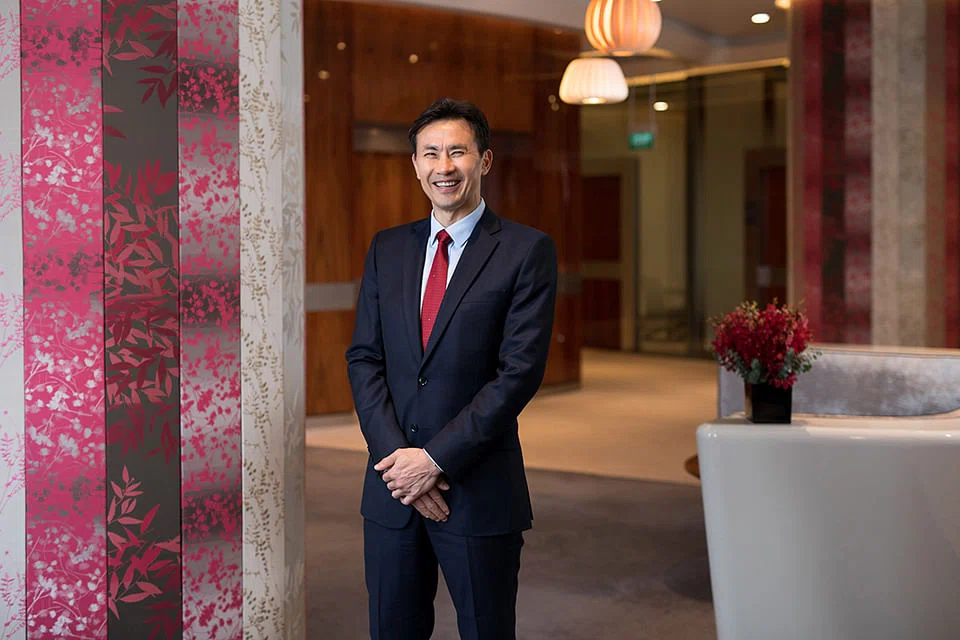
DBS Private Bank is seeing a wave of interest in environmental, social and governance (ESG) investments among its well-heeled clients in the past year, driven in part by the global health crisis which has accelerated the ESG agenda.
Assets under management (AUM) in its ESG funds rose 260 per cent as at May 2021, said Joseph Poon, group head of DBS Private Bank.
In another sign of this seismic shift in sentiment, when the private bank relaunched its MSCI ESG Outperformance notes, AUM grew by seven times that of the amount raised when it was first launched in 2018.
Doing good through the form of an ESG focus is likely paying off for DBS - while there was no breakdown on the contribution of ESG-related investments, the private bank saw its AUM jump 18 per cent year-on-year as at May 2021. This is significantly higher than pre-Covid levels, which used to range between 8 and 10 per cent.
For a sense of scale, DBS' wealth management AUM (which comprises three segments: Private Bank, Treasures Private Client and Treasures) rose 7 per cent year-on-year to a record S$264 billion in FY20.
The growing demand for ESG investments is in line with DBS' ambitions on the ESG front. Earlier in March, it set a target of having over 50 per cent of private banking AUM in sustainable investments by 2023, up from 41 per cent currently.
But this is "not just a numbers game", and a journey that the bank started years ago, Mr Poon told The Business Times.
The pandemic shone a spotlight on the need to position for the long term and staying on top of risks, he noted. ESG, as an additional screening layer on top of financials, helps identify potential non-traditional risks.
As ESG investing is still considered nascent in Asia, the private bank is focused on client education and engagement to understand what ESG really means, instead of looking at it as a fad aimed at preserving reputation.
"Clients in Asia, in particular, want to just write a cheque or build a school somewhere with their name on it and be done with it, but we felt that ESG is a far more heavily engaged process that touches all parts of our world," he said.
"The old kind of thinking about ESG is that you must give up something to do the right thing, or you can't do well and do good at the same time," he noted. "That myth has been around for many, many years - we want to break that."
For instance, its MSCI ESG Outperformance product that was first rolled out in 2018 was intended by the bank to debunk misconceptions that ESG compromises financial returns. To date, "almost all" clients have exited at profit, noted Mr Poon.
Recently in June, the bank launched its ESG-weighted portfolio ratings methodology so that clients can make more well-informed investment choices. He pointed out that this moves beyond rating individual holdings to rating portfolios holistically, allowing clients to factor in their long-term view of an asset.
This approach, he said, is key for Asia, where many assets tend to have lower ESG ratings than their Western counterparts. This comes as the region is home to many developing nations still in the early stages of economic growth, and may need time to improve their ratings, added Mr Poon.
These come on top of ongoing relationship manager (RM)-client conversations around ESG, and other engagement initiatives such as educational webinars and small-group discussions connecting clients and social enterprises that the DBS Foundation supports.
DBS Private Bank is making several decisive steps forward to reach its goal of having over 50 per cent of its AUM in sustainable investments.
For a start, it is expanding its sustainable investment products (defined as BBB-rated and above), and proactively reviewing its clients' portfolio ESG ratings through targeted advisory, working with them to improve. Since March, around 4,000 such client conversations around this have been held, he noted.
The latter involves replacing low-rated assets with higher-rated alternatives where suitable, or deploying new funds into sustainable investments, said Mr Poon.
When asked what ESG products clients are more inclined to favour, he said that there is no fixed pattern so far.
But the beauty of this ambiguity is that it brings clients closer to the bank as they are able to have frank, personalised conversations about their investments. The bank can address their specific concerns, rather than push products, he said.
With Asia's wealth transition taking place in the next decade from the ageing first generation of business founders to the next generation, he predicted that investments in ESG is "going to explode", given that younger people are more focused on investing in "something they can be proud of", and not for pure financial returns.
It is estimated that about a third of Asia's wealth will be in the hands of Millennials in the next five to seven years, according to a Financial Times report.
"The funny thing is that when it comes to ESG, it was a marginal topic maybe just three or four years ago in Asia, in particular, where economics is the driver," he noted.
His ultimate wish is that ESG will "no longer be a discussion" in three to four years' time.
"(I hope) it's something that's embedded in processes (and) in people's psyche," he said.
READ MORE: