

Wirecard funds supposedly held in trust by Citadelle with OCBC confirmed to be just fraction of initial claims
Claudia Tan HS
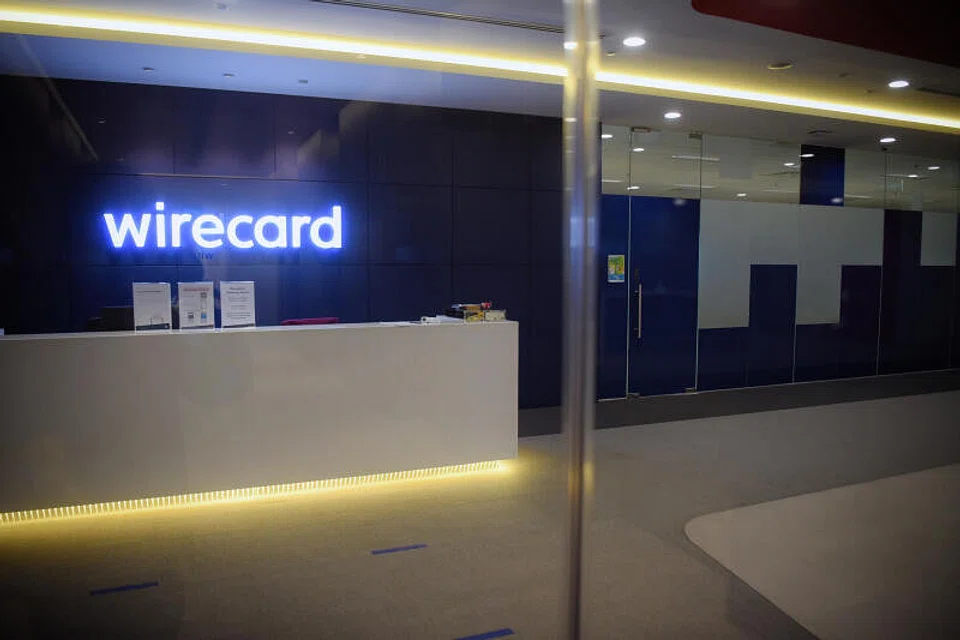
AS Wirecard's insolvency administrator seeks to unravel the mischief done at the payments group, details about the extent of the fraud are coming to light - including the roles of Singapore-based players.
In November, detailed bank records surfaced after Wirecard's insolvency administrator Michael Jaffe managed to obtain leave from the Singapore High Court to use these records in his insolvency case.
The records showed massive discrepancies between the amount Wirecard was supposed to have in accounts at OCBC, and what it actually had.
One reason given by Wirecard's auditor EY for the latter's failure to uncover these irregularities earlier was that local confidentiality laws prevented it from reaching the bank directly.
These bank statements were, however, obtained by lawyers from Oon & Bazul acting for Jaffe. They are being presented as evidence in insolvency proceedings in Munich, to declare Wirecard's previous financial accounts as void.
Citadelle Corporate Services had claimed, in letters sent from 2015 to 2018, that it was holding around 30 million euros (S$46.3 million) on trust for Wirecard in an OCBC account in Singapore. But bank statements revealed that there were just over 2,000 euros in those instances.
Meanwhile, sums of between 20 million euros and 84 million euros were supposedly held in a second account between December 2015 and December 2018. Bank statements revealed that there was in fact no money on 3 occasions. In December 2018, there was just over 2,000 euros in this account.
A third account had over US$21,000 in it as at July 2020.
In a fourth account, Citadelle had claimed to hold between 66 million euros and 365 million euros at various times from December 2015 to September 2019. The actual sum never exceeded 3.25 million euros, according to bank statements available till July 2020.
All 4 accounts were closed by July 2020 after all the money was withdrawn.
Banks in Singapore are obliged under section 47 of the Banking Act not to disclose, in any way, customer information. Typically, this means that banks in Singapore will not even confirm whether or not a person or entity has a bank account with them.
Wirecard's auditors had instead relied on confirmations of the funds from Citadelle. Its then director R Shanmugaratnam was last year charged for allegedly falsifying letters to Wirecard entities, Cardsystems Middle East, and Wirecard UK & Ireland, stating bogus balances held in his company's accounts.
Applications for the disclosure of bank records such as Jaffe has managed to obtain are in fact "rare and difficult to succeed in, due to Singapore's well-deserved reputation for upholding banking secrecy", said Suresh Divyanathan, partner at Oon & Bazul and lead counsel for Wirecard's insolvency administrator.
Nevertheless, Divyanathan said the recent process in Singapore's court does not "denigrate Singapore's banking secrecy reputation" but instead shows that "in exceptional circumstances, banks in Singapore can be ordered to reveal customer information to third parties, if the interests of justice demands it".
Confidentiality laws cannot be considered responsible for frauds and money laundering schemes in a company or financial system, said Reshmi Khurana, managing director and head of South-east Asia at Kroll, a risk consulting firm.
"Preventing such malfeasance requires a multi-pronged strategy on behalf of both the individual financial services companies and the regulators. This includes robust due diligence of third parties, transaction monitoring and efficient and nimble regulatory and judicial systems. A holistic approach to governance is required to prevent frauds like the one at Wirecard from recurring," Khurana added.
Wirecard collapsed in June 2020, after admitting that 1.9 billion euros in cash was missing from its books.
Net revenues from Wirecard's third-party acquiring (TPA) business were purportedly held by Shanmugaratnam and placed into bank accounts opened by him and maintained with OCBC till late 2019.
Wirecard had earlier disclosed that around half of its revenue is derived from its TPA business, but Jaffe is now arguing that the latest evidence from the OCBC bank accounts records confirms his suspicions that the TPA business never existed.
Separately, on Dec 14, the Accounting and Corporate Regulatory Authority (Acra) announced it has suspended Shanmugaratnam's registration as a Registered Qualified Individual (RQI) for 12 months, ending Dec 10, 2022, for providing false information in an annual return filed with Acra.
The suspension follows an investigation into a separate matter, for an annual return filed for a company called YO54 Holdings in 2018. An RQI is an individual who provides corporate secretarial services for business entities and transacts with Acra on behalf of his/her clients.
TRENDING NOW

Why US$100 oil, 5% US yields affect Singdollar, ringgit differently vs other Asean currencies

Anthropic to open Singapore office in October, sees it as ‘standout market’ for Claude

Singapore’s covered bond boom is largely a DBS story
Malaysian developer Eco World tops bids for Sin Ming area housing plot with S$1,612 psf ppr offer

