How will the return to office play out for the office market?
Hybrid working is here to stay, but the Singapore office market still has many positives going for it, including diversity of tenant mix


S SINGAPORE’S Central Business District awakes after hibernating for the most part of the pandemic years, a changed workplace landscape is emerging.
Workers are returning to offices, but it is evident that the hybrid work model – combining working from the office and remote work (typically from home) – is not expected to disappear.
One company that has made a decisive move is Dentons Rodyk, one of Singapore’s biggest and oldest law firms. Dentons revamped its office at UOB Plaza 1, reducing its space by 40 per cent from 60,966 sq ft to 36,618 sq ft, under a hybrid work model allowing its employees to work from home (or WFH) 1 to 3 times a week, shedding 2 floors of office space at UOB Plaza 1 in the process.
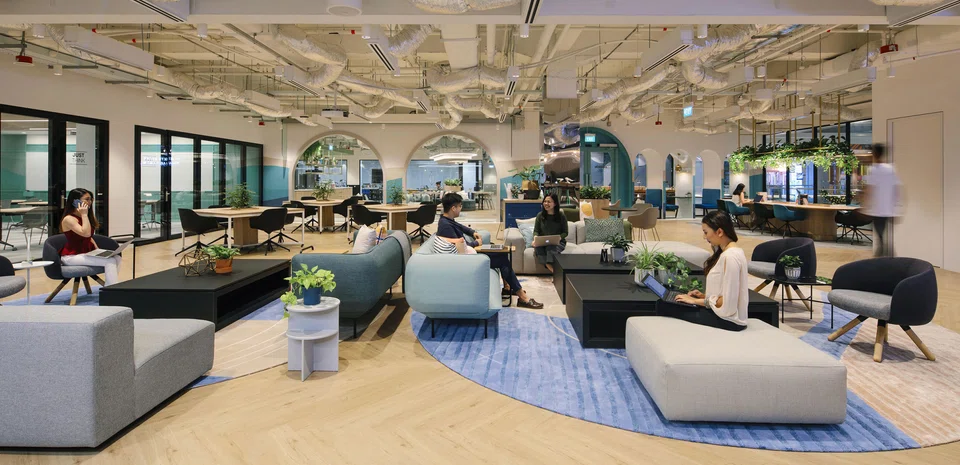
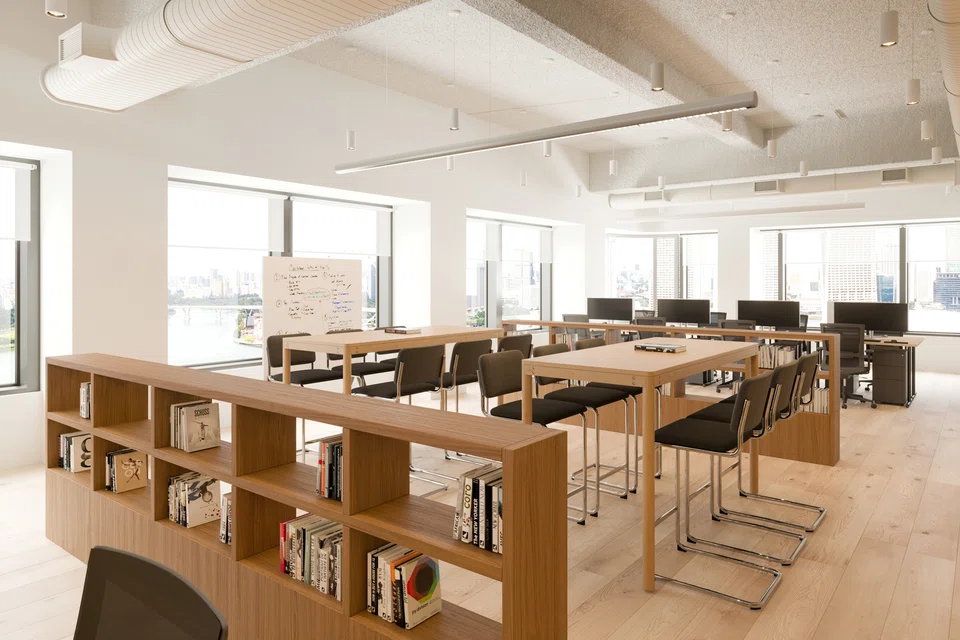
Dentons has also done away with assigned workspaces and instead implemented hot-desking, and created spaces to boost networking and collaboration. Senior partners share rooms, with each room shared by 2 partners and only 1 person using each room at one time. The phased renovation, which started in July last year, will be completed by the end of next month.
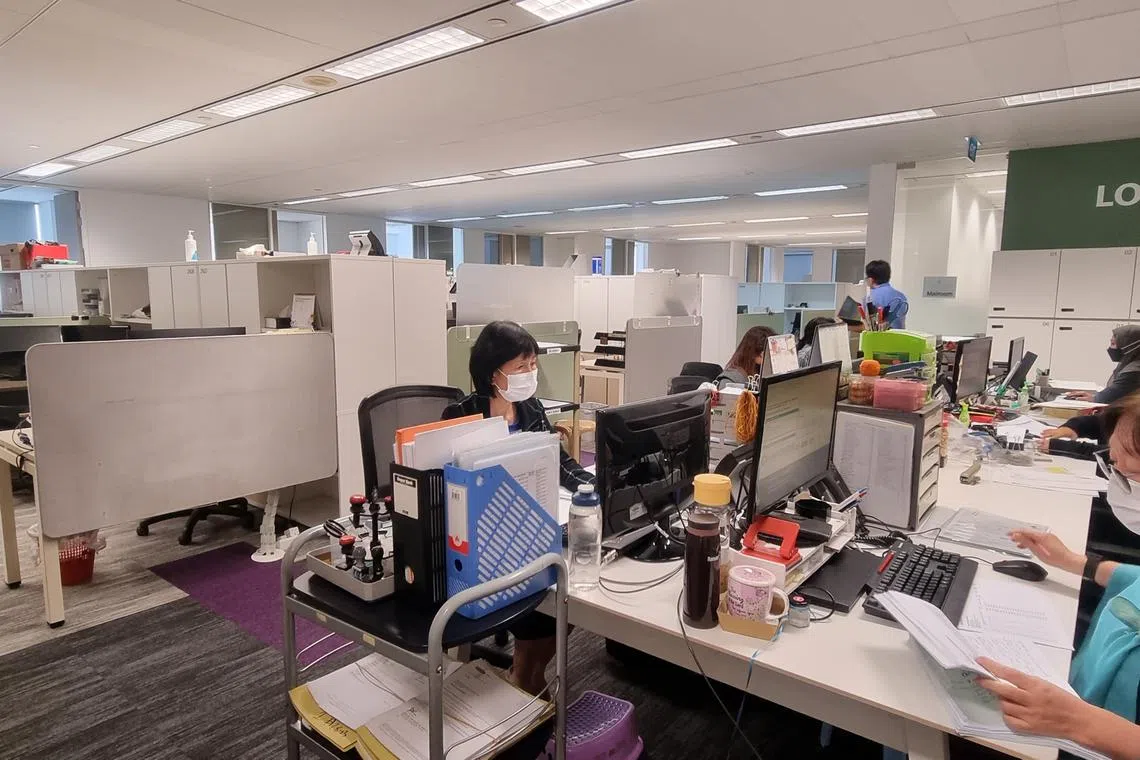
In one of the more significant reductions in office footprints arising from the adoption of hybrid work, Standard Chartered is poised to give up, in October this year, about 200,000 sq ft or half of the total 400,000 sq ft on 18.5 levels that it currently leases at Marina Bay Financial Centre (MBFC) Tower 1. This is part of the group’s shift to an agile working strategy.
Putting things in perspective, David McKellar, senior executive director and co-head of office services for Singapore at CBRE, observed: “Aside from some of the large banks, who even prior to the pandemic were adjusting their workplace models, we’re not seeing much in the way of space reduction by firms upon lease renewal/expiry.”
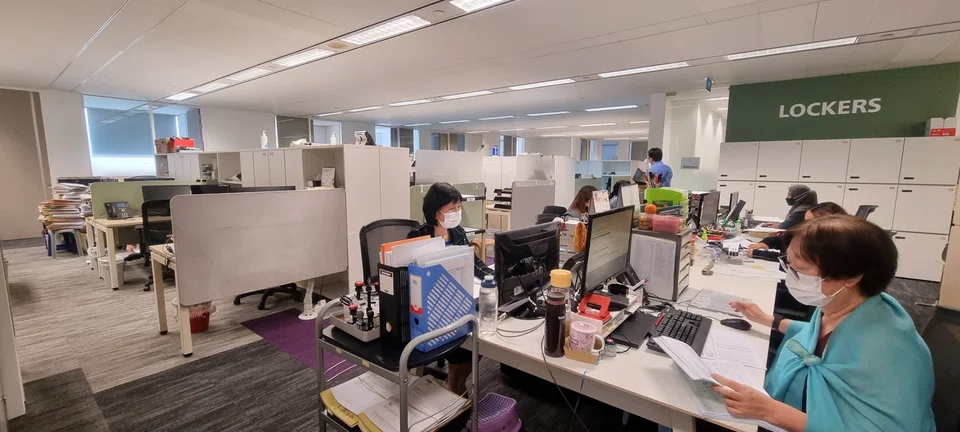
Much to the relief of office landlords, the level of workers returning to the office has increased steadily since Mar 29, when up to 75 per cent of employees who can work from home have been allowed to return to the workplace, up from the 50 per cent limit that kicked in at the start of the year, when the government lifted the default work-from-home rule.
CapitaLand Integrated Commercial Trust (CICT), which has office buildings in locations such as Raffles Place, Marina Bay and Tanjong Pagar, told The Business Times that the return of its office community has risen from about 37 per cent for the week ended Apr 1, 2022, to 43 per cent for the week ended Apr 8, and to 49 per cent for the week ended Apr 14.
A spokesperson for City Developments Ltd (CDL) said that since the relaxations on Mar 29, around 40 to 70 per cent of its office community (at Republic Plaza, South Beach, King’s Centre and City House) have returned to the office, as of Apr 14.
This is higher than the 20 to 50 per cent of its office community that had returned to the workplace, when the government lifted the default WFH requirement at the start of 2022.
JLL’s executive director of property asset management in Singapore, Derek Soh, said: “We are already seeing an increase in employees returning to offices across the office buildings islandwide managed by JLL; it was about an average of 30 per cent before Mar 29 and it is around 40 per cent in general now.”
“The results are varied,” said CBRE’s McKellar. “Some companies with client-facing, collaborative teams such as ourselves have consistently occupied offices to the maximum allowable capacity; so very close to 75 per cent of our seats in Raffles Place are being utilised on a day-to-day basis. Other firms, particularly those with globally consistent workplace policies, are still well below the allowable threshold.”
Another seasoned leasing agent noted that the doubling of the group size cap to 10 persons from Mar 29 has been an enabler, helping to draw people back to offices as they can go out for lunches with colleagues, or socialise over dinner and drinks after work.
However, some companies are finding it challenging to bring more employees back to the office. Savills Singapore executive director of research and consultancy Alan Cheong said: “While some Singapore workers do not like to WFH, more apparently do. The practice has been gradually ingrained in their psyche over the past 2 years and hybrid work is etched on the new working landscape.”
CDL’s spokesperson said: “Some of our MNC (multinational corporation) tenants, particularly from the financial and legal sectors, have shared that there have been some challenges in getting their workforce back to the office after 2 years of working from home. The preference for remote work arrangements is more prevalent among the Gen Z workforce.”
Savills’ Cheong, too, highlights that in a tight labour market, companies that enforce a return-to-office policy risk losing talent to companies that offer more flexible work options.
Balancing act
Or as JLL Asia-Pacific’s senior director of consulting Mireille Wan put it: “There is greater awareness of hybrid working and how employees have a greater choice of working in the office, from home or anywhere. Even the Singapore government is looking into making flexible work arrangements the norm, by 2024. Office tenants are trying to balance the government advisory allowing up to 75 per cent (of the) workforce to return to the office, and the preference to WFH.”
Office landlords and some tenants are stepping up efforts to woo workers back to offices. A spokesperson for Frasers Property Singapore said: “We have seen a recent spike in enquiries for booking of event and collaboration spaces available in our buildings like Frasers Tower, as tenants are looking to organise gatherings, activities and events for their employees.”
Some landlords are pitching in to organise activities, ranging from health/fitness events to classes for origami-folding and creating terrariums. Others are dishing out treats – such as coffee or fruits and discount vouchers at F&B/retail outlets within the project.
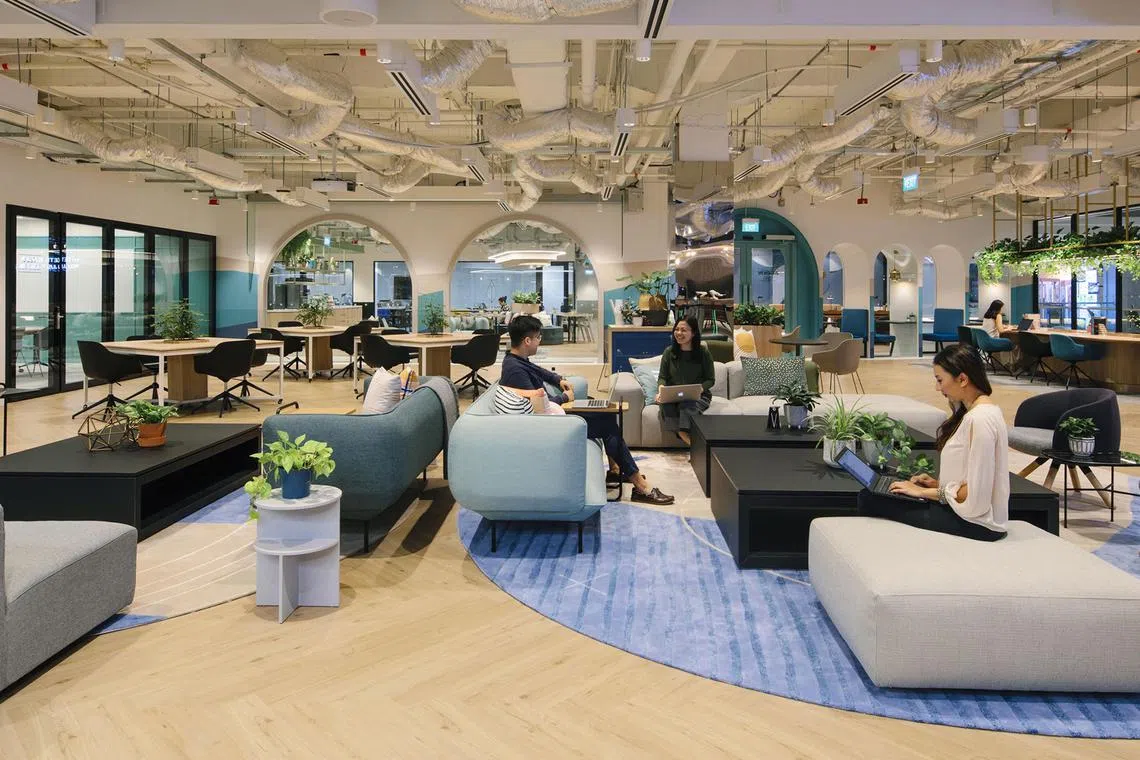
Some corporates have also redesigned their offices, introducing new facilities and with a focus on well-being, sustainability and collaboration.
As far as office occupier strategies go, what StanChart has done is seen as extreme in the banking world, with 80 per cent of its Singapore-based employees adopting flexible work arrangements, including working from home. The bank has said that it is “reinvesting and refreshing” its city offices to create a more open, conducive and collaborative environment.
Bank staff also have the option to work at StanChart’s 2 buildings in Changi Business Park; alternatively, they may work out of flexible space operator IWG’s various locations across Singapore if they find this solution closer to their homes. (StanChart has a global partnership with IWG, providing near-home workspaces across 3,500 locations.)
While rightsizing continues to work through the Singapore office market as tenants review space requirements as they adopt flexible working, there are a lot of positives going for the office sector.
For a start, implementing a hybrid work model may not necessarily lead to a cut in office space.
June Chua, executive director and head of office services at Colliers, said that while companies may reduce the number of workstations in the new office design, they will also need to add more collaboration space and meeting rooms for staff use, which are going to be the main reasons for staff coming to the office. “Whatever space being removed as workstations will go to creating such; hence floor area leased may be the same or even more,” she said.
McKellar of CBRE said: “In a hybrid working environment, companies still need to provision sufficient space to cater for peak periods of occupancy, which may be on a Tuesday, Wednesday and Thursday. With rising market rents expected over the medium term, firms may also be thinking that whatever they relinquish now, if miscalculated, may be more expensive to get back at a later date.”
The rising rental scenario comes amid tight supply this year from new office completions in the CBD, while more ageing office stock is expected to be taken off the market for redevelopment under the government’s urban rejuvenation schemes.
Said Colliers’ Chua: “With greater certainty of economic growth and work from home no longer the default, we anticipate that some companies will abort initial plans to downsize as business activities pick up and employees start to stream back to the office.”
Lately, Singapore also seems to be attracting an unexpected source of office demand, with some MNCs moving certain functions to Singapore from Hong Kong when the authorities rolled out strict social-distancing rules and border controls earlier this year amid a surge in Covid infections – although restrictions are now starting to be relaxed.
Market watchers are counting on healthy demand from occupiers in tech, non-consumer bank financial services, legal, professional services, private equity and wealth management, to support occupancy and rents, especially for the better-quality, greener, CBD Grade A and premium office buildings.
Earlier this year, KPMG leased 4 levels totalling about 125,000 sq ft in Asia Square Tower 2; it will be relocating from Hong Leong Building in Raffles Quay. ByteDance is said to in negotiations to lease some 120,000 to 130,000 sq ft at Capital Tower in Robinson Road. Chinese online retailer Shein recently took up 22,000 sq ft at MBFC Tower 3.
Said GuocoLand’s group general manager of asset management Valerie Wong: “The Singapore office market and tenancy mix is a diversified one. For every company that is thinking of rightsizing due to them deploying a hybrid workplace strategy, there will be other companies with expansion plans.”