

After latest rate hike, Federal Reserve looks set to drive US economy into recession
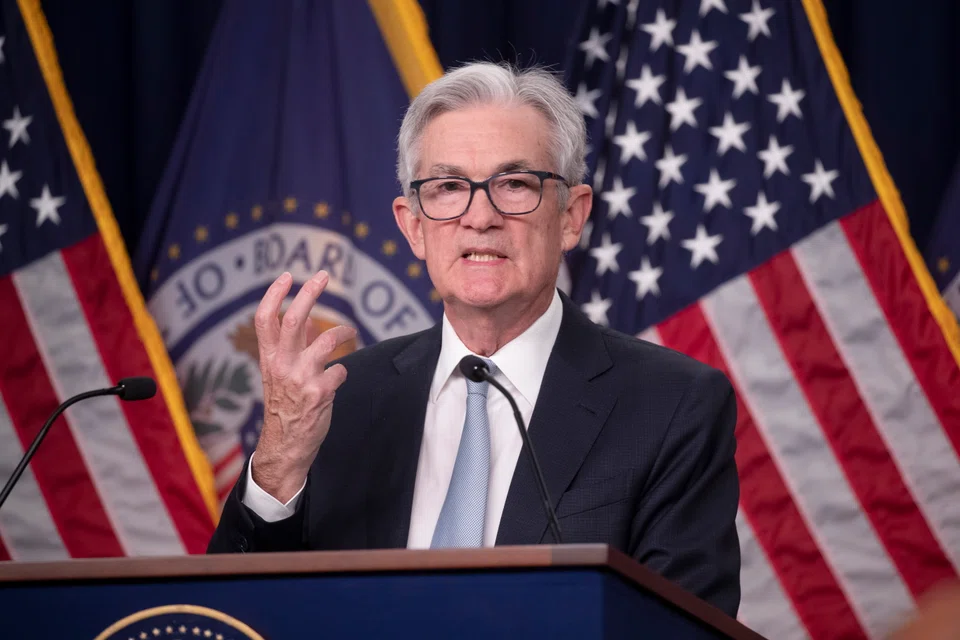
The US Federal Reserve was supposed to pivot at the end of its meeting on Wednesday (Nov 2), but it was the stock market that did so instead.
The markets initially rallied after the Fed’s statement seemed to open the exit door to its rate-hike cycle. But the rally soon petered out, and the biggest “Fed day” selloff in more than a year ensued after Fed chairman Jerome Powell slammed the door on any policy pivot.
The central bank raised interest rates by 75 basis points to bring its benchmark overnight rate to a range of 3.75 per cent to 4 per cent. It was the sixth rate increase of 2022 and the fourth of that ponderous size.
The action will push mortgage rates beyond their current 20-year high, and could cause more financial distress like the recent pension-fund crunch in the UK. All of that was already baked into stock prices, however.
The market’s focus was the wording of the statement, which the bulls scoured for evidence of the moderation in rate hike sizes promised in a recent Wall Street Journal report. The bulls seized upon a new line in the statement where the Fed said it would consider the “cumulative” tightening effects of policy when it makes its next decision.
The bulls interpreted that as the pivot they had been waiting for, that the central bank would raise rates more modestly from now on, and soon pause entirely while it waited to observe the cumulative effects of everything it had done so far. The Dow Jones Industrial Average leapt by over 400 points based on that rationale.
At his news conference, Powell - every inch the hawk in aspect and tone - began to systematically deconstruct the bulls’ theory. The market, he seemed to say, had the wrong end of the stick. It was premature to even talk about a pause, he said.
Far from retreating from the inflation fight, the Fed now anticipated raising rates above the 4.6 per cent level that it forecast as the terminal level in September. As Powell said, the Fed could reduce the size of the hike at the December meeting or the February meeting to 50 basis points, but this would be in no way a signal that the end of the cycle was nigh. The stock bulls had confused the planned size of hikes with the planned duration of the cycle.
“It is more about the destination (the terminal rate) and less about the journey (the pace at which the Fed gets there),” said analysts at brokerage Bank of America Securities.
“Hike slower but end higher,” was the way analysts at Standard Chartered put it.
Stocks slipped into the red as Powell debunked hopes of a pause in hikes. The rout gathered force when he noted that economic and inflationary data remained strong in his eyes. When he added that the central bank may not be able to defeat inflation without causing a recession, the selling cascaded. The Nasdaq Composite finished down by 3 per cent, and that was before a dire warning about smart-phone demand from chipmaker Qualcomm.
Powell said he believed the bigger risk was stopping rate hikes too soon, rather than too late. Most Wall Street observers are convinced of the opposite, concerned that the Fed has already gone too far.
To Jim Paulsen, chief investment strategist at money manager The Leuthold Group, the Fed should have been looking at cumulative effects months ago. It’s as if the central bank were running a 15th century war, making decisions via letters that take weeks to arrive at the front, and arrive at very different situations to those described in the last dispatch.
In Paulsen’s eyes, the Fed should also consider the cumulative effects of the yearlong spike in the value of the dollar - which alleviates inflation on imports - and other financial conditions. The Fed’s battle is already won, he said.
“The evidence on inflation is pretty dramatic that it’s peaked out and it’s coming down,” said Paulsen. “Has it shown up that much in headline numbers? Maybe not yet but it’s going to, because there’s so much negative force coming down the pipe.”
As Powell acknowledged when he said that the window for a “soft landing” is narrowing, the central bank looks set to drive the economy into recession. The only question is how deep that recession might be. If the Fed pivots too late, it could cause months of unnecessary economic pain, thanks to the lag effects.
Some took heart from the tone of the statement, which acknowledged for the first time that the impact of policy was important to monitor.
“They have confirmed that while they are committed to fighting inflation, they have no interest in being so aggressive that they put the US economy into a steep recession. They continue to try to thread the needle,” said Oliver Pursche, senior vice-president at financial advisory Wealthspire.
The October rally - the biggest gain on the S&P500 on record - was entirely predicated on hopes for a pivot in Fed policy. With no pivot in sight, the September lows are likely about to be tested, with another 10 per cent selloff on the broad index a distinct possibility.
TRENDING NOW

Singapore to use ‘every legal and regulatory lever’ against companies linked to haze: Shanmugam
Far East Organization’s The Serra Residences sells less than a quarter of units released at average S$3,460 psf

DBS, OCBC, UOB face rate hike reality check

The only common thing in S-E Asia is that we all eat rice: Cisco’s Asean president

