

AI boom fuels record US$14.5 billion in Taiwan tech firm borrowing
The borrowing volume is nearly double the US$7.5 billion the firms raised in the same period last year
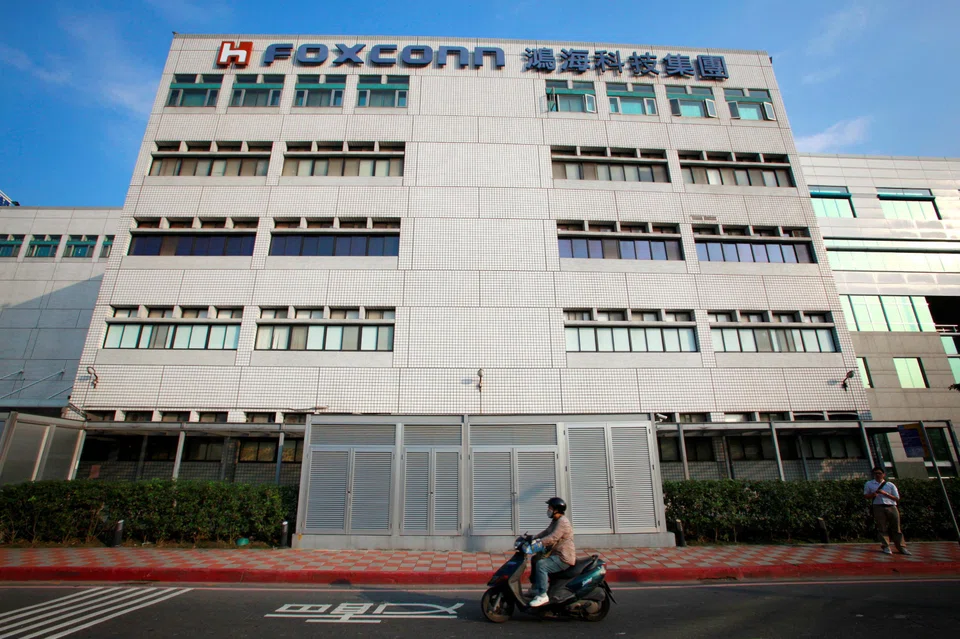
[HONG KONG] Taiwanese tech firms have completed a record US$14.5 billion of debt deals so far this year, as they race to secure financing to meet soaring demand for artificial intelligence capacity.
Hardware manufacturers such as chip component makers and server builders, vital parts of the global AI supply chain, have been driving the surge in borrowing as procurement and capital expenditure needs accelerate. The trend mirrors a global debt binge by tech companies as they build up AI infrastructure.
The borrowing volume is nearly double the US$7.5 billion the firms raised in the same period last year, according to data compiled by Bloomberg, and it’s on track to climb further as more deals fill the pipeline.
Taiwanese tech firms play a crucial role in the development of AI capacity, with Nvidia, Microsoft and OpenAI increasingly relying on them to fabricate their chips and build their servers. That’s helped boost shares of not only tech behemoths such as Taiwan Semiconductor Manufacturing Company and Hon Hai Precision Industry, but also those of smaller AI players, turning the island’s stock market into the fifth largest in the world.
Of the total amount of financing, loans made up the biggest chunk, with US$6.2 billion in deals so far this year, while tech firms issued US$5.9 billion of convertible bonds and US$2.4 billion of corporate notes.
“AI has substantially scaled up the value and complexity of traditional server hardware,” said Randy Abrams, head of research at UBS Taiwan. Manufacturers need more working capital as they upgrade production lines and invest in new facilities in North America and South-east Asia to meet demand, he added.
Among the largest borrowings in the pipeline is Hon Hai’s up to US$1.5 billion convertible bond to help fund the procurement of materials from overseas. That follows a US$1.1 billion-equivalent loan the firm raised in February. Hon Hai, long known for its work assembling iPhones for Apple, expects AI hardware to be its key growth driver this year, as the business has surpassed smartphones as the biggest contributor to sales.
While TSMC, the world’s biggest chipmaker, relies heavily on cash from operations to support its capital expenditures, smaller firms are looking for paths for quick financing as their funding requirements become more urgent.
“Many Taiwanese tech firms will require significant capital” to contribute to global AI development, said Matthew Liaw, head of the structured finance division at CTBC Bank. As a result, financings, including syndicated loans, “are expected to grow substantially”, he added.



Giga Computing Technology, which makes high-end AI servers, just launched its first syndicated loan this month, as it looks to raise about US$1 billion. That comes on the heels of a US$500 million convertible bond sale by its Taiwan-listed parent, Gigabyte Technology.
The optimism around AI has helped some companies that are rushing to raise cash shorten the fundraising process. In its first foray into the syndicated loan market, memory controller supplier Phison Electronics Corp. this month wrapped up its US$400 million facility after marketing the deal in about a month rather than the six weeks that are typical for most loans in Taiwan.
Phison, which has partnered with Micron Technology and SK Hynix, was seeking the financing to help cover advance payments for goods, sources familiar with the matter said earlier.
Despite the fundraising spree, AI-related investments face an array of uncertainties, including geopolitical tensions and shifting trade policies that could disrupt capital flows. Investors are also growing concerned that firms are loading up on large amounts of debt to fund AI buildouts with uncertain payoffs.
Still, the financing deals in the pipeline mean investments will likely continue at least in the near term.
“We see real demand for AI now,” said CTBC Bank’s Liaw. “We, however, remain prudent in lending to the rapidly changing sector,” he added. BLOOMBERG
Decoding Asia newsletter: your guide to navigating Asia in a new global order. Sign up here to get Decoding Asia newsletter. Delivered to your inbox. Free.
Share with us your feedback on BT's products and services
TRENDING NOW

Once staunchly pro-China, Malaysian Chinese businesses are now distancing themselves from Beijing

Looking beyond looming CEO succession, should UOB potentially pursue a transformative merger?

Could stablecoins be the future of money?

Grab CEO’s wife Chloe Tong on life with Anthony Tan and finding her purpose

