

Analysts see hope for some S-Reits excluded from FTSE EPRA Nareit index series

AS the excitement over the recent addition of 11 more Singapore-listed real estate investment trusts (S-Reits) and property trusts to the FTSE EPRA Nareit Global Developed Index starts to die down, attention is turning to the smaller names that have failed to make the cut. Analysts have suggested a few of them still have the potential to grow and make their way into the index series later, but others may not recover.
Of the 40 actively traded S-Reits and property trusts, around a quarter remain sidelined from FTSE's global index series. This is despite a lowered inclusion market cap threshold for the Developed Asia series, which resulted in several additions at the latest quarterly review.
The 10 S-Reits that are excluded from the index series are ARA US Hospitality Trust (ARA H-Trust) XZL, BHG Retail Reit BMGU, Dasin Retail Trust CEDU, EC World Reit BWCU, Elite Commercial Reit MXNU, Frasers Hospitality Trust ACV, IReit Global UD1U, Lippo Malls Indonesia Retail Trust D5IU, Sabana Shari'ah Compliant Industrial Reit (Sabana Reit) M1GU and United Hampshire US Reit ODBU .
Another two - Eagle Hospitality Trust (EHT) and RHT Health Trust - are not actively traded. EHT has been suspended since March 2020, while RHT Health Trust is a cash trust after it divested its portfolio in January 2019.
The investable market cap threshold was lowered in June to 0.1 per cent of the securities' respective regional indices for additions to the Developed Asia series, compared to 0.3 per cent previously.
For deletions from the index series, the threshold was lowered to 0.05 per cent from 0.15 per cent.
Inclusion is expected to help the S-Reits improve liquidity, investor visibility and potential investability, as well as lower the cost of equity and make it easier for distribution per unit-accretive acquisitions via partial equity raising, said Citi analyst Brandon Lee in a recent report.
The 11 new inclusions saw a boost in trading activities on Sept 2, the day after the quarterly index review announcement. Their traded value jumped 353 per cent on the day, compared with their 12-month total average daily traded value (ADTV).
The three S-Reits that saw the biggest increase in ADTV on Sept 2 were ARA Logos Logistics Trust (+541 per cent), Starhill Global Reit (+431 per cent) and SPH Reit (+426 per cent).
Those that haven't made the index, however, are facing a much less positive prospect. Their trading volumes are expected to remain low without the added visibility and investability that comes with inclusion into the index series.
Veteran Reit investor Gabriel Yap noted these excluded S-Reits have market capitalisations of less than S$1 billion, and generally suffer from poor liquidity. The poor liquidity could lead to accentuated ups and downs in unit prices, he said.
"If there is a major seller in the market, it is hard to put a floor to the decline," said Mr Yap, executive chairman of investment firm GCP Global.
Another hurdle these smaller S-Reits face is difficulty in making acquisitions to improve their property portfolios.
Said Mr Yap: "A Reit is only as good as the assets it owns."
Already, many of these S-Reits have very high yields, making it difficult to buy assets at an accretive valuation. On top of that, they could struggle to raise funds by issuing more units.
With limited avenues for growth, should these smaller S-Reits just wind up? And should investors steer clear of them entirely?
Mr Yap said inclusion in the index series should not be seen as "very important". "Qualifying for the index doesn't mean fortunes will change overnight," he added.
He believes other factors, such as the quality of sponsors and assets as well as the ability of the Reit to transform itself, are more important in determining the success of a Reit.
The way Jefferies analyst Krishna Guha describes it, there are "nuances" to each Reit and inclusion into the index should not be seen as a one-size-fits-all solution.
"Notwithstanding the fact that the 10 Reits are not included in the index, half of them have outperformed the FTSE S-Reit Index year to date," Mr Guha noted.
RHB analyst Vijay Natarajan agreed: "Investors should holistically evaluate the Reit in terms of size, asset class, market positioning, competitive edge and growth strategy, and compare against valuation of peers to identify potential Reit investments."
He sees some potential in these 10 excluded S-Reits, with a chance that some "will eventually grow in size and get included in the future, which may lead to an uplift in valuation".
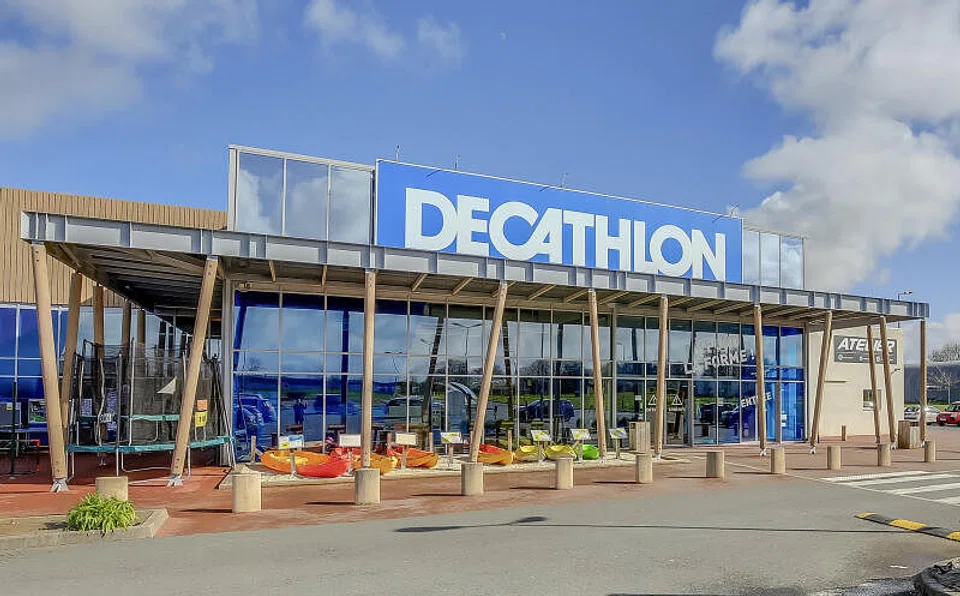
RHB is maintaining its "buy" call on IReit Global after its acquisition of 27 retail assets in France that are fully leased to sporting goods retailer Decathlon.
"IReit Global's latest acquisition of Decathlon assets has further enhanced its income resilience and diversified its tenant and geographical mix," said Mr Natarajan, adding that the move showed the Reit managers' "capability in adding hidden gems".
"The strong support from two good quality sponsors and modest gearing positions it for future inorganic growth," he added.
CGS-CIMB analysts Lock Mun Yee and Darren Ong highlight Elite Commercial Reit as having a potential re-rating catalyst in the form of rental uplifts in FY2023.
"We like Elite Commercial Reit's stable income portfolio, with inbuilt growth through its inflation-linked rental structure and inorganic growth potential," they said in a recent note. CGS-CIMB has an "add" call on the UK-focused Reit.
Meanwhile, DBS analyst Geraldine Wong has highlighted ARA H-Trust as a potential beneficiary of "a summer leisure demand spillover into H2 2021 and the return of corporate travel".
In a recent report, Ms Wong said she expects "a sustained recovery" for ARA H-Trust and is keeping her "buy" recommendation on the counter.
"With travel demand turning up, we believe that an improvement in cashflows in H2 2021 will support higher portfolio valuations. We see this catchup in valuations and lower gearing to be positive catalysts for the stock," Ms Wong said.
Inorganic growth may be another potential catalyst for these smaller Reits.
The local Reit market has been consolidating, with most managers arguing that size matters for a Reit. In 2018, ESR-Reit J91U merged with Viva Industrial Trust. In 2019, OUE Commercial Real Estate Investment Trust TS0U merged with OUE Hospitality Trust while Ascott Residence Trust HMN merged with Ascendas Hospitality Trust. And last year, Frasers Logistics & Industrial Trust merged with Frasers Commercial Trust BUOU while CapitaLand Mall Trust merged with CapitaLand Commercial Trust C38U .
Last year, Sabana Reit and ESR-Reit also attempted a merger. In their communications to unitholders, managers of both Reits had cited increased potential for inclusion in the FTSE index series as one motivation for the merger.
The merger attempt was unsuccessful as unitholders of Sabana Reit had protested the deal's valuation of Sabana Reit.
But RHB's Mr Natarajan is of the opinion that a Reit should not merge or acquire another Reit for the sake of growing bigger.
"Rather, a combination of factors, such as the operational synergies, diversification benefits, cost rationalisation, distribution per unit (DPU) or net asset value (NAV) accretion, along with growth potential, should be taken into consideration when evaluating a merger," he said. "A holistic approach in value creation should be considered."
READ MORE
TRENDING NOW

Government to bring forward raising of retirement age, give employers more financial support to create flexi-load jobs
Former minister Maliki Osman, Revolut chairman join Asia Gulf Holdings advisory board

Is Manila Asia’s new dining hot spot?
Simba at risk of losing operating licence over spectrum misuse

