

Analysts upgrade DBS, lift target price on improved forecasts, wealth franchise growth
Increased inflows into Singapore from a flight to safety and the strong Singapore dollar may benefit bank, says OCBC Group Research

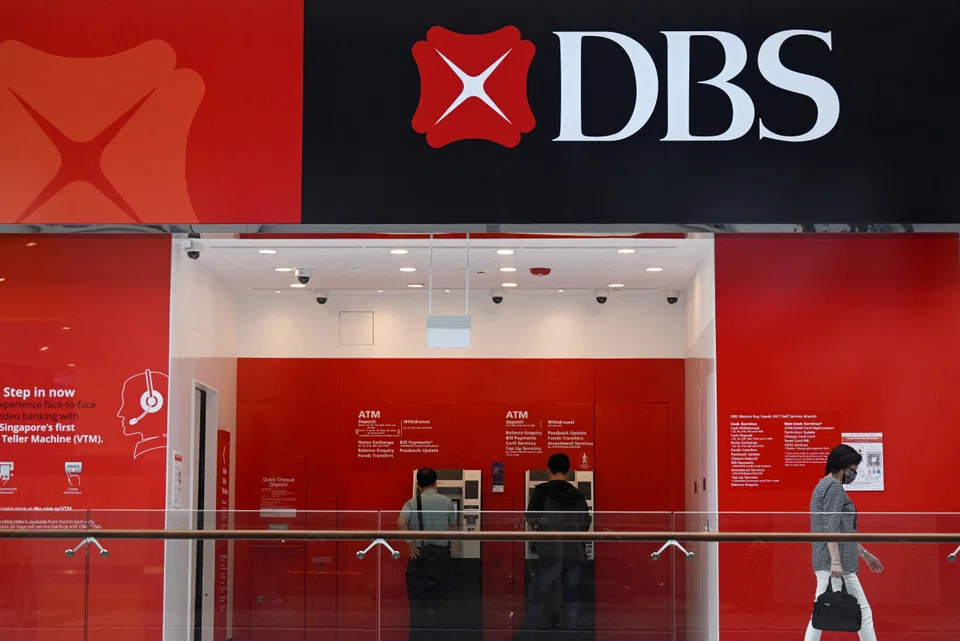
[SINGAPORE] CGS International Securities Singapore (CGSI) and Macquarie upgraded their calls on DBS , citing improved forecasts for Singapore’s largest bank after its strong first-quarter earnings beat expectations last week.
Following DBS’ earnings release on Thursday (Apr 30) – where its net profit rose 1 per cent year on year to S$2.93 billion and surpassed Bloomberg analysts’ expectations – CGSI upgraded the bank to “add” from “hold”, raising its target price to S$63.80 from S$60.
“We turn more constructive on DBS after its analyst briefing on Apr 30, due to its resilient net interest income (NII) and stronger growth in its wealth management fees,” said CGSI analysts Tay Wee Kuang and Lim Siew Khee.
Similarly, Macquarie upgraded DBS to “neutral” from “underperform”, and lifted its target price by 8 per cent to S$52.38 from S$48.56.
Macquarie analyst Jayden Vantarakis noted that DBS’ guidance for 2026 has turned “slightly more upbeat”.
He noted that DBS now thinks its earnings “have a good shot at coming in flat year on year for FY2026”.
Citing DBS’ resilient Q1 earnings, strong balance sheet and existing credit provision buffers in place, he expects the bank to post a roughly 2 per cent year-on-year increase in profits for FY2026.
Macquarie raised its 2026 to 2028 estimates for DBS’ earnings per share (EPS) by 3 to 6 per cent, on account of better NII and profitability.
CGSI also lifted its EPS forecasts for FY2026 to FY2028 by 1.1 to 1.3 per cent, citing the bank’s “resilient” NII and stronger growth in wealth management fees.



PhillipCapital on Monday also raised its target price to S$61 from S$60 and maintained its “accumulate” call. OCBC Group Research on Thursday increased its fair value estimate to S$60.93 from S$59.43 and assigned the bank a “hold” rating.
Macquarie’s Vantarakis noted that DBS’ Capital return plans remain in place for FY2026 to FY2027 and that the bank may benefit from long-term opportunities, even as it faces near-term risks.
He pointed out that DBS has de-risked its consumer and SME portfolio: “DBS believes supply chain impacts on its clients from the Middle East conflict can be contained and expects medium-term lending opportunities in infrastructure and renewables to arise.”
Wealth business growth may drive earnings
Growth in DBS’ wealth business may support earnings, analysts said.
CGSI’s Tay and Lim noted that the investment house’s improved rating for the bank accounts for “stronger wealth management fee growth that would allow DBS to eke out earnings growth in FY2026, with potential upside on better deposits growth”.
Elevated geopolitical tensions could benefit DBS’ wealth business, said OCBC head of equity research Carmen Lee.
“With the flight to safety and the strong Singapore dollar, we expect some inflow of funds into Singapore. This should be positive for DBS’ wealth business,” she said.
This, alongside market expectations of no rate cuts by the US Federal Reserve this year, should mitigate an “otherwise challenging situation for banks”, she added.
Citing management, she noted that the bank has “limited direct exposure” to the Middle East.
She also said that wealth income currently accounts for 53 per cent of total fee income, up from 48 per cent in Q1 2025.
Moreover, DBS has grown its wealth assets under management from S$291 billion in 2021 to S$492 billion currently, which is a “credible compounded annual growth rate of 14 per cent per year”, she added.
“With this growing base, we expect that the group will continue to grow its wealth franchise including more products and locations.”
Similarly, PhillipCapital research analyst Glenn Thum concurred that wealth flows and fees could fuel growth.
“We nudge up our FY2026 earnings estimates by 1 per cent from higher wealth management estimates,” he said.
He expects non-interest income to remain the primary growth driver, while bancassurance could provide counter-cyclical diversification to investment-linked wealth management fees.
Decoding Asia newsletter: your guide to navigating Asia in a new global order. Sign up here to get Decoding Asia newsletter. Delivered to your inbox. Free.
Copyright SPH Media. All rights reserved.
TRENDING NOW

Grab CEO’s wife Chloe Tong on life with Anthony Tan and finding her purpose

HDB reviewing ‘jumbo’ flat scheme after Telok Blangah unit listed for sale at S$2.18m

He built the Vingroup empire. Now South-east Asia’s richest man is handing some key roles to his sons

Singapore judge raises doubts iron ore trader Radiant World is owed US$1 billion

