

Asian equities hold ground as Japan bond jitters ease; Wall Street up in early trade
Spillover from Japan’s debt market moves appear limited as regional investors turn to policy signals from Davos

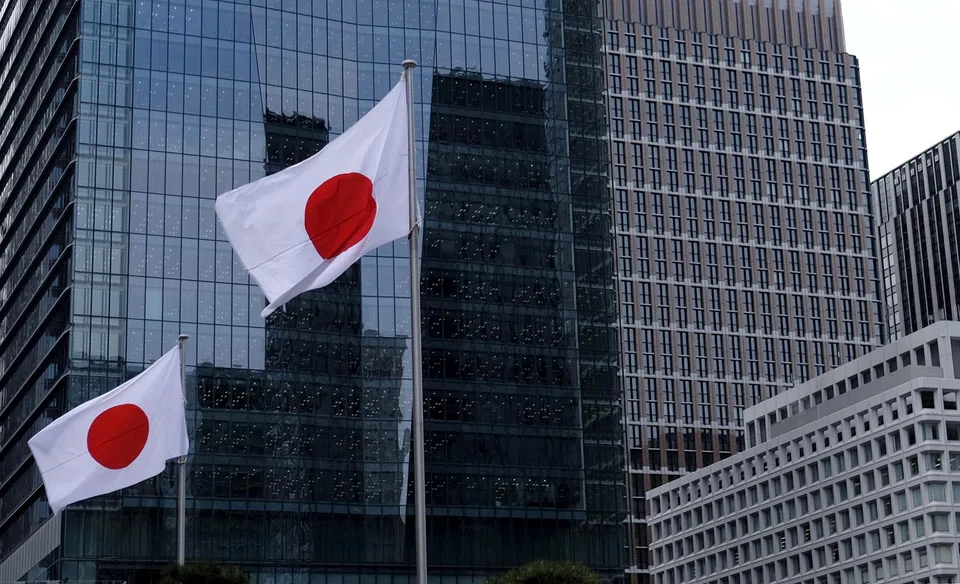
[SINGAPORE] Asian equity markets remained on a stable footing on Wednesday (Jan 21), with most regional indices holding on to their year-to-date gains, as the sell-off in long-term Japanese government bonds eased after the previous day’s spike.
In Asia, analysts expect spillover effects from the recent slump in the world’s third-largest debt market to be “limited”, noting that most Japanese government debt is held domestically and that intervention by local banks is likely.
Later on Wednesday, investor focus shifted to US markets as President Donald Trump addressed the World Economic Forum in Davos, Switzerland.
Trump, who began speaking at 9.38 pm Singapore time, appeared to – for the first time – definitively rule out the use of force in acquiring the Danish territory of Greenland.
“I’m seeking immediate negotiations to, once again, discuss the acquisition of Greenland by the United States,” he said.
US equities appeared to welcome Trump’s remarks, opening higher at 10.35 pm Singapore time. The S&P 500, Dow Jones Industrial Average and Nasdaq Composite were up 0.3 per cent, 0.4 per cent and 0.1 per cent, respectively.
Meanwhile, the US dollar index – which measures the greenback against a basket of six major currencies – was down 0.1 per cent at 98.53 points. Gold extended its rally to fresh record highs, with spot prices touching US$4,888.42 per ounce.
“We believe spillover risks (from Japan) remain limited,” said Masahiko Loo, senior fixed-income strategist at State Street Investment Management. “Pension funds remain stable long-term holders (of long-term debt), and Japan’s self-funded structure (90 per cent domestic ownership) mitigates systemic risk, making broader financial stress unlikely.”
Loo expects Japan’s yield curve to remain steep through the first half of the year, before stabilising and “gradually flattening” as bond issuance patterns adjust and local banks return as buyers.
Asian markets
Singapore’s benchmark Straits Times Index closed 0.4 per cent lower at 4,809.88 on Wednesday, but was still up 3.5 per cent year to date. Malaysia’s KLCI rose 0.4 per cent to 1,705.81, taking its year-to-date gain to 1.5 per cent.
Hong Kong’s Hang Seng Index increased 0.4 per cent to 26,585.06, with a 3.7 per cent gain for the year so far, while South Korea’s Kospi added 0.5 per cent to 4,909.93, bringing its year-to-date advance to 16.5 per cent, Bloomberg data showed.
In Japan, the benchmark Nikkei 225 slipped 0.4 per cent to 52,774.64, but remained up 4.8 per cent for the year.
The relative resilience of Asian equities contrasted with the US market, which fell sharply in Tuesday’s session and erased most of its year-to-date gains.
As at Tuesday’s close, the S&P 500 dropped 2.1 per cent to 6,796.86, pushing it into a 0.9 per cent decline for the year.
The Dow fell 1.8 per cent to 48,488.59, narrowing its year-to-date gain to 0.9 per cent, while the Nasdaq slid 2.4 per cent to 22,955.94 and was down 1.2 per cent year to date.
Tuesday’s pullback in US equities represents a “healthy market correction following the strong, largely uninterrupted rally since November”, wrote Mathieu Racheter, head of equity strategy research at Julius Baer, in a Wednesday note.
“This combination of a sharp increase in yields and policy uncertainty (from the Trump administration’s latest tariffs over Greenland) amplified the equity correction, although the move still appears driven primarily by positioning and sentiment rather than a structural deterioration in the macro outlook,” Racheter added.
Snap elections
Investor attention has sharpened in recent days after long-term Japanese bond yields surged to multi-year – and in some cases multi-decade – highs, as markets digested Japanese Prime Minister Sanae Takaichi’s decision to call snap elections.
On Wednesday, Japan’s 10-year government bond yield was flat at 2.29 per cent, while the 20-year yield slipped slightly to 3.24 per cent and the 40-year tenor was little changed at 4.07 per cent.
This followed a sharp sell-off on Tuesday, when the 40-year yield climbed to 4.22 per cent – the highest level since the maturity was introduced.
Yields on shorter maturities also touched decade-high levels, with the 10-year reaching 2.38 per cent, its highest since 1999, and the 20-year rising to 3.47 per cent.
The bond market rout came a day after Takaichi – who took office in October and currently enjoys Cabinet approval ratings of around 70 per cent – said she intends to dissolve parliament and call for a snap election on Feb 8.
On the same day, Japan’s first female prime minister also unveiled an election pledge to cut the consumption tax on food to zero from the current 8 per cent for the next two years, stoking concerns over Japan’s fiscal outlook.
Eliminating the tax would cost about five trillion yen (S$40.6 billion) annually – equivalent to roughly 0.8 per cent of Japan’s 2024 gross domestic product – noted Tomo Kinoshita, global market strategist for Japan at Invesco, in a Wednesday note.
Japan’s debt-to-GDP ratio stood at 203 per cent as at late 2025, based on CEIC data.
“With no clarification on how the proposed tax cuts would be financed, the prevailing assumption is that the government would have to issue more bonds,” Kinoshita said.
“Concerns over Japan’s future fiscal health have led to an upwards trudge in long-term yields, which exacerbates fiscal pressures even more through higher debt-servicing costs,” he added.
TRENDING NOW

DBS, OCBC, UOB rout lops billions off STI as inflation, rate concerns spook investors

Grab CEO’s wife Chloe Tong on life with Anthony Tan and finding her purpose

OCBC sheds S$8 billion in value as shares close nearly 6% down; analysts cautious on banks

Deal between tycoon friends sparks scrutiny of Philippine power sector

