Asset light or asset heavy? It need not be ‘either or’, says GuocoLand CEO
The group is open to divesting assets, but there must be attractive opportunities to redeploy funds
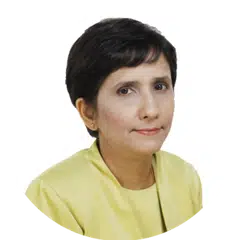
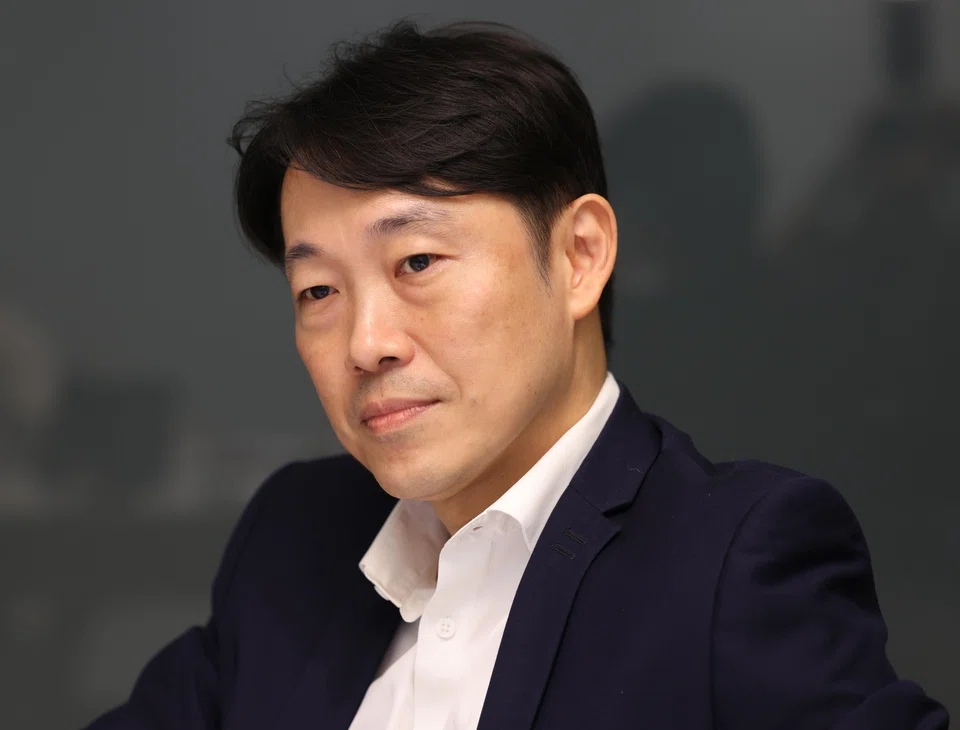
[SINGAPORE] GuocoLand may not have followed the asset-light route of some Singapore property groups, but its group CEO Cheng Hsing Yao made the point that there is no need to choose between being either asset light or asset heavy.
“One may choose to hold some assets and divest others, whether partly or fully. It need not be an ‘either or’ approach. It is actually a continuum and over time, we can shift along that continuum,” he said.
He emphasised that GuocoLand does not “hold assets just for the sake of holding assets”.
“We are open to divesting assets,” he added. “The critical consideration is this: If we were to sell an asset, are we able to redeploy the funds into equivalent or better opportunities?”
In a recent interview with The Business Times, Cheng made the case that GuocoLand offers investors the best of both worlds – steady recurring income growth from rental of investment properties, and participation in the higher-return property development segment.
He acknowledged that some investors may not sufficiently understand the group’s twin-engine growth strategy.
“The residential property development business captures a lot of limelight and excitement, and some people only see that part of our business, but miss out that we have this other very important investment engine that primarily supports our ability to provide stable dividends via exposure to some of the best office assets in Singapore.
“While the return on equity (ROE) for recurring income is lower, it gives us predictability of growth, providing a base to support sustainable dividend increase.”
On the other hand, income from GuocoLand’s Singapore residential property development business is more volatile, fluctuating according to the number of projects it has and their stages of development.
“However, the development business has higher ROE and creates the capital to expand our business – for instance, to buy new sites or invest in a new business,” said Cheng.
“So in that sense, the fluctuations in the residential market do not necessarily impact our ability to sustain the dividend,” he added.
GuocoLand shareholders will receive a first-and-final dividend per share of S$0.08 on Nov 18 for the financial year ended Jun 30, 2026. This is up from the payouts of S$0.07 for FY2025 and S$0.06 for FY2024.
Cheng also cited GuocoLand’s capabilities in the entire real-estate value chain as a competitive strength – beginning with site selection; followed by planning and design; property development and investment; sales and leasing; and asset and property management.
Having expertise in these areas gives the group flexibility, enabling it be more resilient in the long run, he noted.
“When you have the full range of expertise, it allows you to respond to different kinds of market cycles better, because you are able to do various things or seize different opportunities, or respond to changes in the market. Let’s say there are not a lot of assets to buy. We can build.”
GuocoLand is part of Quek Leng Chan’s Hong Leong Group of Malaysia. The billionaire tycoon controls about 72 per cent of GuocoLand.
As at end-FY2026, the value of GuocoLand’s investment properties stood at S$6.86 billion, or 2.2 times the S$3.05 billion as at end-FY2017.
GuocoLand’s S$293 million rental revenue from investment properties in FY2026 was nearly 4.2 times the S$70 million in FY2017. Both the investment property and rental figures are based on 100 per cent interest in the properties.
Milestone moments for second engine
Establishing GuocoLand’s second engine – a pool of investment properties generating a recurring income stream – has been more than a decade in the making.
A key milestone was the 2010 award of the Guoco Tower site above Tanjong Pagar MRT station at a state tender. The mixed-use integrated project’s office component of 890,000 square feet (sq ft) of net lettable area received Temporary Occupation Permit (TOP) in September 2016, followed by the completion of the 100,000 sq ft of retail space in the following year.
Another major milestone was in late January 2023, when TOP was obtained for the 709,000 sq ft office component of another integrated project, Guoco Midtown in Beach Road. This was followed by the completion of about 30,000 sq ft of retail space in the development in the same year.
GuocoLand owns 80 per cent of Guoco Tower, 70 per cent of Guoco Midtown and 60 per cent of Guoco Midtown II, which comprises 20,000 sq ft of retail space in a mixed development in Tan Quee Lan Street.
At the 999-year leasehold 20 Collyer Quay, GuocoLand owns 163,000 sq ft of offices across 24 strata units. It holds the reversionary interest to the remaining seven units in the building, which were earlier sold by the previous owner on a 50-year lease in January 1985 to BNP Paribas.
GuocoLand fully owns the 90,000 sq ft Lentor Modern mall in Singapore and the 173,000 sq ft DC Mall in Damansara Heights in Kuala Lumpur
Also fully owned are two office towers totalling 729,000 sq ft, and basement retail basement space of 129,000 sq ft at Guoco Changfeng City in Shanghai.
For now, the group’s strategy favours retaining ownership in its investment properties, thereby benefiting from capital value gains. Over the past decade, the group has booked over S$1.2 billion of fair-value gains from its investment properties.
In contrast, an asset-light approach would mean less participation in the capital value gains, Cheng noted.
Why product experience is paramount
To secure fair-value gains from its investment properties, rental income growth is vital, he added. The process begins by getting the product right from the get-go.
For Cheng, an architect by training, the product experience is paramount.
“In the first place, you must have a very strong product from the design concept, efficiency, quality of materials, technology and systems standpoints.
“Once you have a very strong and timeless product, our approach to keeping it functional, relevant and new is to continuously invest in maintaining and upgrading the asset.”
With this approach, one tends not to end up undertaking massive renovations which can be costly, disrupt tenant operations and impact the landlord’s rental stream. “A good product experience enhances tenant satisfaction,” added Cheng.