Bailing out retail or commercial banks is bad business for central banks
REGULATORY reaction to Silicon Valley Bank’s (SVB) troubles has revived fears of moral hazards and may have permanently expanded the government’s role in the pricey business of deposit insurance. Those are reasons for markets to be worried.
On Mar 12, the US government was forced into an effective bailout of SVB Financial Group, SVB’s parent, by offering to make uninsured depositors whole. It made a similar promise to depositors of Signature Bank.
On Mar 16, Swiss banking giant Credit Suisse Group received US$54 billion in support from its central bank.
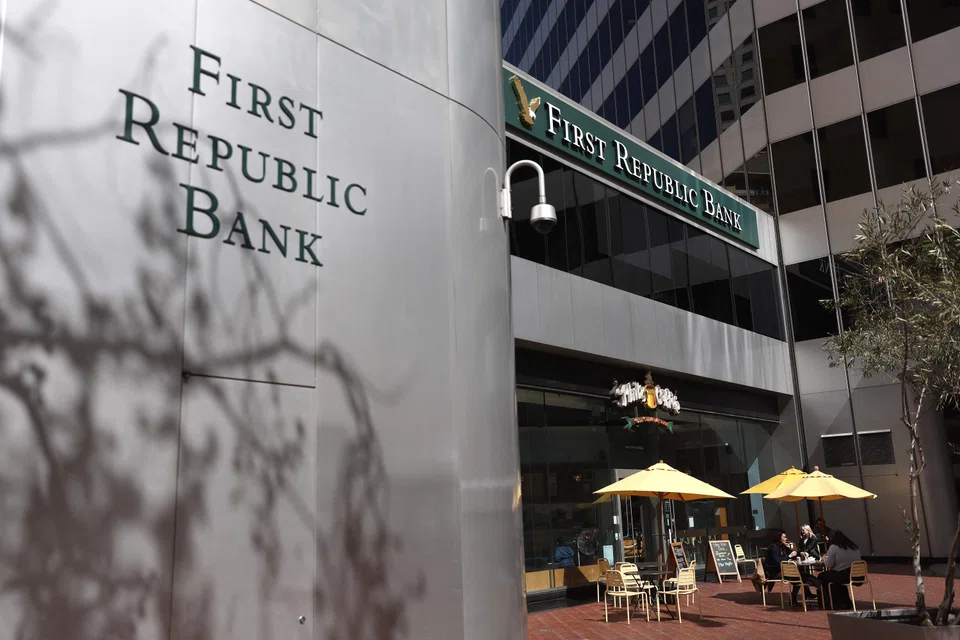
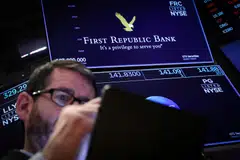
And overnight, it has emerged that 11 US banks have – under the encouragement of government officials – agreed to park US$30 billion with San Francisco-headquartered First Republic Bank for at least 120 days.
“They have to… The fallout (from a failure) would be unbearable,” said Lorenzo Di Mattia, manager of hedge fund Sibilla Global Fund, referring to the regulators’ moves to quell the panic.
Even by panic standards, this one was unusually frenzied. The quick spread of news on social media and the decades-high rate of inflation have made a financial crisis easier to trigger, and potentially more expensive.
The run on SVB was fuelled by frantic tweets and forwarded WhatsApp messages suggesting the bank was not safe.
SVB was a banker to tech billionaires, startups and venture capitalists. This unique customer base gave it an unusually high average deposit size, particularly when compared with its book of loans. A relatively small number of key clients could dent its capital by withdrawing their millions.
The bank’s approach to management mirrored the business culture of Silicon Valley: improvised, fast-moving and high-risk. Its collapse happened like everything is supposed to in the tech industry – at the speed of thought.
SEE ALSO


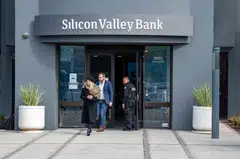

“Its balance sheet trebled very quickly as a result of the money flowing into the tech and venture capital sectors during the pandemic,” said Andre Reichel, a financial-sector analyst at Schroders. “But the mindset of management didn’t keep up with the fact that the bank had become a very different, much larger, business in a short space of time.”
Regulators were asleep at the wheel, and never seemed to consider the danger. “They grew too fast,” said one Texas banker, who didn’t wish to be named. “That in itself should have been a red flag.”
In response, bank stocks have crashed this past week. The KBW index of US regional banks has lost about 30 per cent of its value, as markets take a “shoot first and ask questions later” approach.
Shares of large banks with a similar client profile to SVB and Signature are down by more than 70 per cent. The contagion has also spread across the Atlantic, where long-running concerns about losses at Credit Suisse have converted into panic.
Unlike SVB and Signature, which mostly lend to corporations, Credit Suisse is tangled up with other investment banks worldwide.
BNP Paribas is among those reportedly trying to cut ties with Credit Suisse, citing “counterparty risk”, in a move reminiscent of Wall Street firms cutting off oxygen to American International Group and Lehman Brothers in 2008.
Could Credit Suisse be this generation’s Lehman? “I think the government/central bank will prevent that,” said Di Mattia, the hedge fund manager. “Credit Suisse in Switzerland is like Citigroup or Bank of America (BOA) in the US; it’s the No 2 bank.”
SVB’s abrupt failure and improvised bailout have some similarities to Bear Stearns’ collapse in March 2008. In that instance, the US backstopped JPMorgan Chase’s acquisition of the mortgage security-laden investment bank.
The hope was that the government’s direct assistance would be a one-off, and would prevent any similar collapses.
At the time, many had warned about the moral hazard created from the bailout. The government was inadvertently incentivising risk-taking by setting the precedent of a rescue, critics said. It would subsequently have to save all banks in a similar situation, or be viewed as an arbitrary picker of winners and losers.
Fifteen years later, it seems that moral hazard remains. To negate it, the US could overhaul deposit insurance rules and raise the limit from the current US$250,000. But such radical regulatory changes have their own unforeseen consequences.
“Historically, whatever regulations you enact for the last crisis sow the seeds for your next crisis,” said Kent Engelke, chief economic strategist and managing director at money manager Capitol Securities Management.
The personification of this historical cycle is Barney Frank. The former congressman was a lion of financial reform following the 2008 financial crisis. He now sits on the board of Signature Bank, and is blaming a US vendetta against cryptocurrencies for its collapse.
The bank panic also complicates the US Federal Reserve’s task of containing inflation. Given that Fed rate hikes were part of the reason why SVB ended up having to book the losses that hurt depositor confidence, there are now expectations that the central bank might try to ease up on its tightening moves.
Yet, recent data suggests upward price pressures remain. “You could pledge all underwater bonds at 100 cents on the dollar, but that would completely reverse a large part of the tightening that the Federal Reserve has done,” said Engelke.
The ECB stuck to its guns on inflation, raising rates by 50 basis points despite Credit Suisse’s thirst for cheap capital. Traders are betting that the Fed will relent, however, and stop its campaign earlier than planned. When rates rise, “something always breaks”, said strategists at BOA Global Research.
Depending on what regulators do next, SVB may be remembered as the thing that broke this time around, or part of something much larger.
Decoding Asia newsletter: your guide to navigating Asia in a new global order. Sign up here to get Decoding Asia newsletter. Delivered to your inbox. Free.
Share with us your feedback on BT's products and services