

Asia banks hit as funding costs, credit charges crimp profit
Leaders of lenders warn of a tougher road ahead, given geopolitical risks and higher energy prices
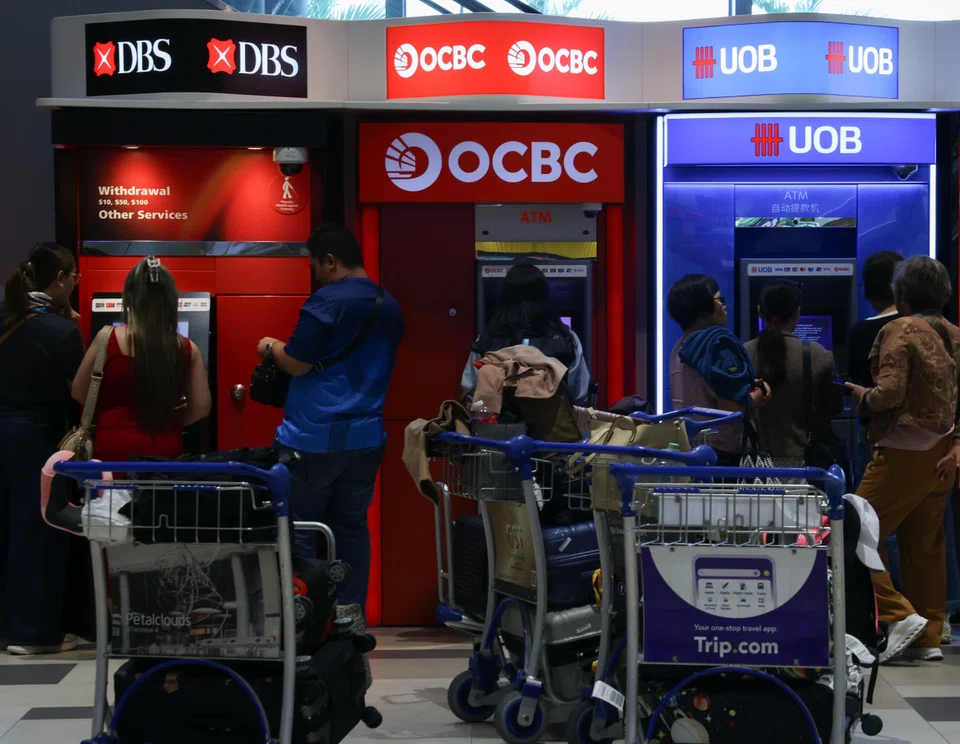
[SYDNEY] Higher interest rates are not playing out as expected for lenders across Asia-Pacific.
From National Australia Bank (NAB) to DBS , lenders are missing analysts’ expectations. They are grappling with higher funding costs and bigger outlays for credit losses that have eroded profitability, even as they await the boost to their lending income.
In Australia, banks are setting aside more money to cover potential bad debts and defaults as household and business budgets get increasingly stretched.
In Singapore, net interest margins are shrinking with funding costs rising at a faster clip than their loans can reprice.
This is setting up a grim backdrop for the rest of major bank earnings that are coming, from ANZ Group to Commonwealth Bank of Australia that is giving a trading update, to Japan’s so-called megabanks.
The banks’ leaders are warning of a tougher road ahead given the geopolitical risks and higher energy prices.

Investors have also tempered their exuberance that had driven some of the stocks to record levels earlier in 2026. Shares of both NAB and UOB fell more than 5 per cent after their results.
“I’ve said it many times – the operating environment has become more complex and continues to be more complex,” UOB’s chief executive officer Wee Ee Cheong said in an earnings briefing this week.
The Singapore-based bank saw earnings hit by a drop in trading and investment income, together with narrowing interest margins as rivals compete intensely for deposits. It is trying to boost its wealth business as well as divest non-core assets to boost growth.



At larger rival DBS, that announced a change to its long-time chairman, the lender suffered a tumble in markets trading income and CEO Tan Su Shan cautioned that the outlook has become more uncertain.
While the bank has boosted its deposits, Tan said on Thursday (Nov 5) the global market is getting tighter for such funding. Hyperscalers and data centres also continue to suck up a lot of liquidity, she added.
Banks are positioning for the tougher environment.
Melbourne-based NAB, which reported an increase in credit impairment charges, is cutting up to 2,500 roles as it navigates the sluggish economy and rising interest rates.
CEO Andrew Irvine said the firm needed to simplify how it operates to sustain performance, with the job cuts cutting duplication and speeding up decision making.
“During the year we made a number of changes to better position NAB for risks and opportunities in an evolving environment,” said Irvine. “The actions we’ve taken reflect our expectation of a tough year ahead.”
Westpac Banking said its impairment charges more than doubled in the year, reflecting a more severe downside scenario at the Australian bank and was a key factor impacting the dip in its net profit. The lender is also shedding jobs.
The disappointment in Asia bank earnings was already felt earlier with HSBC investors expecting a more bullish outlook.
“In a high interest rate environment, there’s sometimes a market expectation that we upgrade guidances or we change our targets,” its CFO Pam Kaur said on an earnings call last week. The bank’s shares fell when that did not happen. BLOOMBERG
Decoding Asia newsletter: your guide to navigating Asia in a new global order. Sign up here to get Decoding Asia newsletter. Delivered to your inbox. Free.
Share with us your feedback on BT's products and services






