

Bessent deploys debt buybacks in sign of concern over yield rise
The new plan by the US Treasury Secretary drives the US dollar to the weakest in three months

[NEW YORK] US Treasury Secretary Scott Bessent made a fresh attempt to rein in long-term borrowing costs from multi-year highs, sending Treasury yields and the US dollar down.
Just two weeks after releasing its planned schedule for buybacks this quarter, the Treasury Department on Wednesday (Aug 19) said it is “increasing, by at least double, the size of liquidity support buyback operations” for securities dated from the 10-year to the 30-year sector.
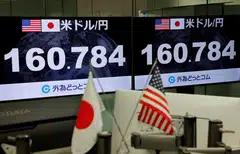
The new plan drove the US dollar to the weakest in three months.
It also pushed yields on the 30-year bond lower by as much as 10 basis points to 5.18 per cent, moving it away from its highest level since 2007.
Twenty-year yields also dropped, leaving investors with tepid demand for a US$16 billion auction of the securities.
Elevated yield levels have kept US mortgage and other borrowing costs high, posing a headwind for economic growth and a potential problem for US President Donald Trump and his fellow republicans ahead of the November midterm elections.
They have also driven up the Treasury’s own borrowing costs, worsening what was already a steep trajectory for government debt.
“This administration needs a win, and maybe that comes in the form of artificially trying to keep long Treasury rates contained,” said Jack McIntyre, a portfolio manager at Brandywine Global Investment Management.
“They have to try something. Sentiment around the long-end globally is about as bearish as I have seen in a very long time.”
SEE ALSO



How long lasting the impact will prove remains to be seen. “What really gets long rates lower is a slowing economy or resolution on the Iran conflict, and I’m not sure we’re there yet,” McIntyre said.
Bessent in 2025 invoked the buyback programme as part of the department’s “big toolkit we can roll out” if needed to address dislocation in the Treasuries market.
He has also repeatedly said, since taking office, that his key financial market benchmark is 10-year yields.
In November 2025, he said, “my job is to be the nation’s top bond salesman – and Treasury yields are a strong barometer for measuring success in this endeavour”.
Officials made the announcement as long-dated government bond yields around the globe rose to significant levels this week – with the US 30-year trading at its highest since 2007.
A 10-year auction last week drew the highest financing cost at that tenor since 2007, while a 30-year sale a day later was at the greatest yield since 2001.
“The buyback is a clear signal the Treasury is watching markets and is concerned about long-end yields. That sort of increase in flow cannot in and of itself turn the tide of long-end selling, though the signal may be sufficient to prompt further short-covering,” said Bloomberg macro strategist Cameron Crise.
“If yields go too far, Treasury will try and fight it – and now we know where some pain points are,” said John Briggs, head of US rates strategy at Natixis North America.
The ramped-up buybacks will begin Sep 9, the Treasury said.
Two weeks ago, the department said it anticipated purchases of up to US$38 billion of older securities, known as off-the-runs, for “liquidity support”.
Its tentative calendar for Sep 9 through Nov 4 indicated up to US$14 billion total buybacks of 10-year to 30-year Treasuries. At least doubling that total would suggest an extra US$14 billion or more.
Treasury officials reintroduced the buyback programme in 2023 – an initiative originally conceived more than two decades ago, back when the government enjoyed budget surpluses and was repurchasing and retiring higher-cost securities.
The new programme was aimed in part at boosting liquidity in the market, as traders typically prefer to hold the current benchmark of given tenors, leaving older ones less easy – and more expensive – to trade.
“This increase in buyback operation sizes reflects Treasury’s desire to provide greater liquidity support in longer-dated nominal sectors where there is consistent strong sponsorship from market participants, as evidenced by the significant volume of high-quality offers Treasury routinely receives in longer-dated buyback operations,” the Treasury said in its statement.
The buyback gambit is the latest in a series of interventions by Bessent – who came to office after a decades-long hedge fund career – that some analysts say is designed to actively manage down borrowing costs ahead of the November midterm elections.
Around the end of July, Bessent engaged in the first US-Japan coordinated yen purchases since 1998, viewed by strategists as aimed at heading off large-scale sales by Tokyo of Japanese holdings of Treasuries.
Days later, the Treasury’s quarterly debt-issuance policy statement featured a tweak in forward guidance that opened the door to a potential reduction of sales of long-term securities.
Bessent has also been taking to the airwaves and social media to defend the new communications strategy of US Federal Reserve chairman Kevin Warsh, who caused yields to surge after July’s meeting when he failed to explain how – or when – the central bank may act to bring down inflation.
Buyback enthusiasm
The latest buyback was conducted on Tuesday, when the Treasury offered US$2 billion for securities set to mature in the 2046 to 2056 range. The operation was 10 times oversubscribed, showcasing investors’ enthusiasm for the programme.
It also comes just days after the Treasury paid out about US$85 billion in interest to bondholders, the largest sum in records tracked by Bloomberg.
Wednesday’s statement did not indicate how the operations would be paid for, but the Treasury typically relies on issuance of bills, which mature in up to a year, for its fluctuating funding needs.
If officials are in effect replacing longer-dated debt with bills, Bessent’s latest manoeuver amounts to a Treasury Department version of something the Fed has done more than once over the decades: an “Operation Twist”.
The Fed’s version featured replacing short-dated Treasuries with longer-dated ones in the central bank’s portfolio – aimed at bringing down longer-term borrowing costs and boosting economic growth.
“Operation twist is here,” Deutsche Bank’s George Saravelos, global head of FX research, wrote in a note. “Treasury would have to issue more treasury bills to finance the removal of duration from the market.”
They added that it is effectively a “soft-form financial repression”. BLOOMBERG
Decoding Asia newsletter: your guide to navigating Asia in a new global order. Sign up here to get Decoding Asia newsletter. Delivered to your inbox. Free.
Share with us your feedback on BT's products and services
TRENDING NOW

Once staunchly pro-China, Malaysian Chinese businesses are now distancing themselves from Beijing

Looking beyond looming CEO succession, should UOB potentially pursue a transformative merger?

Could stablecoins be the future of money?

Grab CEO’s wife Chloe Tong on life with Anthony Tan and finding her purpose

