

China lowers funding costs with shift to overnight policy rate
The move reduces borrowing costs for financial institutions
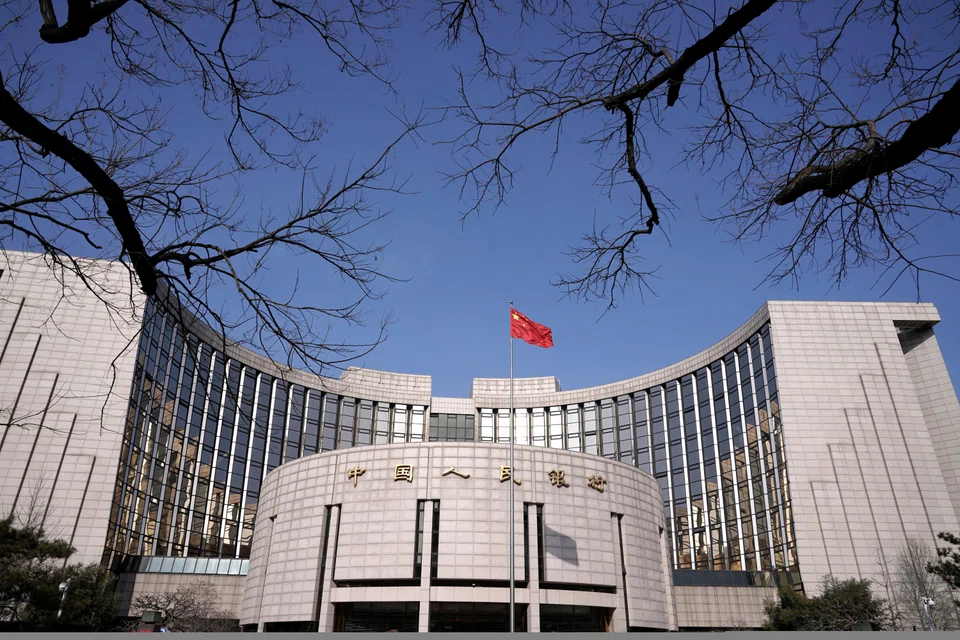
[SHANGHAI] China’s central bank injected cash into the banking system on Monday (Nov 2), as it formally shifted its main policy rate to an overnight lending rate, a move analysts said would ease funding costs and support the economy.
The People’s Bank of China (PBOC) injected 541 billion yuan (US$81.3 billion) through overnight reverse repurchase agreements at 1.25 per cent, according to a statement.
The central bank said last Friday that it would start to conduct overnight reverse repos every day and switch the seven-day operations to multiple rates from a single fixed one.
“The policy rate has officially shifted its anchor to the overnight rate, with the 1.25 per cent pricing confirming the existing benchmark for funding costs,” said Ming Ming, chief economist at CITIC Securities.
Analysts said the change effectively lowers the floor of China’s interest-rate framework by 15 basis points, reducing borrowing costs for financial institutions.
Although the move was not a conventional policy rate cut, it would help lower yields across the bond curve, they added.
“Judging by the initial 1.25 per cent rate, the monetary policy stance is steering short-term interest rates downward,” said Marco Sun, chief financial market analyst at MUFG (China).
The shift comes as credit concerns from state-owned developer Zhuhai Huafa Group have unsettled the bond market and added pressure on policymakers to shore up investor confidence.
Zhaopeng Xing, senior China strategist at ANZ, said the move was equivalent to a targeted 15-basis-point rate cut for financial institutions.

“It’s effectively a red packet for financial institutions, boosting their net interest margins by about 5 basis points,” Xing said.
“The aim is to stabilise profitability in the financial sector and strengthen its capacity to absorb risks,” he added, noting the measure is unlikely to have a material impact on the stock market.
Separately, Chinese regulators, including the central bank, will hold meetings with financial institutions on Monday to discuss tools to support capital markets, media reported, as turbulence in stocks and bonds fuels calls for policy support.
Still, some analysts said they expect monetary stimulus to be delivered next year.
The transition was “a mark-to-market adjustment rather than a de facto rate cut, and (we) do not expect an LPR cut to follow in November,” Citi analysts said in a note.
“We continue to see 2027 as the more likely window for rate cuts, while renewed credit concerns arising from Zhuhai Huafa reinforce the case for continued local debt-resolution efforts and should keep liquidity conditions loose in the interim.”
The PBOC said last month that it was considering making the overnight reverse repurchase rate its main policy rate, in an effort to improve the transmission of monetary policy and support economic growth. REUTERS
Decoding Asia newsletter: your guide to navigating Asia in a new global order. Sign up here to get Decoding Asia newsletter. Delivered to your inbox. Free.
Share with us your feedback on BT's products and services
TRENDING NOW

If Europe goes to war, the fallout will be felt in East Asia

Wilmar sold goods to 6 firms issued notices under Singapore haze law; no operational relationship
Stocks to watch: Wilmar, Great Eastern, Keppel, Nio, Lendlease Global Reit
Singapore banks’ wealth fees may ease in Q3 as AI lending, bond yields draw scrutiny

