

DBS CEO Tan Su Shan ranks sixth globally on Fortune’s most powerful women list in 2026
Png Chin Yee, Temasek International’s CFO, is the only other Singapore-based executive on the global list, at 77th

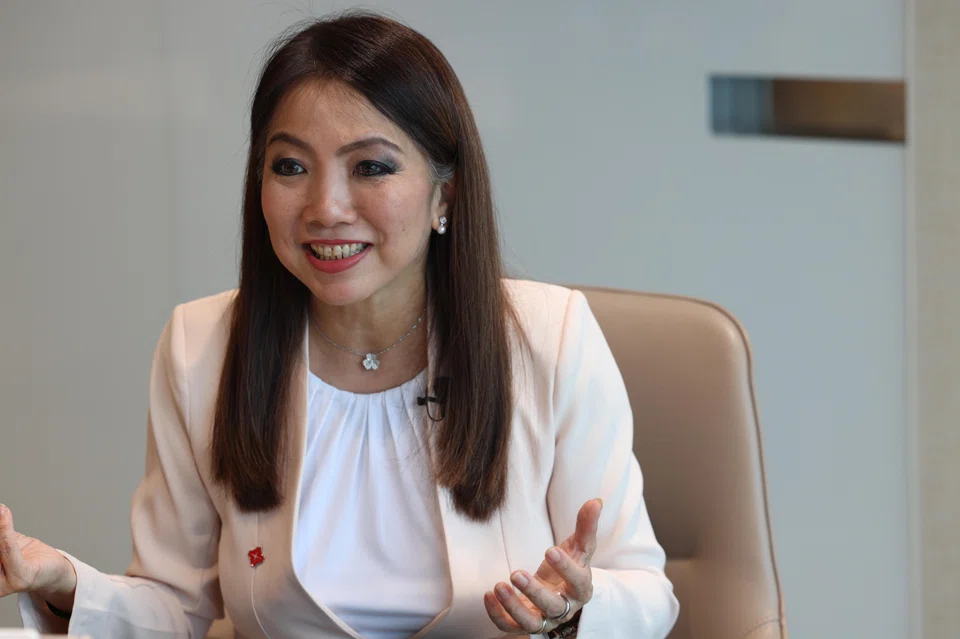
[SINGAPORE] DBS group chief executive officer Tan Su Shan came in sixth globally and first in Asia on Fortune’s 2026 “Most Powerful Women in Business” list, which recognises female leaders commanding boardrooms, markets and industries globally.
The annual list, now in its 29th year, was released on Wednesday (May 27) and features 100 women from the corporate world.
Collectively, these women lead 94 companies employing 11.8 million people and generating US$7.3 trillion in annual revenue. They also hold 180 board seats in 20 countries and territories.
Topping this year’s ranking was Jane Fraser, chair and chief executive officer of Citigroup, who is five years into taking over the banking group’s top role. She made history in 2021 as the first woman to lead a major Wall Street bank.
Tan was one of two Singapore-based executives on the list. The other was Png Chin Yee, chief financial officer of Temasek International, who placed 77th.
Fortune had also named Tan as Asia’s most powerful woman in business in 2025. The publication noted that since taking over as CEO of DBS, she has steered it through challenges such as renewed trade tensions and the rise of alternative financial products such as cryptocurrencies.
Fortune highlighted that Tan made history in 2025 as the first woman to lead DBS, South-east Asia’s largest bank by assets. She succeeded long-time chief executive Piyush Gupta, who led the bank for 15 years.
Under her leadership, Fortune noted that DBS posted a record net profit of S$10.7 billion last year, despite a stronger Singapore dollar and a challenging interest rate environment. The bank’s market capitalisation also crossed US$100 billion for the first time, placing it among the world’s 25 largest banks by market value.
DBS recently noted that under Tan’s leadership, the bank has continued to deliver a strong financial performance despite a challenging operating environment marked by macroeconomic uncertainty and interest rate headwinds.



Before becoming CEO, she oversaw DBS’ consumer banking, wealth management and institutional banking businesses, which together accounted for about 90 per cent of the bank’s revenue.
Fortune said its most powerful women list this year features women leading some of the world’s largest companies, including firms on the Fortune 500 and Global 500 lists.
However, it noted that women still head only about 11 per cent of Fortune 500 companies, meaning corporate influence is not measured solely by a CEO title.
The list also features women seen as influential through other forms of leadership, including executives on track to get top jobs, and founders who have built significant businesses.
Fortune’s editors assessed candidates on several factors, including the size and health of the businesses they lead, their record of innovation, the influence they wield, the trajectory of their careers, and their broader impact on society.
By geography, the United States had the highest number of women on the list with 10, followed by China with nine, and France and the United Kingdom with six each.
The Asia-Pacific region accounted for 20 executives on the list; besides Tan, there are Qantas CEO Vanessa Hudson, Naver Corporation president and CEO Choi Soo-yeon, and Huawei CFO Meng Wanzhou.
In terms of sector, Fortune noted that technology and finance continued to dominate the rankings, although women are increasingly breaking through in traditionally male-dominated sectors such as energy, where BP CEO Meg O’Neill ranked 16th.
The publication also pointed to the growing prominence of women in artificial intelligence, for instance, Fidji Simo, who oversees AGI deployment at OpenAI, coming in at 28th on the list.
The top 10 on Fortune’s 2026 “Most Powerful Women in Business” list are:
1. Jane Fraser, chair and CEO, Citigroup (US)
2. Mary Barra, chair and CEO, General Motors (US)
3. Lisa Su, chair and CEO, AMD (US)
4. Julie Sweet, chair and CEO, Accenture (US)
5. Ana Botin, executive chair, Banco Santander (Spain)
6. Tan Su Shan, CEO and director, DBS Group (Singapore)
7. Thasunda Brown Duckett, president and CEO, TIAA (US)
8. Grace Wang, chair and CEO, Luxshare Precision Industry (China)
9. Reshma Kewalramani, president and CEO, Vertex Pharmaceuticals (US)
10. Abigail Johnson, chair and CEO, Fidelity Investments (US).
Decoding Asia newsletter: your guide to navigating Asia in a new global order. Sign up here to get Decoding Asia newsletter. Delivered to your inbox. Free.
Copyright SPH Media. All rights reserved.
TRENDING NOW

LTA proposes combining car COE categories, adding rebate-surcharge system

StarHub to acquire MyRepublic’s mobile business amid ongoing telco consolidation

DBS, OCBC, UOB rout lops billions off STI as inflation, rate concerns spook investors

Grab CEO’s wife Chloe Tong on life with Anthony Tan and finding her purpose

