

From ‘show me your code’ to ‘show me your agent’: DBS CEO Tan Su Shan on how agentic AI is transforming the bank
Amid worries of AI leading to jobless growth, DBS is committed to supporting younger talent

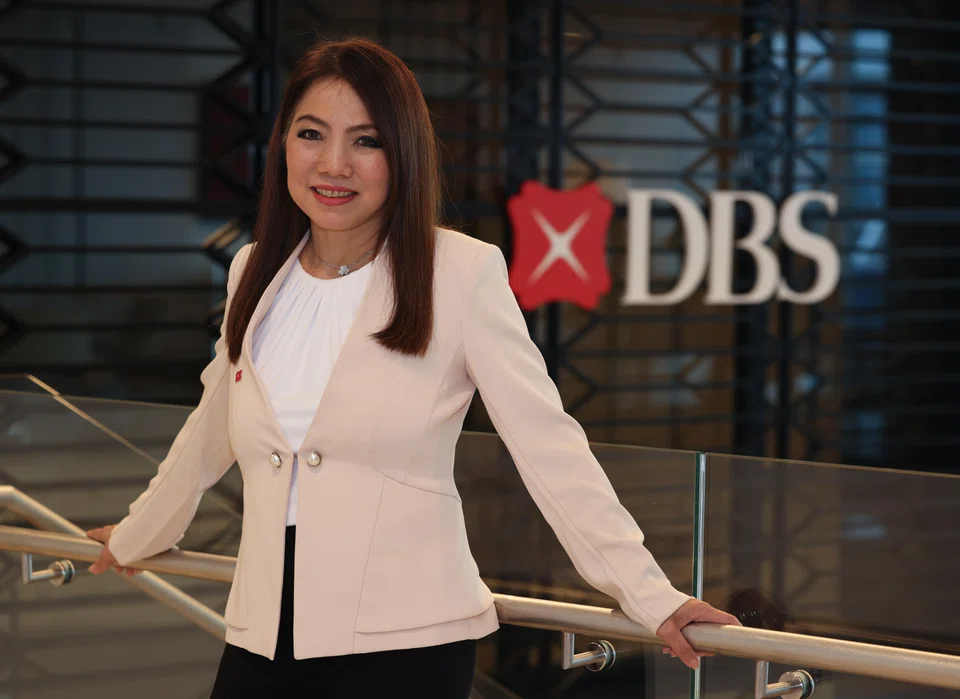
[SINGAPORE] DBS is reframing banking with agentic artificial intelligence, and maintaining an organisational culture open to change will be crucial for success, said its CEO Tan Su Shan.
She recalled that at the bank’s leadership offsite years ago, when the lender was just starting out on its digital bank journey, participants sported T-shirts that declared: “Talk is cheap. Show me your code.”
Fast-forward to this year’s edition, which gathered 200 to 300 senior leaders from across the bank’s key markets to discuss priorities for the year. This time around, the T-shirt was updated to say: “Talk is cheap. Show me your agent.”
All participants there learnt how to make their own agent – essentially a software system that can plan and take actions across tools and workflows with some autonomy.
Fresh from a trip to Silicon Valley, Tan told The Business Times in an exclusive interview that she believes agentic AI – using technology to make decisions autonomously – is the next frontier.
“We look at it from three lenses – personal agents, team agents and enterprise agents (which support complex agentic workflows),” she said.
At DBS, agentic AI deployment has moved at a surprisingly quick clip, jumping to the creation of 10,000 personal agents in just the few months since the capability was made available in late 2025.
Always one to walk the talk, Tan has her personal agent that checks and serves up to her the latest news on banking and what bank CEOs around the world are saying.
Apart from personal agents, there are the team agents.


Take the case of an analyst who needs to compare sets of financial data to set deposit and mortgage rates. Today, an agent can pull up the data from multiple sources, including competitor banks, and synthesise it, speeding up the process of data collation.
This use case is already being trialled in DBS offices in Hong Kong, Singapore and elsewhere.
Aside from agentic AI, the bank had earlier rolled out generative AI (GenAI) tools.
Seven in 10 DBS employees are using such tools, which range from DBS-GPT, the bank’s chat function, to Microsoft Copilot for tasks such as report-writing.
These employees craft 1.8 million prompts a month to get help with brainstorming, research, writing, translation and summarisation.
Agentic AI will be transformative for operations
Eventually, what will make the most significant difference for DBS will be the enterprise agents and operating model transformations. This is because they will transform the way DBS works, as well as significantly improve the customer journey, said Tan.
Work is ongoing in 11 areas, including wealth, small and medium-sized enterprise banking, institutional banking, risk management and legal and compliance. Outcomes are expected to be seen this year.
One major improvement has already been observed in the area of the credit memo-writing within the institutional banking unit. Relationship managers previously put the bulk of their time and effort into preparing the credit memo, or the request for approval for a loan amount.
“As much as Tan holds a utopian perspective of AI, she added that ‘we have to be aware that a dystopian view is also very much a possibility. That’s why we have a governance framework and set up a control plane’. ”
What does preparing such a report entail? Reading market and industry reports, analysing financials and annual reports, customer meetings – all these are needed to get a sense of whether a given company is credit-worthy, and if so, the recommended loan quantum.
This work can now be done by agentic AI – using as many as 70 agents – which produces a draft that the credit manager can review to assess and make the final call.
What this means is that the relationship manager now has more time to meet existing clients and do so more often, as well as to reach out to potential clients.
Trust, data and a supportive culture
The agentic AI journey may be the way forward, but success hinges on trust, a robust data framework and an organisational culture that supports these objectives, said Tan.
She referred to the 2025 DBS annual report, in which a lighthouse is pictured, symbolising a trusted beacon that can offer safe passage in a volatile world – one in which the bank can stand for stability and innovation.
She said that, in order for AI’s output to be trusted, vectors which incorporate data governance principles such as fairness and considerations of inherent bias are needed.
As much as she holds a utopian perspective of AI, she added that “we have to be aware that a dystopian view is also very much a possibility. That’s why we have a governance framework and set up a control plane”.
“We can see all the agents, the agent registry, with numbers and identification details. We have safety guard rails, meaning there is accountability, observability, traceability and evaluations of the agents.”
This is the rationale behind the implementation of “harness engineering”, which guides the glide path of AI by ensuring the agents adhere to the policies, governance frameworks and standard operating procedures.
Overcoming the trough of disappointment
Many organisations are unable to transform because the organisational culture is resistant to change, something Tan is aware of and determined to fix.
In DBS, failure – though disappointing – is accepted, she said.
In the early days of the lender’s digital journey in 2014, it experimented with DBS IBM Watson, a tool used to process financial data and generate wealth-management advice. It did not pan out, achieving only about 80 per cent accuracy.
With these setbacks in mind, Tan said: “You’ve got to be resilient. You’ve got to face that trough of disappointment and accept the scepticism, the pushback. Meanwhile, you have to learn by doing and give people the tools to try out.”
She accepts that “it’s a fine balance between risk-taking and safety, with some tolerance for failure and mistakes”.
The culture at the bank is such that it welcomes good ideas from all quarters. In sessions dubbed “Spark Ideas with Su Shan”, employees who have ideas are encouraged to show up to discuss them.
At the most recent session, more than 20 people attended and produced 17 suggestions among them. “Two of our young people were day traders, and they had ideas to improve the trading app; I said ‘Let’s do it’,” said Tan.
The future of work
But as banking and business operations are being transformed, it is unavoidable that some aspects of jobs will disappear.
In fact, everyone’s job can be replaced. Nothing brought home that more clearly to Tan than on the day in 2025 she was appointed CEO. The board sent her a WhatsApp message: “You know, even a CEO’s job can be replaced by AI.”
For her, the takeaway is that AI can be used to create capacity for growth, to take away the mundane work and create capacity for people to be trained for higher-order jobs.
She said: “We used to have around 3,000 production engineers, but with AI, these numbers will be much lower. For a leader, this means I have to fast-track their learning, and they will have to operate at a higher level.”
Tan pointed out that it is “inevitable” that there will be some who are resistant to change.
“You can bring a horse towards (water), but you can’t force it to drink right?” she quipped, adding that the bank aims to “protect workers, not jobs”.

Indeed, DBS is doing more than its fair share of trying to transform its workforce.
At the May Day rally, for example, Prime Minister Lawrence Wong held up the example of Ali Jinah Mohamed Yusuf, who started out as a customer service officer but has since become a GenAI team lead at DBS’ customer service hub, driving AI projects that improve service and operations.
To expedite learning across the workforce, the bank taps the institutional and domain knowledge of its veterans. It nudges them to share their knowledge, or “download your brain to the enterprise knowledge base” so the next generation can learn from the mistakes made earlier.
Hiring young people
For DBS to succeed in transforming its business, getting the right talent is crucial. Even as there are fears that AI will result in jobless growth, the lender is committed to supporting the younger generation.
It announced on Tuesday (May 19) that it will hire 500 young local talents this year through its management associate, internship and traineeship programmes.
Tan said: “This is the right thing to do, and we want them for our future bench. But I would prefer to bring them in before they graduate.
“Everybody does well in interviews, so it’s really hard to tell, and attitude comes through only when you start working together. Attitude is much more important because knowledge is ubiquitous.
“We will be doing a lot more internships. We will continue to hire graduates. (Consultancy) McKinsey talks about the diamond-shaped organisation... but my diamond will be fatter at the bottom because I’m going to keep hiring graduates.”
Having met startups in Silicon Valley on her recent trip and even (OpenAI founder) Sam Altman, she feels inspired to tell the younger folks to go out and build something.
“You can have legal, finance and policy experts all in your phone. The most important thing today is attitude. Go be an apprentice. Go do an internship, learn, and then be like a sponge, and have a great attitude.”
A bifurcated world
When asked about what she thought the future holds for DBS and banking, she emphasised that the growth story continues, with opportunities in the wealth, payments and financial institutions space.
“My strong belief is that the role of capital will increase. Structurally, it will become more important, as a source of active and passive income. With the nature of white-collar jobs changing, people will be doing part-time work or gig work, multiple things.”
All this translates to people who need their money and their savings to work harder. “People are also living longer, so we need to be their partner in their growth cycle. Wealth is a journey that now begins early. It’s more digital, more intuitive, more long-term and more regular.”
She sees this as a strong growth driver for the wealth business. “That’s a structural growth story. It starts from retail wealth – not just from the high-net-worth individuals.
“The financial institutions group, the institutional investors, the role of capital markets, will continue to rise; that’s a structural growth story.”
It is a bifurcated world with geopolitical turmoil, but she sees the silver lining.
She noted that customers used to say they would prefer a global bank which can serve their business across the world; now, companies want banks that can serve Asia, Europe and US separately.
“So we are a diversifier bank: If you want to custodise your assets, we can meet your needs.” Through its AI and digital assets offerings, DBS is also a disruptor bank and a digital lender.
But Tan takes pains to emphasise that “DBS aims to be an AI-enabled bank with a heart. So I want to put the heart at the centre of everything”.
“Even as we are continuously reinventing ourselves, we want to navigate these big changes with resilience and responsibility.”
Looking ahead to the future, Tan said: “We have to manage for maximum flexibility. Prepare for the worst. The volatility is here to stay, and geopolitics could get a lot murkier, too.”
She added: “With any kind of reinvention, the first few years (of change) will always be the toughest, but I remember this: When things are bad, don’t lose your heart. When things are good, don’t lose your head.”
Decoding Asia newsletter: your guide to navigating Asia in a new global order. Sign up here to get Decoding Asia newsletter. Delivered to your inbox. Free.
Copyright SPH Media. All rights reserved.
TRENDING NOW

DBS, OCBC, UOB rout lops billions off STI as inflation, rate concerns spook investors

Grab CEO’s wife Chloe Tong on life with Anthony Tan and finding her purpose

OCBC sheds S$8 billion in value as shares close nearly 6% down; analysts cautious on banks

Deal between tycoon friends sparks scrutiny of Philippine power sector

