

ECB set for ‘insurance hike’ as Iran war fans eurozone inflation
Inflation in the 21-country currency bloc is already above 3 per cent
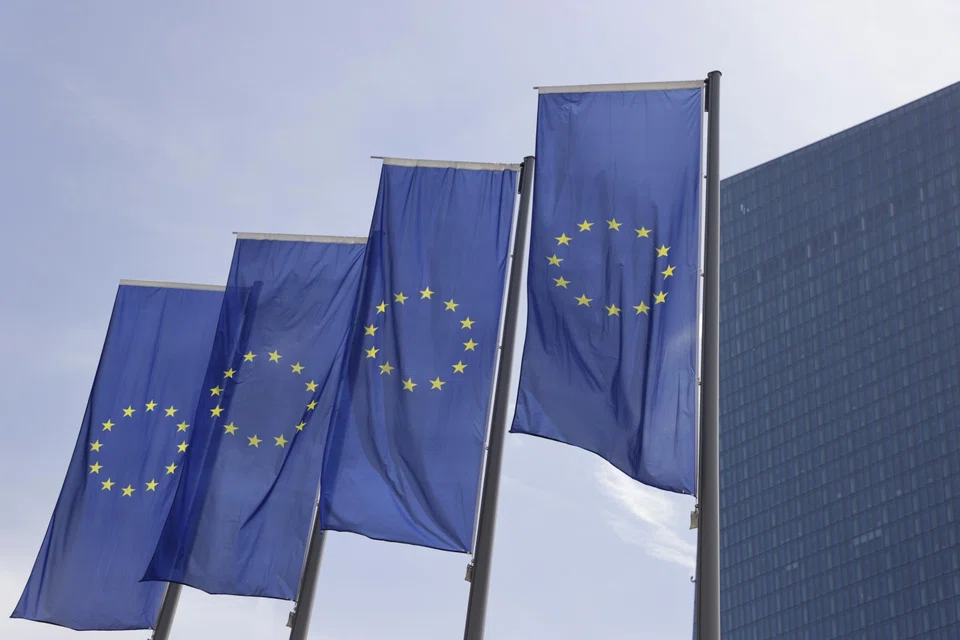
[FRANKFURT] The European Central Bank is all but certain to raise interest rates on Thursday (Jun 11) in the hope of nipping higher inflation in the bud before a surge in energy costs triggered by the Iran war spreads more broadly across the eurozone economy.
The well-telegraphed move would come as inflation in the 21-country currency bloc is already above 3 per cent, well in excess of the ECB’s 2 per cent target, and economic growth is very weak – a backdrop that has economists split over the case for tighter policy.
ECB policymakers, some of whom had already pushed for action in April, are nonetheless expected to press ahead, seeking to keep a lid on inflation expectations and to safeguard their credibility after being slow to react to a post-pandemic inflation spike in 2022.
“The ECB needs to hike to protect credibility and prevent inflation expectations from de-anchoring, but it is still operating around neutral rather than moving decisively into restrictive territory,” Annalisa Piazza at MFS Investment Management said.
Thursday’s hike would be the first in nearly three years and take the ECB’s benchmark deposit rate to 2.25 per cent from 2 per cent.
Sources have told Reuters the ECB is unlikely to commit to further rate rises this week but financial markets expect another two over the coming year, with the next move seen as soon as September.
The bank’s new economic projections are also likely to hint at further rate hikes.
“New staff projections are likely to be consistent with three hikes and (ECB president) Lagarde is unlikely to dismiss this as unreasonable,” JPMorgan’s Greg Fuzesi said. “That would give the meeting a clear hawkish feel, even if the communication is likely to be more consistent with the next move in September.”
An ‘insurance hike’ that underpins expectations
Several ECB watchers have characterised the expected move as an “insurance hike”: a precautionary step that could be reversed if price pressures fade.
Supporting the case for action, the ECB is likely to raise its quarterly inflation projections on Thursday, bringing them closer to its “adverse” scenario published in March, which saw inflation peaking at 4.2 per cent in the final quarter of this year before falling back sharply in 2027.
Consumers, companies and financial investors have revised their own views about price hikes, although medium-term expectations remain close to the ECB target and far from their levels in the aftermath of Russia’s invasion of Ukraine.
“Two hikes this year thus looks like a minimum,” Anatoli Annenkov at Societe Generale said. “Markets are likely to start pricing in the next hike in July... but we still think a majority of governors would prefer to wait for more data and new forecasts in September.”
Heading for a policy mistake?
Not all economists are convinced. Some warn the ECB risks tightening into an economy that is already paying a high price for the Iran war.
Berenberg’s Holger Schmieding said the ECB was “heading for a policy mistake” given a stagnant labour market and weak consumer demand.
“Amid the ongoing destruction of demand, the inevitable temporary surge in prices... seems unlikely to turn into a protracted inflation problem that would need to be addressed by higher rates,” he wrote in a note.
A Reuters analysis of earnings call transcripts by eurozone companies showed just 40 per cent of those outside the financial sector had raised prices or were planning to do so, roughly half the share seen as the Ukraine war pushed up energy prices in 2022.
Eric Dor, director of economic studies at France’s IESEG School of Management, said the ECB was overestimating its ability to influence household and business expectations, particularly in a situation where inflation is driven by fuel costs rather than domestic demand.
But the ECB has sharpened its messaging in support of tighter policy. Chief economist Philip Lane, typically seen as an inflation “dove”, has said the Iran-related shock may be broader in scope than the Ukraine crisis, as it affects global energy markets rather than primarily Europe. REUTERS
Decoding Asia newsletter: your guide to navigating Asia in a new global order. Sign up here to get Decoding Asia newsletter. Delivered to your inbox. Free.
Share with us your feedback on BT's products and services
TRENDING NOW

DBS, OCBC, UOB rout lops billions off STI as inflation, rate concerns spook investors

Grab CEO’s wife Chloe Tong on life with Anthony Tan and finding her purpose

OCBC sheds S$8 billion in value as shares close nearly 6% down; analysts cautious on banks

Deal between tycoon friends sparks scrutiny of Philippine power sector

