NEWS ANALYSIS

European Central Bank risks economic overkill with steep rate hikes
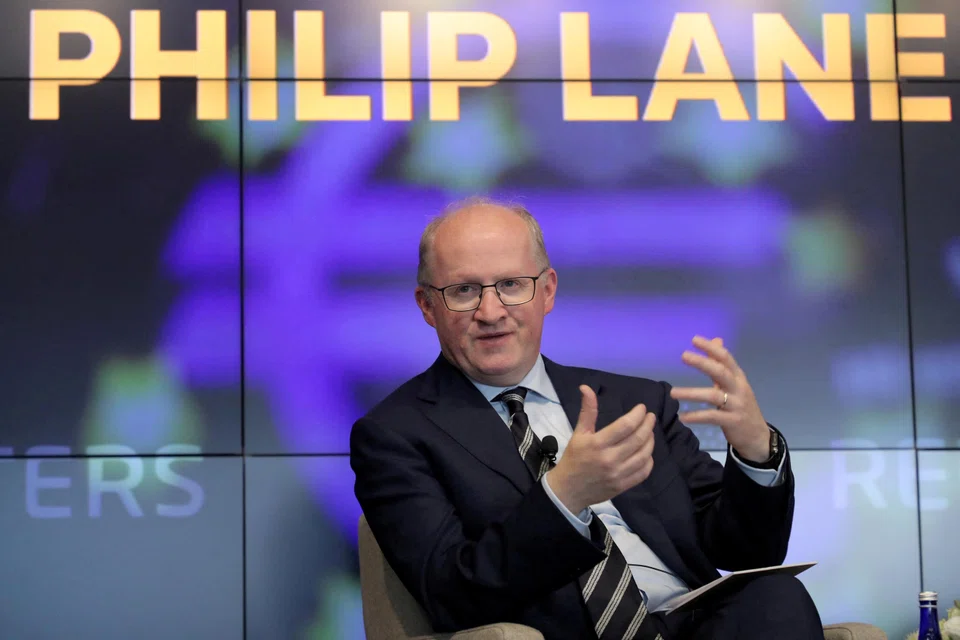
    • European Central Bank chief economist Philip Lane at an event in New York in September. He says the plan is to continue with steep interest rate rises in the next few months.
    • European Central Bank chief economist Philip Lane at an event in New York in September. He says the plan is to continue with steep interest rate rises in the next few months. PHOTO: REUTERS
    Published Wed, Nov 23, 2022 · 06:00 PM

    The European Central Bank (ECB) is so intent in breaking inflation, that it risks an economic overkill. Its chief economist Philip Lane said earlier this week that the plan is to continue with steep interest rate rises in the next few months. This follows a 75 basis-point increase to 2.25 per cent on its refinancing operations, and 2 per cent on the marginal lending facility at the beginning of November.

    He said that economic activity in Europe is expected to slow substantially in the next few quarters to due to four factors.

    “First, high inflation is dampening spending and production throughout the economy, and these headwinds are reinforced by gas supply disruptions. Second, the strong rebound in demand for services that came with the reopening of the economy after Covid, will lose steam,” he said.


    “Third, the weakening in global demand, tighter monetary policy and worsening terms of trade will mean less support for the euro area economy. Fourth, uncertainty remains high and confidence is falling sharply.” Despite that gloomy outlook, he warned that the ECB is poised to raise rates again in December. The expected further rises in 2023, and their extent, will depend on inflation. Eurozone inflation rose to 9.9 per cent in September, reflecting further increases in all components, but energy price rises of 40.7 per cent remained the main driver. Lane cautioned that due to inflation and tighter monetary policy, the average eurozone long term rates – the ten-year sovereign bond yield – had already risen to 2.9 per cent.

    The ECB is continuing with its rate rises even though its latest financial stability review for November warned that Europe is already in the throes of a credit crunch. Borrowing surged during the period of almost zero and even negative interest rates, according to latest data from the Bank for International Settlements.

    So much so that total credit of the eurozone’s “non-financial sector” – governments, non-bank corporations and households – rose from 262 per cent of gross domestic product in 2017, to 273 percent of GDP in the first quarter of 2022.

    At these borrowing levels, the higher interest rates are already beginning to hurt. The ECB warned in its stability review that highly indebted nations such as France, Italy, Spain, Portugal and Greece are vulnerable as they will be rolling over their debt at much higher rates. Moreover, numerous European corporations have issued bonds that will need to be repaid in the next few years.

    Depending on the strength of the company and their leverage i.e. extent of borrowing, yields on these bonds are 0.5 to 1.5 per cent higher than sovereign debt.

    The ECB added that a proportion of companies issued debt in US dollars. The greenback has appreciated by 17 per cent against the euro in the past five years, so interest and debt repayments of these borrowers will be much higher.

    In the past month, European stock indices have rallied to their highest levels in three months, albeit still below their 2021 peaks. 

    “The funding costs of euro area banks have increased further,” cautioned the ECB in its report. “Yields on bank bonds have reached their highest levels since 2012.” At the end of October, bank bond yields in Italy were just under 6 per cent, followed by Spain (4.8 per cent) and Germany and France (both 4.4 per cent). The eurozone average stood at 4.5 per cent, the ECB said. The ECB is reducing its 2.1 trillion-euro (S$3 trillion) programme of cheap loans –known as targeted longer-term refinancing operations – to eurozone banks.

    The percentage of banks reporting a tightening of credit rose to 19 per cent in the third quarter of 2022, up from 16 per cent in the previous quarter and 14 per cent in the same period in 2020.  Fabio Panetta, a member of the ECB’s executive board, warned that the central bank should be wary of the dangers of excessive tightening which could cause a steep recession. Bank of Italy governor Ignazio Visco is also concerned that the ECB policy could lead to a “serious credit crunch”, while Barclays Investment Bank economist Ludovico Sapio noted that the tightening in financing conditions corroborates the bank’s view that the euro area is headed towards a sharp recession.