Ex-BOJ chief Kuroda sees yen intervention impact as short-lived
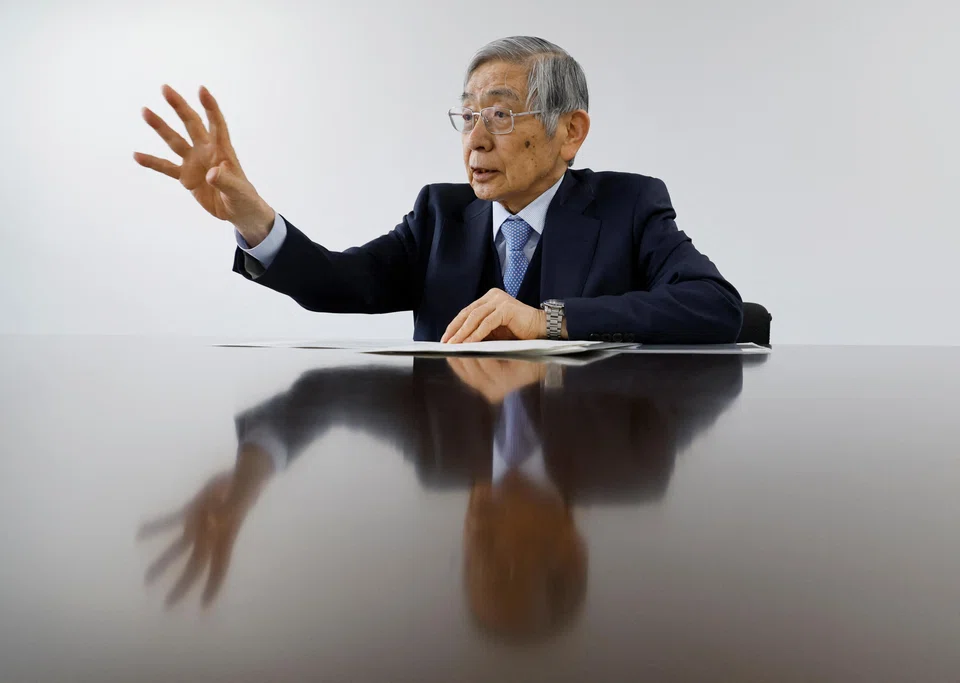
[TOKYO] Japan’s recent foreign exchange intervention may have kept the yen from sliding below the 160-per-dollar mark but it is unlikely to have a lasting effect in propping up the sagging currency, former Bank of Japan Governor Haruhiko Kuroda said on Wednesday.
Currency intervention would only have a longer-term impact if it inflicts huge damage on speculators or is powerful enough to overhaul market sentiment, Kuroda said in a seminar.
“Japanese authorities took decisive action against excessive yen declines this time. But it’s hard to expect the move to have a lasting effect on the yen,” said Kuroda, who oversaw Japan’s exchange-rate policy as top currency diplomat before becoming BOJ governor.
“The recent bout of intervention did have some effect in the sense it prevented the yen from breaking below 160 per dollar, which would have caused further yen falls,” he said. “But the impact of intervention usually does not last very long.”
Japan is thought to have spent nearly 10 trillion yen in the current round of interventions that began on April 30, its first official currency action in nearly two years, sources have told Reuters.
“My belief is that a dollar/yen rate around 120-130 is seen as an equilibrium based on Japan’s economic fundamentals,” Kuroda said at the seminar. The dollar stood around 157.80 yen on Wednesday.
The key drivers behind the yen’s downtrend were the rising cost of importing oil since the Ukraine war that began in February 2022, and the interest rate divergence between Japan and the US, said Kuroda.
“It’s unlikely for the yen to slide below 160 per dollar as authorities appeared to be stepping in to defend that level,” he said.
Kuroda said Japan’s economy was in “extremely good shape” and inflation was moving around the central bank’s 2 per cent target, driven by solid wage gains.

“With the central bank gradually raising its policy rate and inflation moving around 2-3 per cent, it’s natural for the 10-year Japanese government bond yield to rise to current levels of around 2.58 per cent,” Kuroda said.
During his decade-long stint until 2023, Kuroda deployed a massive stimulus package to pull Japan out of prolonged deflation and economic stagnation. His successor, incumbent Governor Kazuo Ueda, exited the ultra-loose policy in 2024. REUTERS
Decoding Asia newsletter: your guide to navigating Asia in a new global order. Sign up here to get Decoding Asia newsletter. Delivered to your inbox. Free.
Share with us your feedback on BT's products and services