Former BOJ chief Kuroda sees chance of interest rate rising above neutral
The BOJ is widely expected to raise rates next month
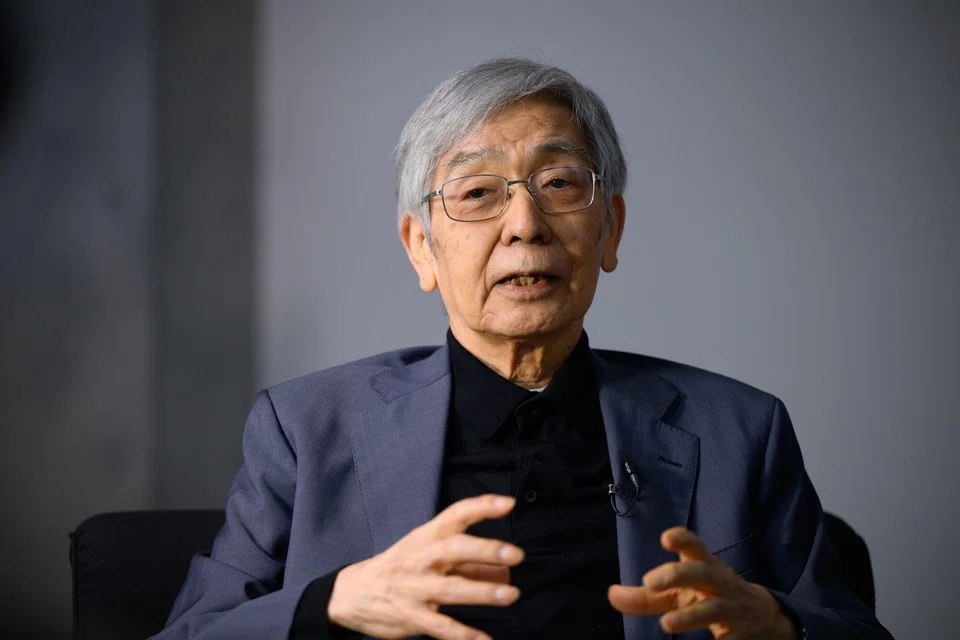
FORMER Bank of Japan Governor Haruhiko Kuroda flagged the possibility that persistent inflation risks might prompt authorities to raise the benchmark interest rate above the so-called neutral rate, where policy is deemed to be neither stimulative nor restrictive.
“It all depends on inflation,” Kuroda said in an interview with Bloomberg on Monday (Nov 16). “If inflation becomes more serious, then rate hikes will naturally have to accelerate as well, and rates may even have to rise above the neutral rate.”
Kuroda pointed to inflationary pressure stemming from US President Donald Trump’s war with Iran, which is raising costs for Japan because of its reliance on imports of oil, raw materials and food.
With the BOJ widely expected to raise rates next month, how high the policy rate might ultimately rise in this cycle has become a primary focus for investors. The median economist estimate is 1.75 per cent, or essentially two more hikes, while some see it reaching as high as 2.5 per cent.
Kuroda spoke roughly two weeks after the BOJ board led by his successor, Kazuo Ueda, reached a milestone by asserting that underlying inflation was consistent with the BOJ’s target for the first time since the goal was set in 2013. Kuroda said it was a favourable development, but the bank’s job isn’t finished.
Handpicked by then-Prime Minister Shinzo Abe in 2013, Kuroda presided over a decade of aggressive monetary easing that pushed the boundaries of conventional central banking and became a central pillar of Abenomics.

He stepped down in April 2023 after two terms, making him the longest-serving governor in the BOJ’s history.
The former chief stressed that inflation would determine the BOJ’s future course. The BOJ’s price outlook is 2.5 per cent for this fiscal year, but the average has been about 1.7 per cent in actual data through September. The average monthly gain would need to sharply rise to about 3.3 per cent in the next six months for the projection to be realised.
The interview took place hours after government data showed Japan’s economy contracted in the three months through September, with consumer spending declining partly due to unusually bad weather during the period.



Kuroda played down concerns about the contraction and said the weakness is probably “temporary.”
A former Finance Ministry official, Kuroda also spoke as lawmakers debate Takaichi’s plan to cut the sales tax on food for two years starting in April. Takaichi has said households need support against inflation while critics doubt its effectiveness and question how to fund the measure.
The tax cut measures are expected to add around 10 trillion yen (US$62.7 billion) to the economy. That fiscal boost is likely to complicate the BOJ’s task as the economy is already running at capacity with strong employment — the jobless rate is a mere 2.4 per cent, the former governor said.
“I don’t see the point. If you cut taxes under those circumstances, it’s obviously not going to raise the growth rate — it’s going to push up prices,” Kuroda said. “And if that happens, the BOJ will have no choice but to keep raising interest rates.”
One of the most controversial policies Kuroda deployed was a negative interest rate of -0.1 per cent in 2016. In his book published last month, he revealed that at the time he thought it would be difficult to cut rates any further, even though the bank repeatedly pledged to do so if deemed necessary.
“Financial institutions may not have been able to stomach any further” given their inability to impose negative rates on depositors, Kuroda said. “Among central bankers it was a shared view that it can’t go deeper and deeper.” BLOOMBERG
Decoding Asia newsletter: your guide to navigating Asia in a new global order. Sign up here to get Decoding Asia newsletter. Delivered to your inbox. Free.
Share with us your feedback on BT's products and services