

MUFG wades back into Japanese bonds with eye on policy risks
The chief executive of the bank’s global markets business says it has started ‘exploratory purchases’ of 10-year JGBs at around 3.1%
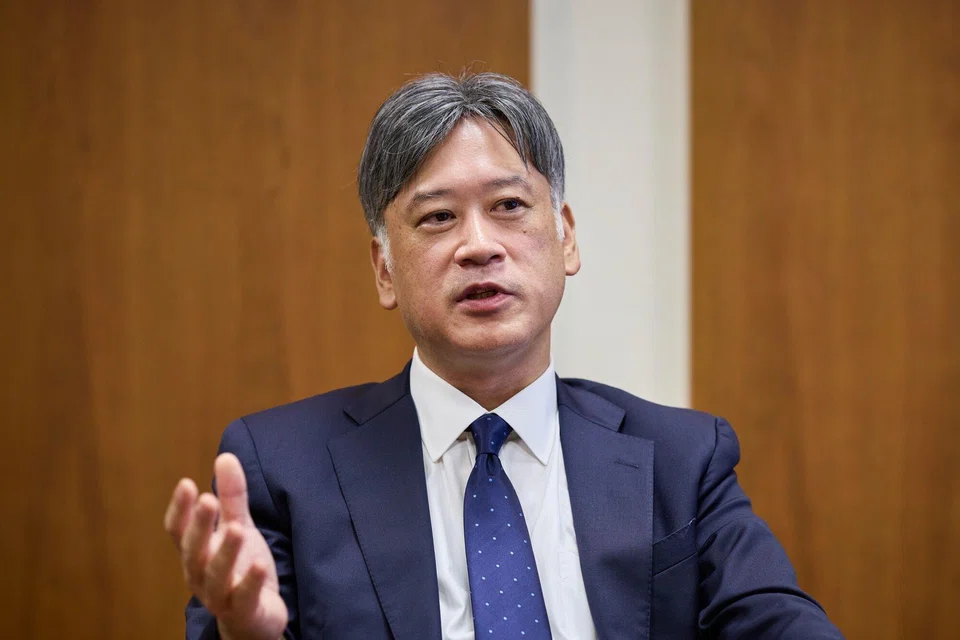
[TOKYO] Japan’s biggest bank is tentatively getting back into the country’s benchmark government bonds, even as it remains concerned that yields could further spike due to fiscal and monetary policies in the nation.
“We plan to rebuild our position gradually going forward while carefully assessing interest-rate levels,” said Atsushi Yamashita, chief executive of MUFG Bank’s global markets business.
Yamashita expects Japan’s 10-year government bond yields to peak at about 3.2 per cent, just above the three-decade high of 3.115 per cent reached earlier this month.
But Yamashita remains wary that yields could climb higher if the Bank of Japan (BOJ) struggles to contain inflation or Prime Minister Sanae Takaichi fails to convince investors that she can maintain a grip on government finances.
“We don’t yet think risks of a further yield rise have been completely eliminated,” he said in his first interview since taking the role at the core unit of Mitsubishi UFJ Financial Group.
Global investors are grappling with a surge in yields in major economies, where questions over fiscal sustainability are gaining more urgency along with rising prices fueled by the prolonged Middle East conflict.
MUFG and rival Japanese banks are being watched closely for signs of a shift in their cautious stance toward the nation’s bonds, whose value has been falling steadily as interest rates rise.
Yamashita, who took the position in April, is responsible for managing the lender’s securities investments. MUFG’s banking and trust bank units had a combined portfolio of more than 85 trillion yen (US$537 billion) as of June.
MUFG has been trimming its holdings of longer-term Japanese government bonds (JGBs) in recent years, reducing its exposure to rising interest rates. The average duration of its JGB holdings fell to 1.2 years as of June, from 3.1 as of September last year.


Yamashita said that the bank started “exploratory purchases” of 10-year JGBs at around 3.1 per cent.
While his base case is for yields to peak at 3.2 per cent, he noted that there’s a risk that they climb to the mid-to-high 3 per cent range, potentially driven by the policy paths of the central bank and the government.
Ten-year JGB yields fell 5 basis points to 2.945 per cent on Thursday (Oct 15) morning in Tokyo, dropping more than other tenors.
Markets are watching whether Takaichi maintains fiscal discipline as she carries out her ambitious economic growth agenda.
In a country with the highest ratio of debt to gross domestic product in the developed world, questions remain over how the government will finance outlays and a temporary tax cut on food items in Budget proposals to be unveiled toward the end of the year.
“It is important from the standpoint of maintaining market confidence to conduct fiscal policy without relying too heavily on optimistic growth scenarios,” Yamashita said.
While acknowledging that the country’s finances are improving thanks to an inflation-driven increase in tax revenue, he added: “Markets are looking not only at the current situation, but also at what lies ahead.”
The Bank of Japan’s policy outlook also carries risks, as soaring energy costs and a weak yen spur inflation.
“The market is most concerned about a scenario in which the pace of rate hikes fails to keep up with inflationary pressures, leaving the Bank of Japan behind the curve,” said Yamashita.
He said that the BOJ’s next rate hike is likely to come in December, followed by more in roughly three-month intervals. While he expects the terminal rate to reach around 2 per cent from 1.25 per cent now, it may go higher depending on inflation prospects.
Even as MUFG gradually builds up its yen bond holdings, Yamashita ruled out repatriation, which involves selling assets overseas to invest more at home. “If yields become sufficiently attractive in light of factors such as where the rate-hiking cycle ultimately peaks, there would be scope to increase our foreign-bond investments as well.”
MUFG has little exposure to European sovereign bonds, including French debt, Yamashita pointed out.
Volatility in European bond markets is likely to remain elevated for now, but the bloc is unlikely to spiral toward a situation similar to the debt crisis that engulfed it around 15 years ago, he said. “The current concerns are centred on the fiscal and political situations of specific countries and haven’t spread into broader concerns about the stability of the region’s financial system.”
Still, Yamashita added that France’s fiscal and political challenges that have fuelled a bond market rout offer a lesson for Japan. He pointed out: “How to contain the fiscal deficit while debt-servicing costs are being pushed up by rising rates should serve as cautionary example for Japan. It’s likely to face the same problem in the future.” BLOOMBERG
Decoding Asia newsletter: your guide to navigating Asia in a new global order. Sign up here to get Decoding Asia newsletter. Delivered to your inbox. Free.
Share with us your feedback on BT's products and services






