

RBA must decide if rate sufficient to cool prices: governor
Australia’s central bank kept the key interest rate unchanged at 4.35% in August
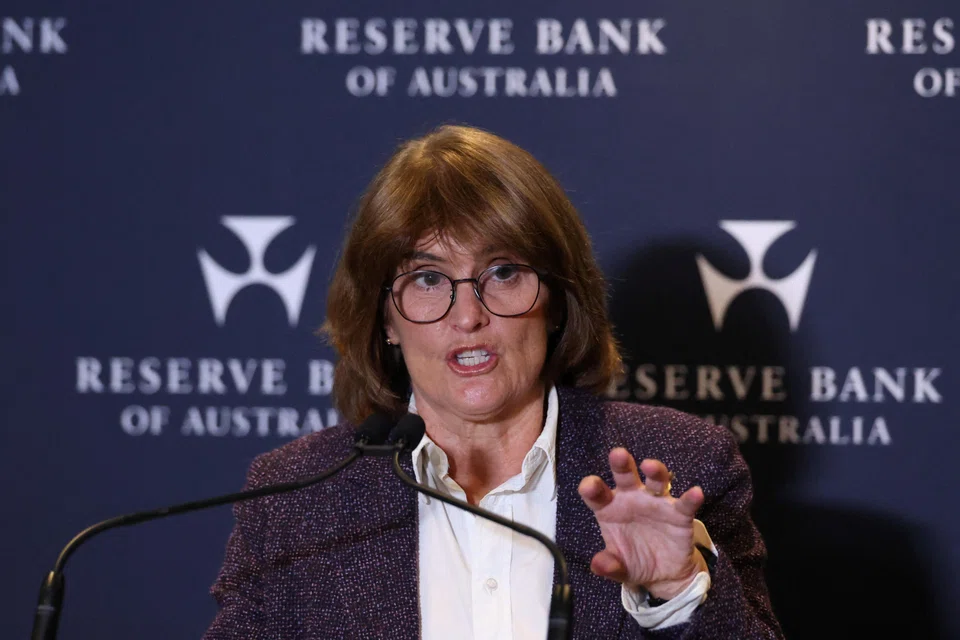
AUSTRALIA’S central bank board needs to decide later this month whether its benchmark interest rate is at a level sufficient to restrain price pressures and return inflation to target, governor Michele Bullock said.
“The Monetary Policy Board will meet in just over a week’s time,” the Reserve Bank chief said in her opening statement to a parliamentary panel on Friday (Sep 18). “We’ll discuss our assessment of the flow of data and how the risks are unfolding. A key question is whether the tightening in monetary policy to date will be sufficient to bring inflation back to target in a reasonable time.”
The remarks are Bullock’s first significant public comments since the RBA’s August policy decision, when it held the key interest rate unchanged at 4.35 per cent for a second straight meeting.
Officials have been signalling mounting concerns that inflation has been too high for too long and are worried about additional price pressures.
“I recognise that higher interest rates are difficult for Australians with mortgages who are also facing cost-of-living pressures,” Bullock said. “But reducing inflation is essential.”
The Federal Reserve this week lifted borrowing costs for the first time since 2023 and projected further hikes to contain inflation, and a number of other developed world central banks have either hiked or are considering doing so.
When the RBA released updated forecasts in August it warned that risks were skewed to the upside.
“Developments since then suggest that although growth in the Australian economy is slowing, some of these upside risks to inflation appear to be materialising,” Bullock said.
“Global cost pressures have increased – the Middle East conflict, the AI boom and extreme weather events are contributing to upward pressure on a range of energy, agricultural and technology-related prices.”

Prior to the testimony, swaps markets priced at least two more RBA rate hikes by the February meeting, with a more than 80 per cent chance the first occurs on Sep 29. At the start of this month, traders had expected the RBA to hike just once more, likely by year-end.
The governor pointed out that there seems little early prospect of a resolution to the US-Iran war.
The US and Iran exchanged strikes on oil tankers in the Persian Gulf earlier this month, driving up energy prices.
Tensions flared again in the Strait of Hormuz last weekend, while Saudi Arabia has come under pressure from the Teheran-backed Houthi militants in Yemen.
Brent crude surged back above US$100 a barrel this month, fanning fears over energy-linked inflation pressures.
“Through our liaison programme, we are hearing that many firms are passing on higher input costs,” Bullock said. “This was expected. But it is important that these effects remain contained and do not become embedded into price and wage setting decisions. Otherwise, inflation could prove more persistent and require a stronger policy response.” BLOOMBERG
Decoding Asia newsletter: your guide to navigating Asia in a new global order. Sign up here to get Decoding Asia newsletter. Delivered to your inbox. Free.
Share with us your feedback on BT's products and services
TRENDING NOW

LTA proposes combining car COE categories, adding rebate-surcharge system

StarHub to acquire MyRepublic’s mobile business amid ongoing telco consolidation

DBS, OCBC, UOB rout lops billions off STI as inflation, rate concerns spook investors

Grab CEO’s wife Chloe Tong on life with Anthony Tan and finding her purpose

