

Oil prices fall 1% on hopes of limited supply disruptions
Both oil benchmarks closed about 1% lower on Thursday
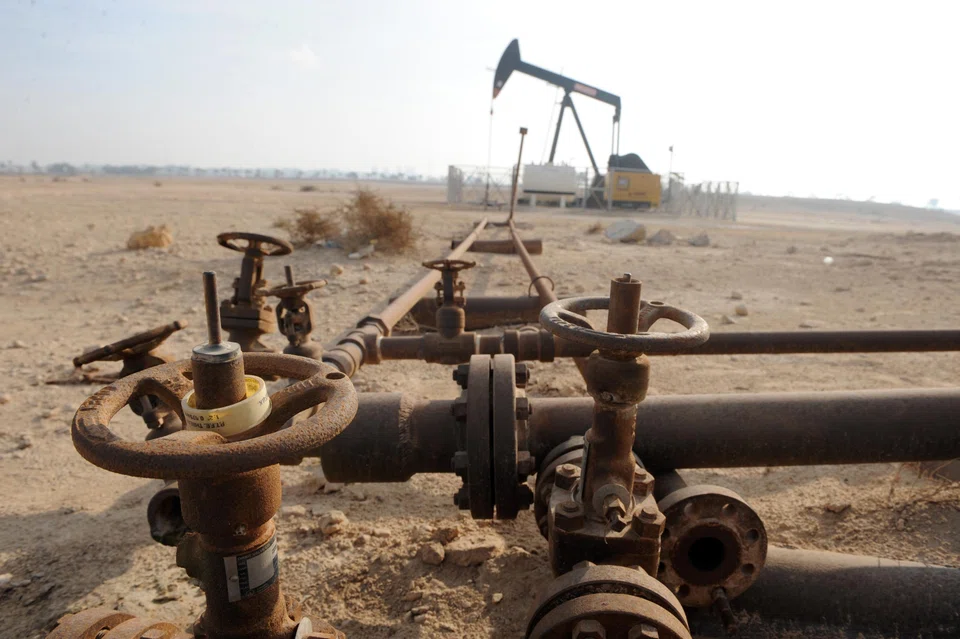
OIL prices fell about 1 per cent, extending losses for a third session, but stayed above US$100 on Friday (Sep 18), as hopes of alternate ways for barrels from the Middle East to reach markets outweighed concerns about strikes between Saudi Arabia and Yemen’s Houthis.
Brent crude futures fell US$1.01, or 1 per cent, to US$103.77 a barrel by 0020 GMT, while US West Texas Intermediate futures fell US$1.03, or 1 per cent, to US$100.88 a barrel. Both benchmarks had closed down about 1 per cent on Thursday.
Markets largely shrugged off concerns about new threats to supplies even as Saudi Arabia and Yemen’s Iran-backed Houthis exchanged fresh strikes across their border on Thursday, expanding the Middle East war front.
Oil prices had climbed to around four-month highs this week as sources said crude loadings at Saudi Arabia’s Red Sea export hub of Yanbu had been suspended and Riyadh had cancelled some deliveries to Europe after its East-West pipeline was damaged in an attack last week.
Sources that have spoken to Reuters have given varying estimates of how long it will take to reopen the pipeline and return crude flows to normal.
Three of the pipeline’s pumping stations — one more than assessed previously — were damaged, according to satellite imagery and three industry sources. A prolonged closure of the pipeline to Yanbu could cut off as much as 4 per cent of global oil supply, traders have said.
Bloomberg reported that Saudi Arabia was seeking to return about half the capacity of its East-West oil pipeline within days after the critical link to the Red Sea was halted last week following drone attacks.
Saudi Arabia was also offering more crude cargoes to Asian refiners through ship-to-ship transfers off Oman’s Sohar port, a move that would help offset some of the disruption caused by attacks on the East-West pipeline.
US Energy Secretary Chris Wright has said that crude should be flowing through the pipeline within days.
Iran’s Revolutionary Guards Navy said a Togo-flagged oil tanker was struck while attempting to make an “illegal passage” through the Strait of Hormuz on Thursday, Iranian state media said early on Friday.
Highlighting uncertainty, JPMorgan said on Thursday it does not have a clear baseline view for oil markets for the first time since the start of the US-Israeli war on Iran.
The US and Iran have held no peace talks since an interim agreement reached in June collapsed within weeks.
The war will come up for discussion at the United Nations General Assembly next week, and an Iranian delegation will be able to attend, according to the US State Department. REUTERS
Decoding Asia newsletter: your guide to navigating Asia in a new global order. Sign up here to get Decoding Asia newsletter. Delivered to your inbox. Free.
Share with us your feedback on BT's products and services
TRENDING NOW

DBS, OCBC, UOB rout lops billions off STI as inflation, rate concerns spook investors

Grab CEO’s wife Chloe Tong on life with Anthony Tan and finding her purpose

OCBC sheds S$8 billion in value as shares close nearly 6% down; analysts cautious on banks

Deal between tycoon friends sparks scrutiny of Philippine power sector

