

Sovereign investors with US$29 trillion pivot to energy assets, flag dollar fears
61% of central banks say US debt hurts the dollar’s long-term reserve role
 Add BT as a preferred source
[LONDON] Sovereign wealth funds and central banks managing US$29 trillion in assets are turning to energy assets, and raising concerns about the US dollar, in a portfolio reassessment driven by unprecedented geopolitical shifts, according to an Invesco survey published on Monday (Jun 29).
The survey of 90 sovereign wealth funds and 54 central banks showed an increasing focus on diversification, and investment portfolios that can “take a hit and still hold it together” amid trade tariffs, closed shipping channels and wars in Ukraine and the Middle East.
Some 80 per cent of those polled said energy security and energy transition infrastructure were the most credible investments for making their portfolios more resilient, and infrastructure reached 9 per cent of sovereign wealth fund assets in 2026.
The race to build energy-hungry AI infrastructure added to the appeal, the report by the global investment management firm found.
“In a world of inflation shocks, geopolitical fragmentation and more concentrated markets, investors are rethinking old assumptions about diversification and redesigning portfolios to withstand a wider range of outcomes,” Invesco head of research Benjamin Jones said.
“Resilience is becoming a hard requirement, not a nice-to-have.”
The positive bond-equity correlation in recent years has also eroded reliance on bonds for diversification, with more focusing on liquidity and real assets.
US dollar, debt, and risk
Concerns about the US dollar were “widespread and deepening”, and 61 per cent of central banks polled also said that US debt levels negatively impact the US dollar’s long-term position as a reserve asset, up from 20 per cent in 2024.
While the US-Israeli war with Iran has helped lift the US dollar 3 per cent this year, analysts say US policy uncertainty and high debt mean the currency could weaken over the long term.

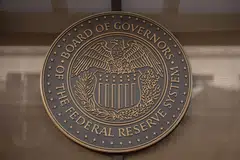
The lack of a credible US dollar alternative is likely to make any shift away from it incremental, but 29 per cent of those in the Invesco survey said the US dollar’s reserve-currency status will be weaker in five years, up from 12 per cent in 2022.
Several institutions also reported reviewing their reliance on US-based custodians, counterparties and clearing infrastructure due to geopolitical tensions, Invesco said.
One European central bank said it had already replaced its US custodian. A Latin American central bank said it was setting up new non-US custodial relationships to prepare for a “worst-case scenario”.
But one central bank respondent said any such move was fraught: “This act in and of itself could be interpreted as hostile by the US”.
One-third of those polled meanwhile said they intended to boost gold holdings as part of the diversification trend. REUTERS
Decoding Asia newsletter: your guide to navigating Asia in a new global order. Sign up here to get Decoding Asia newsletter. Delivered to your inbox. Free.
Share with us your feedback on BT's products and services
TRENDING NOW

Singapore banks may need to address indirect exposure to captive coal in their financing policies

What’s wrong with Orchard Road? Experts weigh in on the street’s cachet and its future

Indonesia bets on creative economy, IP for growth amid rising global competition

Malaysian tycoon Vincent Tan’s sell-downs point to pruning rather than an exit plan

