

‘Walking a tightrope’: OCBC CEO Tan Teck Long on balancing bold moves with conservative banking
He reflects on his approach to technology, investments and regional expansion plans

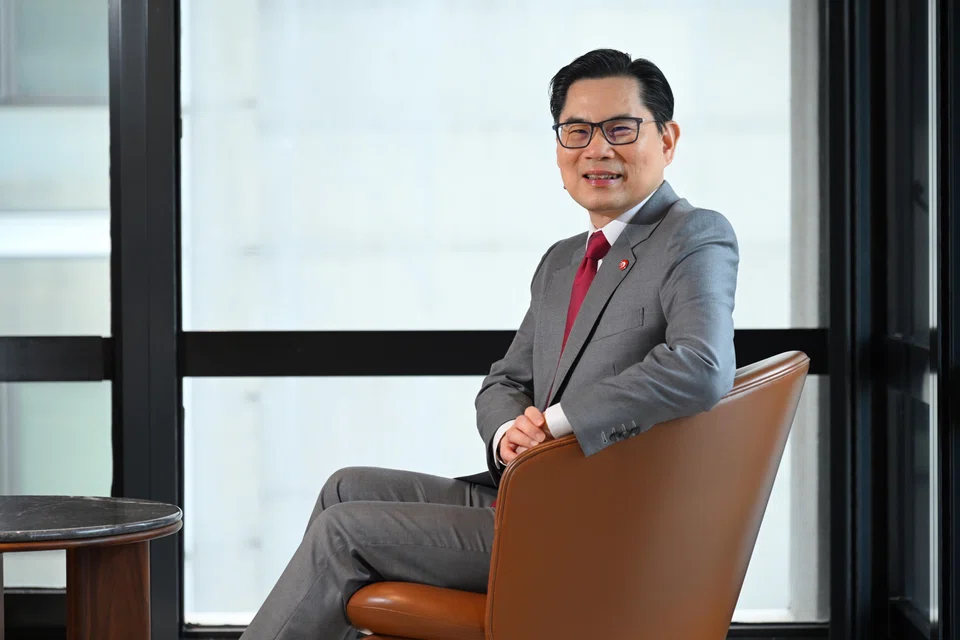
[SINGAPORE] Nearly a year into his tenure as OCBC’s group CEO, Tan Teck Long still considers himself a “conservative” banker.
He used the word repeatedly in an interview with The Business Times, reflecting on his approach to technology, investments and regional expansion plans since taking the helm in January.
Yet, that description appears at odds with the pace of change at Singapore’s second-largest lender under his leadership.
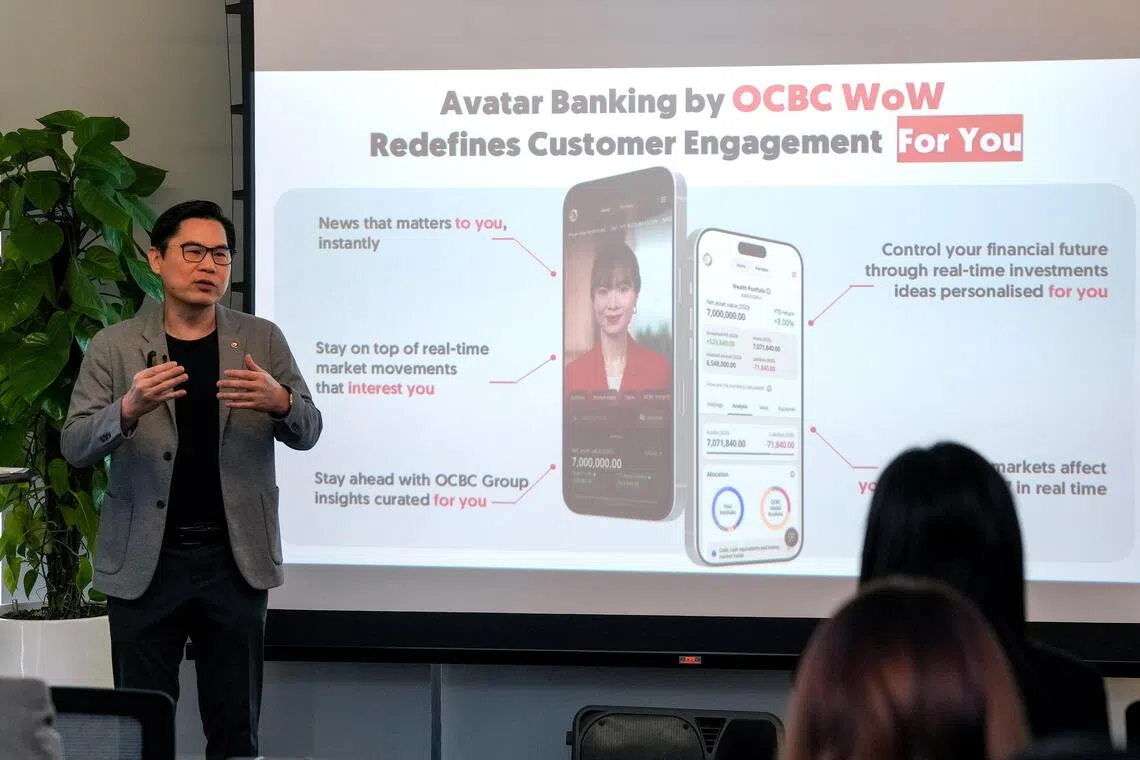
Over the past 11 months, OCBC has acquired HSBC’s retail and wealth franchise in Indonesia; brought together the leaders of its wealth businesses into a single committee; and launched an artificial intelligence-powered banking app it called “avatar banking”.
But Tan rejects the suggestion that these moves signal a shift in the bank’s risk appetite. Rather, they reflect its ability to make calculated decisions based on a deep understanding of the risks involved.
“What we have shown is that we are nimble and we have the ability to make big moves where called for,” he said. “To us, we remain conservative because we know what we are doing.”
For Tan, protecting customer deposits and preserving trust in the brand take precedence over maximising profits, particularly in an uncertain environment. That does not mean shying away from opportunities.
“It is like walking a tightrope, because to say no to everything is very easy for risk management, but that’s not the purpose,” he said.
Against a backdrop of geopolitical uncertainty and market volatility, OCBC has embarked on its “Next Frontier” strategy – one of its most ambitious expansion plans in recent years as it positions itself to ride upcoming megatrends and improve its return on equity (ROE).
The strategy is already showing results. Its focus on wealth, in particular, led wealth fees to rise 25 per cent in the first nine months of 2026.
Tan believes double-digit growth in its wealth business should remain sustainable, given the opportunities to expand the bank’s capabilities in its other core markets of Hong Kong, Malaysia and Indonesia.
Embracing fragmentation
Asia’s fragmented markets have long challenged lenders seeking regional expansion.
While Singapore and Hong Kong serve as regional wealth hubs, OCBC’s businesses in Malaysia and Indonesia are more focused on domestic wealth accumulation.
But Tan believes these differences can work to OCBC’s advantage, enabling the bank to tailor the execution of its strategy to each market rather than adopt a one-size-fits-all approach.
While the bank sets group-wide risk and technology policies, its country management teams can work with group management to adapt them to local market conditions.
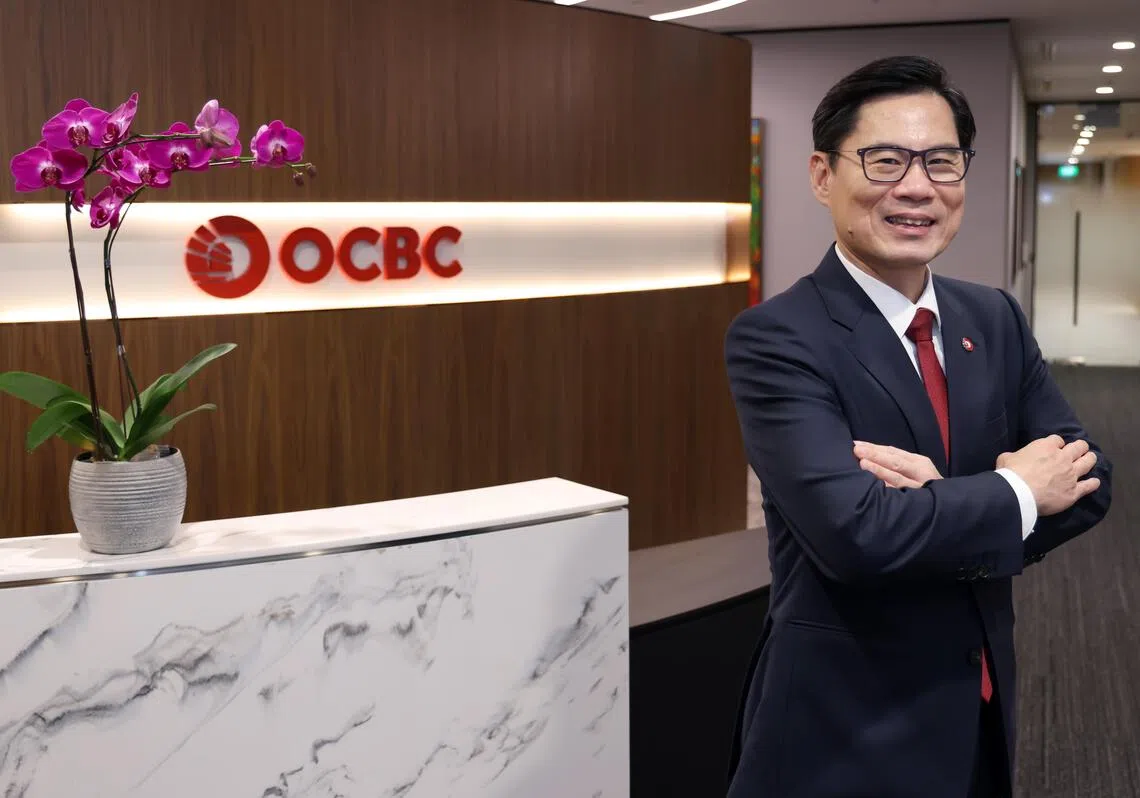
Tan joked that OCBC’s senior executives have to work four times harder than their counterparts at foreign banks, given the need to adapt to four distinct markets.
“It’s a huge competitive advantage,” he said, “because the foreign banks (operating in many more locations) will not be able to react this way.”
With just four core markets, the bank is also “rightsized” to adapt its approach. This allows for a more efficient allocation of resources, as the solutions are more suited to the needs of the individual market rather than a blanket adoption of policies, Tan explained.
OCBC’s expansion plans reflect these differences.
Across its Singapore-Hong Kong twin hubs, the lender aims to deliver an integrated banking, wealth and insurance proposition, including services catered to ageing populations. In Hong Kong, it also plans to expand its affluent segment and global markets business.
As for Malaysia, the bank is looking to expand its affluent customer base through Great Eastern Malaysia’s ecosystem, capture inbound investment flows and pursue opportunities arising from initiatives such as the Johor-Singapore Special Economic Zone.
Meanwhile, in Indonesia, the lender aims to grow its private bank.
Tan expects that these will come together and enable OCBC to accelerate growth across its four core markets, even as their different characteristics call for distinct approaches.
This flexibility also extends to his leadership style, which he describes as “situational”. Where he believes employees are capable of resolving problems independently, he prefers giving them the autonomy to do so.
“When you give (the team) that bandwidth and latitude to sort (problems) out, then they will start to surface things which haven’t occurred to me,” he said.
Balancing growth and risk
Technology is another important area that underpins Tan’s strategy.
Rather than adopting AI for its own sake, he wants the bank to redesign workflows first, deploying the technology only when it can improve processes and ultimately lift revenue and ROE.
“I have been asked by some analysts how much benefit I get from AI,” he said. “But why do I want to count the benefits of AI when I should be getting benefits at scale end-to-end through a better process, and the better process actually enables me to plug in the latest AI tool, which is fit for purpose?”
Tan is also reluctant to incur additional costs simply to quantify AI’s standalone contribution, particularly when improvements stem from a combination of process redesign, digitalisation and AI.
“By not succumbing to the pressure to go and measure it, I actually now have more money to do the right things,” he said.
Instead, OCBC is pursuing what he calls an “expertise-led” approach, bringing together banking, technology and data specialists to redesign workflows and identify where AI can deliver business value.
The bank still tracks the usage of its AI solutions internally, alongside broader business outcomes.
“What we have shown is that we are nimble and we have the ability to make big moves where called for. To us, we remain conservative because we know what we are doing.”
Tan Teck Long, group CEO, OCBC
One example of its technology ambitions is avatar banking, through an AI-powered avatar banking app to give wealth advice.
Tan said that OCBC is the only bank in South-east Asia to offer such an AI-native banking channel, with the platform currently in beta testing as the bank refines its capabilities.
The lender is taking a more measured approach when it comes to product improvements, as it seeks to minimise the risk of AI hallucinations and ensure that the information provided to clients is appropriate.
Looking ahead, he believes that OCBC is still at the early stages of its strategy shift. He hopes for the bank to progress more quickly, but he also noted the need to balance revenue growth with service improvements.
He also flagged cybersecurity risks as one of his biggest worries given the pace of technological change.
Ultimately, the challenge for Tan will be to balance OCBC’s growth and transformation without compromising the conservative approach to risk that he considers fundamental to the bank.
“How do we walk a tightrope? We (have to) build our capabilities and understanding, and then walk the tightrope.”
TRENDING NOW

As Indonesia picks new vice-president to succeed Gibran, investors see risks and opportunities

Could Jensen Huang work for Elon Musk? It would be ‘a titanic ego death match’, says biographer

Inside OCBC’s ‘Tech Shift’: Building a culture of innovation

Yangzijiang Maritime eyes 2027-2028 profit surge on newbuild deliveries

