Berkshire ramps up buybacks under new CEO Greg Abel as Q3 operating profit falls 6%
Berkshire says it repurchased US$9.6 billion of its own stock between July and September
BERKSHIRE Hathaway has accelerated its stock repurchases, as new CEO Greg Abel demonstrated a greater willingness than his predecessor Warren Buffett to put the conglomerate’s enormous cash hoard to use.
The Omaha, Nebraska-based company also on Saturday (Nov 7) reported lower third-quarter profit, with operating earnings down 6 per cent to US$12.71 billion and net earnings down 28 per cent to US$22.11 billion. These reflected declines in insurance businesses such as Geico, and lower gains on common stock investments.
Berkshire said it repurchased US$9.6 billion of its own stock between July and September and about US$2 billion more in October, in addition to US$4.8 billion earlier in 2026.
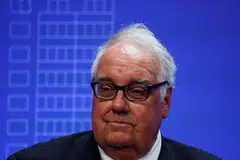
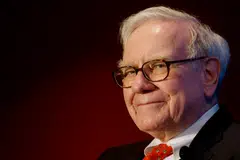
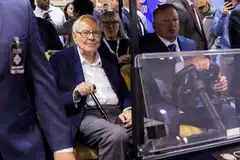
The quarter was the third since Abel, 64, became chief executive. Buffett, 96, had difficulty finding things to buy toward the end of his 60 years at the helm. He remains chairman emeritus, after his son Howard Buffett replaced him as chairman in September.
Following the repurchases, Berkshire ended September with US$356.9 billion of cash and equivalents, down from US$380.2 billion six months earlier. Its biggest year for buybacks was 2021, when it repurchased US$27 billion of stock.
Berkshire owns dozens of businesses including several insurers and reinsurers, the BNSF railroad, utilities, industrial and manufacturing companies, and retail brands such as Brooks running shoes, Fruit of the Loom underwear and See’s Candies. It also owned US$335.5 billion of stocks such as Alphabet, Apple and American Express as of Sep 30.

Many investors view the US$1.21 trillion conglomerate as a barometer for the US economy.
Less volatile, high quality
While the US economy grew at an annualised 3.4 per cent rate in the third quarter, according to the advance estimate of the Commerce Department’s Bureau of Economic Analysis, elevated inflation and gas prices are dampening consumers’ ability to spend.
Berkshire said that “considerable uncertainty” remains about economic and geopolitical events, including tariffs and wars, and several retailing businesses are experiencing “sluggish” demand because of that uncertainty and its impact on consumer confidence.
Nonetheless, shares of Berkshire, which owns several businesses that benefit from higher gasoline and electricity prices, reached record highs this week despite a broader market sell-off driven by investor worries about artificial intelligence and debt-fuelled spending by technology companies.
Since the end of September, Berkshire’s stock has outgained the S&P 500 by more than 18 percentage points, after lagging significantly since Buffett announced in May 2025 he was stepping down as CEO. For all of 2026, Berkshire has beaten the index by more than 5 percentage points.
Cathy Seifert, a CFRA Research analyst who rates Berkshire “hold,” said Berkshire’s balance sheet strength, diversification and share repurchases provide tailwinds.
“Investors may be rotating into less volatile, high-quality names such as Berkshire,” Seifert said. “The question is how much investors will accept short-term shortfalls in exchange for owning a company with a strong balance sheet and which successfully transitioned to a post-Buffett era.”
Support for AI
Berkshire’s third-quarter operating profit of US$12.71 billion, or about US$8,954 per Class A share, fell from US$13.49 billion a year earlier. Profit from insurance declined 26 per cent, and from underwriting fell 43 per cent.
The US$22.11 billion of net income included unrealised gains and losses on stocks that Berkshire is not selling. Berkshire urges investors to ignore the resulting volatility.
Revenue increased 11 per cent to US$105.65 billion, the second straight quarter of double-digit percentage growth, despite declines in consumer businesses such as Fruit of the Loom underwear and Forest River RVs.
Results reflected purchases in 2026 of Occidental Petroleum’s chemicals business for US$9.4 billion and the Taylor Morrison home builder for US$6.8 billion.
Berkshire has also spent billions of dollars on Alphabet shares to help Google’s parent expand in AI, though the stock trades below the discounted prices that Berkshire paid. It also took a 4 per cent stake in Italian software technology company Bending Spoons.
BNSF, energy, industrial businesses fare better
Geico’s 45 per cent pre-tax profit decline reflected a willingness to charge lower premiums, to help regain customers lost during a multi-year effort to improve underwriting quality and reduce overhead.
The insurer’s loss ratio, or percentage of premiums paid to cover claims, rose to 76.6 per cent from 71.5 per cent a year earlier. Claims also grew in other Berkshire insurance and reinsurance businesses.
Seifert called Geico’s results weak relative to those of Allstate and Progressive. She also said Berkshire’s limited financial disclosures, long a concern for analysts, make it harder to pinpoint problems and how to fix them.
“Limited disclosures are fine when everything goes in the right direction, but become a point of vulnerability” when they do not, she said.
Profit at BNSF rose 19 per cent, benefiting from fuel surcharges and higher volumes of consumer, agricultural and energy products.
Profit rose 8 per cent at Berkshire Hathaway Energy, which owns utilities, natural gas pipelines and Berkshire’s namesake real estate brokerage.
Industrial businesses fared well. In that unit, aerospace and industrial gas turbine sales helped Precision Castparts boost pre-tax profit by 30 per cent.
Profit from consumer products businesses declined, mainly because of lower tax credits at Duracell, while higher gas prices boosted the Pilot truck stop chain. REUTERS
Decoding Asia newsletter: your guide to navigating Asia in a new global order. Sign up here to get Decoding Asia newsletter. Delivered to your inbox. Free.
Share with us your feedback on BT's products and services