Biggest danger in Trump era is risk of US economy overheating
The president-elect and his supporters seem determined to shake things up, but this could mean market volatility
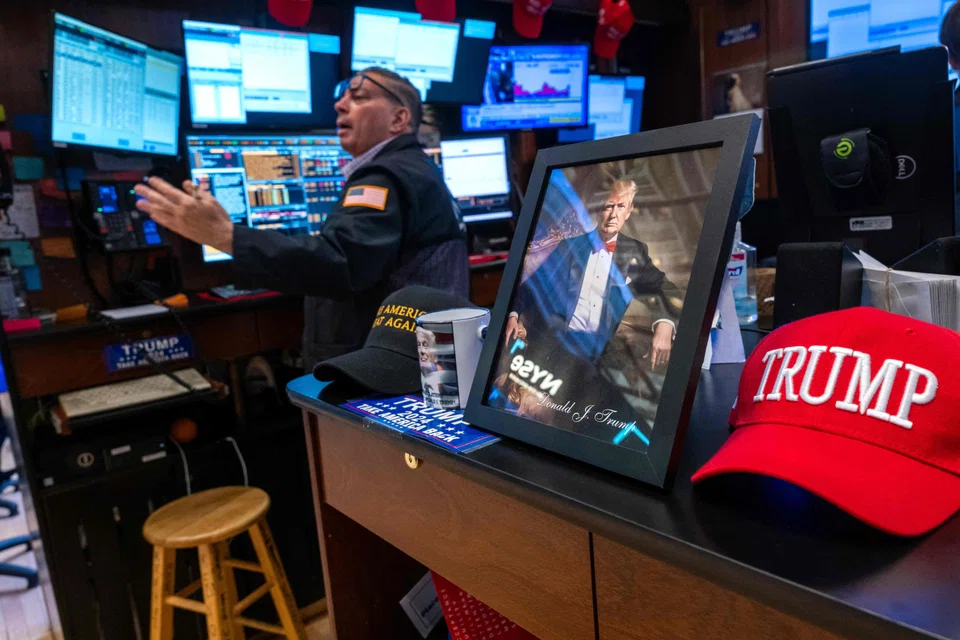
MOST Wall Street strategists anticipate the 2024 rally gaining stronger momentum in 2025. Unfortunately, in the contrarian world of finance, optimism is not always a good sign.
Almost everyone agrees that the US economy and stock market are now in the palm of president-elect Donald Trump’s hand. But what will he do with them all? Trump and his cadre of supporters, including Elon Musk, are determined to shake things up, and make the United States a more business-friendly place.
The motto for the second Trump administration seems to be borrowed from Musk’s old stamping ground in Silicon Valley, which is to “move fast and break things”.
That may work well for space rockets, payment software and electric cars. But when it comes to the complex chemistry of global trade and diplomacy, shaking things up can lead to volatility or even explosions.
There are many reasons why 2025 could see painful sell-offs in addition to euphoric rallies. These include the risk of inflation that comes with widespread increases of tariffs, similar risks arising from the threatened removal of undocumented labour, the reckless speculation that comes with deregulation, and the rich valuation of the stock market.
On Nov 25, Trump vowed to increase tariffs on all Chinese goods by 10 per cent and to impose 25 per cent tariffs on all goods crossing from Mexico and Canada on his first day of work after his Jan 20 inauguration.
One reason Trump is very interested in this kind of trade policy is that the executive branch has absolute discretion over this. A wide swathe of US imports, from computer chips to cars, are likely to grow more expensive if Trump levies the tariffs threatened on the US’ largest trading partners – China, Mexico, Canada and the European Union.
The undocumented people that Trump has threatened to round up and place in detention centres are the cornerstone of the massive US construction, farming and home-maintenance industries.
Economists are unanimous in their warning that wage inflation – the most pernicious form of inflation because it stirs increases in all other kinds of prices of goods, services and accommodation – is inevitable if these threats are carried out.
There are signs of a slowdown in the labour market. US Federal Reserve chairman Jerome Powell noted that jobs are easy to keep, but increasingly hard to find as hiring slows. Still, the biggest danger in the Trump era might not be the economy running too cold but, rather, the risk of overheating.
“The stimulative fiscal policies will add to near-term inflationary pressures, potentially resulting in a less-accommodative Fed,” said strategists at investment firm PineBridge Investments, in a note to clients.
In contrast, the weaker economic outlook for Europe will allow the European Central Bank to cut rates at a steady pace, and the net outcome should bolster a stronger US dollar, they added.
Much of the 2024 stock gains were predicated on a prolonged rate-cut cycle. The mere hint from Powell that inflation was in the air again caused a brief market correction in mid-December.
Independent Wall Street strategist Jim Paulsen felt that Powell may be bluffing. Historically, the Fed has often cut rates during times of rising inflation, he said. Once the central bank has embarked on a policy change, it’s unusual to pause so soon.
Some will win, some will not
Trump’s economic policies are not yet enacted, but there’s undoubtedly some extremely “market friendly” material in his policy plans. It seems highly likely that the tax cuts will sail through a Congress now dominated by his Republican acolytes.
Some of Trump’s more populist vows, such as his stated desire to rein in “middlemen” in the healthcare system, are stock-market-unfriendly, however.
The same applies to the plans to roll back support for solar power, electric cars and other green-economy staples. Some brokerages argue that there will be as many stock-market sector losers branded as there are winners crowned by the second Trump administration.
Wall Street banks and investment managers, on the other hand, are almost certain to have a bonanza. Some of the biggest gainers in the wake of Trump’s election victory in November were Wall Street firms such as Goldman Sachs and Blackstone.
That’s because Trump’s economic team, led by designated Treasury secretary Scott Bessent, is planning a retreat from the interventionist regulatory approach to banking that has been the rule since former president Barack Obama’s election in 2008.
Another red flag recognisable from the dotcom days and from the 2008 crash is people piling into investments that they don’t understand.
Palantir, which was recently added to the S&P 500, quintupled in value in 2024 as small investors clamoured for a piece of its artificial intelligence (AI) business.
Palantir founders Alex Karp and Peter Thiel, among others, have promised to harness the powers of machine learning to conduct the kind of analysis typically conducted by diplomats and intelligence officers.
Warren Buffett famously said that people should understand a corporation’s business before they back it with their hard-earned cash. That’s why Buffett invests in companies such as Coca-Cola, which sells sweetened water. What exactly Palantir is selling requires a degree in computer science to understand.
Meanwhile, on Wall Street, billions of dollars have been ploughed into “private credit” – a system of “non-bank lending” where pension funds and wealthy individuals effectively lend money directly to startups and other corporations. These deals are arranged by firms such as Blue Owl Capital, one of the leading financial stocks on the market in 2024.
Last, there’s the technical question of valuation. For 2024, the broad S&P 500 – the professionals’ gauge of the US stock market – rose about 30 per cent, one of the best years on record.
Based on the traditional price-to-earnings (P/E) ratio for the trailing 12 months, the S&P 500 is currently valued at about 28 times the aggregate earnings of all the companies in the index. That’s expensive on a historical basis, said JD Joyce, president of Texas-based financial advisory Joyce Wealth Management.
He and other bullish strategists are taking it with a pinch of salt this time, however.
That’s because the current P/E tally doesn’t allow for the double-digit net profit increase projected by a FactSet survey of Wall Street analysts for 2025 S&P 500. Even those earnings projections, Joyce noted, do not account for the impact of Trump’s pro-business plans.
Rerun of dotcom era?
Jeremy Grantham, a veteran US investor famous for his scepticism during the dotcom era, warned that the US is in a rerun of that time.
Grantham, who is in his mid-80s, told research firm Morningstar in October that the AI bubble is following an age-old pattern for investment in new technology: an initial burst of exuberance that is completely overdone.
“They overdo themselves in the short term, they crash in the intermediate term, and then they come out of the wreckage and change the world in the long term,” he said.
Take Nvidia, for instance. The company generates considerable annual revenue of roughly US$114 billion from the sales of chips used to power data centres and supercomputers for AI technology. But it only ranks about 30th in the S&P 500 by revenue. For a time in 2024, it was the largest company on the index by market value, even as its growth was set to slow.
Joyce, however, pointed out that the likes of Grantham and former Fed chairman Alan Greenspan, who both warned about valuations on the Nasdaq back in the 1990s, had to wait a long time before their prophecies came true.
“Remember ‘irrational exuberance’?” said Joyce. “Greenspan may have been right, but the market may have doubled before it came to fruition.”
In the chaotic Trump world of 2025, the bulls and the bears are likely to feel vindicated, possibly several times over.