



On the board but frozen out: The Taib family feud tearing Sarawak construction giant apart
Cahya Mata Sarawak is mired in court and boardroom tussles between two sons of the man who built it
 Add BT as a preferred source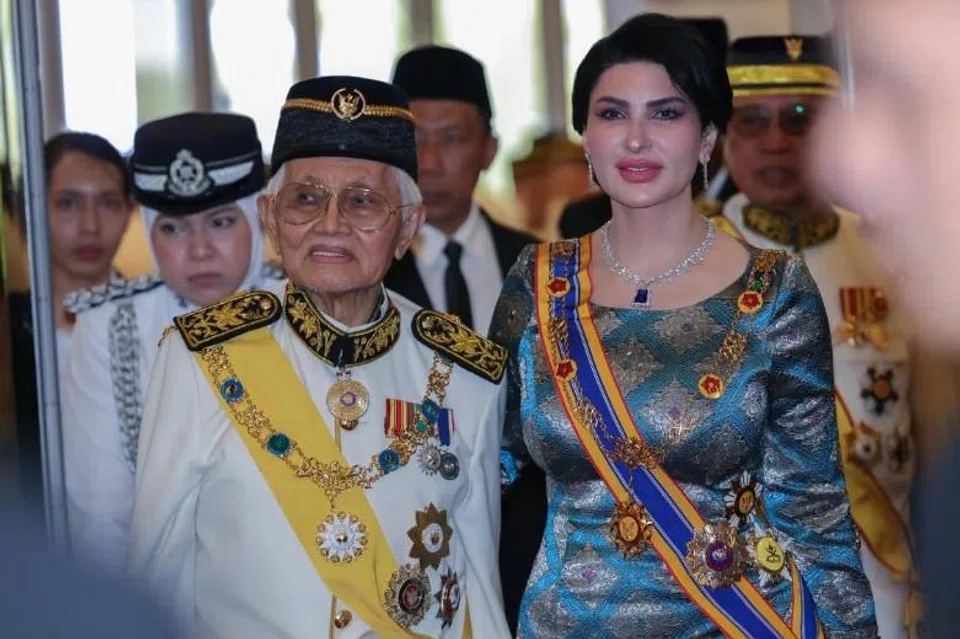
[KUALA LUMPUR] Datuk Seri Mahmud Abu Bekir has a seat on the board of the company built by his father, the late former Sarawak governor Taib Mahmud. But he cannot enter the room to claim it.
The dominant infrastructure firm in Malaysia’s largest state has become mired in both court and boardroom tussles between the two sons of Tun Taib, who was also Sarawak’s longest-serving chief minister.
The feud comes as Cahya Mata Sarawak (CMS) is experiencing a downturn in recent years, with write-offs and loss-making ventures dragging its profitability.
Mahmud, Taib’s elder son and CMS deputy chairman until he was demoted on Apr 7 to a non-executive director, has found himself frozen out of board meetings. This was after he sought detailed financial accounts from several CMS subsidiaries, while suits and counter-suits have multiplied since March 2025.
Given CMS’ close proximity to Sarawak’s political elite, the fortunes of the company – with a 3,000-strong workforce, one of the largest here even after including state-run enterprises – could well become campaign fodder at state polls due by April 2027.
Its May 25 annual general meeting (AGM) is shaping up to be a key turning point with four board members – including managing director Sulaiman Abdul Rahman, who is Taib’s younger son – up for re-election.
The AGM takes place even as a huge RM1 billion (S$323 million) gamble on a new phosphate plant threatens to sink the company entirely. To put this into context, CMS’ total market capitalisation is about RM1.2 billion – making this a substantial bet.
A dynasty at war with itself
The Taibs control about 24 per cent of shares – it was over 60 per cent in the 1990s – in two separate tranches.
As recently as 2020, state-linked investment arms owned a third of the company, although most of these stakes have been pared down, including that of the Sarawak Economic Development Corporation, which is now below 5 per cent.
Taib’s death in 2024 deepened a battle between his children and their stepmother Raghad Kurdi Taib over what some believe is the estate of Malaysia’s richest family, valued in excess of US$20 billion. This wealth was accumulated through logging, agriculture and construction businesses – allegedly concealed behind a web of family members or political proxies.
The Taibs have denied such claims and allegations of wrongdoing. While no criminal culpability has ever been proven against any of the Taibs, financial services from global banking giant HSBC used by Sarawakian firms owned or controlled by the family were flagged as part of suspicious transactions. This was revealed by investigative environmental non-governmental organisation Global Witness shortly before the bank paid a US$1.9 billion fine in December 2012 to settle money laundering investigations in the US.
If the ongoing family feud turns into a no-holds-barred contest pitting Taib’s siblings and children from his first marriage against Toh Puan Raghad, it could see new and damning details divulged in the course of legal proceedings.
Now the tussle over CMS threatens further exposes, especially if the Taib scions take their dispute beyond the firm itself.
This makes it a high-stakes battle not just for those making claims to the Taib fortune, but also for Sarawak’s political elite. The dominant Parti Pesaka Bumiputera Bersatu has held power in various incarnations since the first state polls six decades ago, repeatedly dodging accusations of abuses along the way.
The Gabungan Parti Sarawak coalition it leads is expected to win the state election easily. However, antipathy towards Taib towards the end of his chief ministership led to gains for parties that are now part of Malaysian Prime Minister Anwar Ibrahim’s Pakatan Harapan alliance.
The numbers behind the feud
CMS was the only game in town in terms of cement supply and telecommunications infrastructure when Taib was chief minister from 1981 to 2014 and a further decade as governor. But the company that once had an iron grip on Sarawak’s building blocks is now wobbling.
Practically every infrastructure project, from property development to roads to dams, required cement from CMS.
But its earnings have dipped since 2022, a year after Datuk Seri Sulaiman was appointed managing director.
From a high of RM290 million in 2022, CMS then recorded profits after tax of RM82 million in 2023 and RM125 million in 2024 before a sharp drop to RM40 million in 2025.
The situation appears even more grim from the perspective of comprehensive income, which dropped from RM106 million in 2024 to just RM2 million the following year, after accounting for foreign exchange losses, losses from associated companies and fair value adjustments on assets and liabilities.
Crucially, CMS’ core cement business is not the problem. It delivered pre-tax profits of RM161 million in 2025 – higher than the RM149 million in 2024 and RM146 million in 2023 – against the group’s RM109 million total. This indicates that newer business ventures are the ones making a loss and dragging CMS’ performance.
The most significant is the phosphates subsidiary. A plant that was supposed to open as early as 2019 never did. Then in 2023, Sarawak Energy cut off its electricity supply over unpaid bills. By the time power was restored in September 2025, the venture had accumulated half a billion ringgit in losses – including RM146 million in 2025 alone.
In CMS’ 2025 annual report issued on Apr 24, Sulaiman cited “higher pre-commissioning costs” as the reason for this.
CMS now expects the plant to begin operations in the third quarter of 2026. The initial capital outlay of RM645 million has ballooned to RM1 billion after taking into account loan advances from CMS to the phosphates subsidiary of RM325 million.
Added to that, is the RM342 million Sarawak Energy is suing for unpaid electricity bills from the phosphates arm – a matter now under arbitration. This single venture alone could bring CMS onto the brink of insolvency, as its net current assets stand at RM551 million.
Aside from losses and potential legal costs, there was also over RM300 million recorded as write-offs and impairments between 2023 and 2024.
Battle for the boardroom
It is against this backdrop of mounting losses that Mahmud’s bid to scrutinise CMS’ books has taken on added urgency.
Mahmud has, since 2025, tried to obtain financial and board documents that he claims CMS are withholding from him illegally, given his position as a board member. He filed a suit on Mar 5, 2025, demanding the information. Regulators such as Bursa Malaysia and the Securities Commission have so far not responded substantively to his complaints.
Just two weeks later, CMS sued Mahmud and others involved in an enterprise resource planning system project to unify the entire group’s IT systems and databases. This project was awarded to a firm controlled by Mahmud and his associates in 2019, but had yet to be implemented.
The company also sued Mahmud and others aligned with him for breach of fiduciary duty and conspiracy to injure the company. The suit was based on what it called frivolous and unsubstantiated allegations, and it obtained a court order to bar him from attending board meetings since April 2025.
But even after the order was set aside in January 2026, Mahmud was blocked from attending several meetings as the board cited “conflict of interest” given the ongoing suit to access company documents. On Apr 2, he filed a suit to affirm his right to attend board meetings as a CMS director.
May’s AGM is likely the last chance shareholders have to intervene on CMS’ direction before Sarawak heads to the polls. Should Mahmud succeed in installing directors aligned to him, it would shift the balance of the board – and in all probability, tip the bitter contest with his brother Sulaiman into a new and unpredictable phase. THE STRAITS TIMES
Decoding Asia newsletter: your guide to navigating Asia in a new global order. Sign up here to get Decoding Asia newsletter. Delivered to your inbox. Free.
Share with us your feedback on BT's products and services
TRENDING NOW
Hong Leong, GuocoLand JV sole bidder for condo plot on former Keppel Club site

Nvidia will soon face a chip limit, warns Huawei’s top scientist

Yeoh Pei Xien: YTL’s third-gen scion with a pastor’s heart
Lower consent hurdle among changes proposed for en bloc sales to spur redevelopment, protect minority owners

