

Boards should ‘preset’ instead of reset: Keppel chairman Piyush Gupta
Boards should be viewed as a ‘collective of talent’, much like a football team, he says

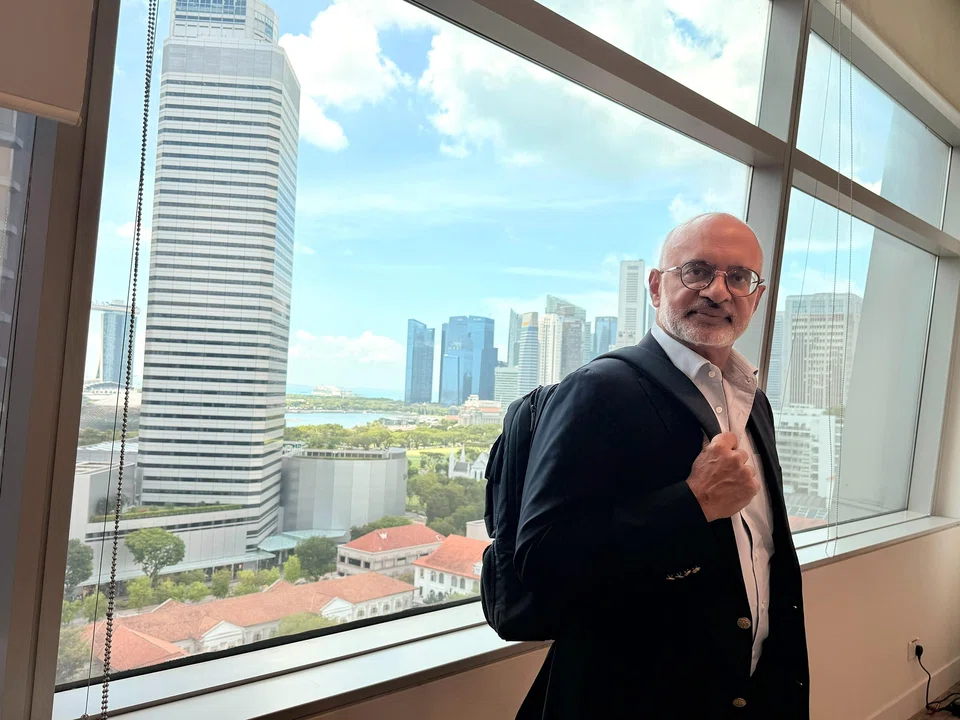
[SINGAPORE] Boards should not be “reset” in response to a changing business and regulatory environment. Instead, they should “preset” by returning to their fundamental role as stewards of companies and long-term value, said Keppel non-executive chairman Piyush Gupta.
“The board is an agent to the shareholder, and their job is to steward the company for creating shareholder value,” he said. While that role can be extended to include broader stakeholder interests, he added that boards “need to be responsible for strategy, direction and creating value” and “cannot just be policemen”.
Gupta, who was formerly CEO of DBS, was speaking in a fireside chat at the annual Singapore Institute of Directors’ (SID) Directors Conference on Friday (Aug 28), moderated by SID treasurer Ooi Huey Tyng.
Gupta was conferred SID’s Honorary Fellowship in recognition of his “distinguished contributions to banking leadership, institution-building and corporate governance in Singapore”, said the national institute for directors.
He also serves on the Board of Trustees of Singapore Management University and Mandai Wildlife Group. In addition, he is a member of the Council of Presidential Advisers to the President of Singapore and serves in an advisory capacity at Temasek as chairman, India. He also sits on the board of Singapore’s National Research Foundation and is a term trustee of the Singapore Indian Development Association.
Speaking at the SID conference, Gupta explained that the evolution of boards towards a role focused principally on policing should not be seen as a reason for a reset. Rather, boards should return to their original, broader role and restore the balance between oversight and value creation.
He said: “That is what I mean by preset. This is not new. We need to go back to our history and understand that boards play a broad role. You have to protect and safeguard value for the long term.”
His comments come as boards face growing regulatory demands and increasingly complex risks.
Regulatory requirements have also contributed to a growing volume of information reaching boardrooms, he added.
SEE ALSO
In banking, audit and risk committee reports can run to as many as 1,000 pages, he said, making it difficult for directors to identify what is truly important.
“In my career, we have been down this path many times, and a lot of agencies have tried to simplify board reporting, but it keeps getting more onerous so I feel the next best is what I tried to do at DBS,” said Gupta.
This entails distilling information into an executive summary that makes clear what the board really needs to know and focus on. This requires an “open the kimono” culture between management and the board, he said, where management is confident enough to spotlight the issues that directors need to focus on.
He recalled that shortly after joining the DBS board, some directors said they were unaware of losses from the bank’s Middle East exposures.
The information had been reported to the board but was buried somewhere, and had not received sufficient attention. Gupta subsequently told his management team that he never wanted any director to be in a position to say “we did not know”.
The solution, he said, was to tell the board to focus on certain things which creates “a culture of openness and dialogue”.
Board culture
Gupta added that management must also feel that the board “has their back”, and that both sides are working on a common agenda.
He recalled that he and DBS chairman Peter Seah spent considerable time building that culture, including through board offsites involving spouses and families. While the approach initially raised eyebrows, Gupta said, the relationships helped create an environment of trust and warmth in which people felt more comfortable speaking openly.
“If you want to create an environment where everybody is honest and willing to talk, you have to feel that you are in a circle of friends,” he said.
Asked by Ooi how boards can strengthen their capabilities and access the expertise needed to remain relevant, Gupta said that boards should be viewed as a “collective of talent”, much like a football team.
This means board composition should be driven by the needs of the company, rather than diversity for its own sake.
“It’s not just ‘did you have three women on the board?’” Gupta said. “You have to think about what is the nature of a company and what kind of knowledge, wisdom and skills do you need.”
Domain expertise is particularly important, he added. He also sees value in having serving executives on boards, as they bring current operating experience and exposure to emerging issues. He pointed to Schneider Electric CEO Olivier Blum, who sits on the Keppel board, as an example.
But having the right expertise on the board is only part of the challenge. As the pace of change accelerates, directors also need to remain open to learning and recognise when established knowledge may no longer be sufficient.
That was a point echoed by DBS CEO Tan Su Shan at the conference, who noted that boards need to ensure that information flows seamlessly.
“The strategy you set last year for this year may have to pivot if things suddenly change,” she said at a panel during the SID conference.
Even deep domain expertise can become outdated, Tan added, making it important for directors to remain open-minded and seek an “outside-in” perspective.
The ability to anticipate disruptions and identify vulnerabilities also requires boards to look beyond individual areas of expertise, said fellow panellist Teo Swee Lian, chairman and non-executive independent director of CapitaLand Integrated Commercial Trust’s manager.
Teo said boards should consider the diversity of a company’s business lines and geographic exposure, so that if one “engine” comes under pressure, others can continue to support the business.
Decoding Asia newsletter: your guide to navigating Asia in a new global order. Sign up here to get Decoding Asia newsletter. Delivered to your inbox. Free.
Copyright SPH Media. All rights reserved.
TRENDING NOW

LTA proposes combining car COE categories, adding rebate-surcharge system

StarHub to acquire MyRepublic’s mobile business amid ongoing telco consolidation

DBS, OCBC, UOB rout lops billions off STI as inflation, rate concerns spook investors

Grab CEO’s wife Chloe Tong on life with Anthony Tan and finding her purpose

