

Brent crude’s sharp reversal points to weakening near-term momentum
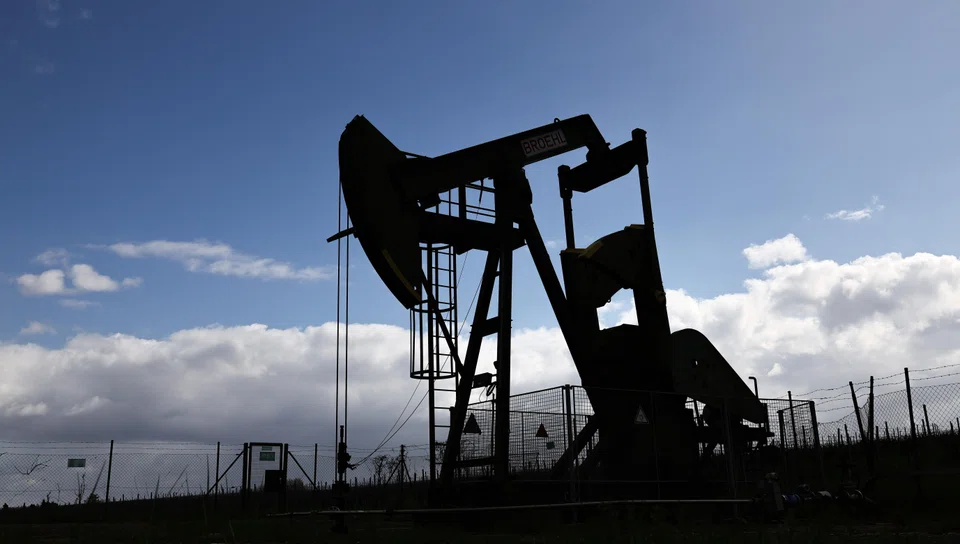
BRENT crude’s sharp retreat from recent highs increasingly looks like a technical reversal rather than a routine correction. After repeatedly struggling to sustain gains around the US$115-116 a barrel level, the benchmark’s performance raises the possibility that the rally driven by Middle East supply fears may be losing momentum.
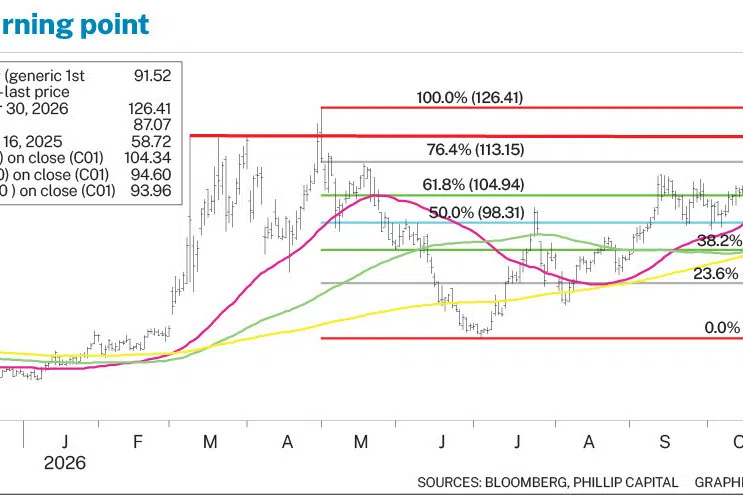
The correction has been swift. Brent plunged approximately 16 per cent in the week ended Nov 6, its steepest weekly decline since the pandemic, before extending losses towards US$92-93 in the week of Nov 9. This move reflects a market increasingly willing to price in easing geopolitical tensions, even though a lasting resolution to the US-Iran conflict remains elusive.
US President Donald Trump’s recent indication that further military strikes against Iran are unlikely has also encouraged traders to unwind positions built around fears of prolonged supply disruptions. Expectations of renewed diplomatic engagement, alongside continued crude exports from the Middle East, have reduced the urgency to hold expensive geopolitical protection.
Fundamentals are also beginning to challenge the bullish narrative. JPMorgan reportedly estimated a global oil surplus of about 1.4 million barrels per day in October, suggesting weaker demand and improving supply availability could be weighing on prices alongside shifting geopolitical expectations.
Technically, Brent’s repeated inability to overcome resistance around the US$115-116 level speaks volumes. The subsequent decline below its 50-day and 100-Day moving averages points to weakening near-term momentum, and shifts attention towards the 200-day moving average as the next important support.
A Fibonacci retracement drawn from the July lows to the recent highs around US$113-116 suggests that Brent’s correction may have further room to run. The 38.2 per cent retracement level coincides closely with the 200-day moving average around US$92, making this a technically significant support zone and a plausible downside target.

Any meaningful diplomatic breakthrough in the Middle East could accelerate the unwinding of the geopolitical risk premium, potentially pushing prices further down to the 23.6 per cent retracement level, around US$80 a barrel. While these levels suggest scope for a deeper correction, the unresolved conflict and persistent supply disruptions could limit the downside and keep volatility elevated.
However, falling oil prices should not be mistaken for a return to normality. The Strait of Hormuz remains central to global energy security. Before the conflict, roughly 20 million barrels of crude oil and petroleum products passed through the waterway daily, accounting for about one-fifth of global oil consumption. Alternative pipeline routes through Saudi Arabia and the United Arab Emirates offer some relief, but their estimated available capacity of 3.5 million to 5.5 million barrels per day falls well short of replacing normal flows through the strait.
Even if diplomatic efforts succeed, restoring the oil trade to pre-war conditions could take considerably longer. Damaged infrastructure, disrupted shipping schedules, higher freight charges and elevated war-risk insurance premiums are unlikely to disappear immediately.
Shipowners and insurers will require more than reassuring political statements before treating the region as a normal operating environment again. This creates an important distinction between the geopolitical premium that traders are willing to pay in the near term and the structural costs that may remain embedded in oil prices for months, or potentially longer. For now, Brent faces a difficult balancing act.
Improving diplomatic expectations and signs of excess supply favour further consolidation, while unresolved military tensions and fragile shipping arrangements limit confidence in a sustained decline.
The steep reversal from US$115-116 may be a warning that the immediate upside has been exhausted. However, it does not necessarily mean the geopolitical risk premium will disappear altogether. Until the conflict is resolved, neither the volatility nor the need for caution should disappear.
The writer is head of market insights at Phillip Nova
Decoding Asia newsletter: your guide to navigating Asia in a new global order. Sign up here to get Decoding Asia newsletter. Delivered to your inbox. Free.
Share with us your feedback on BT's products and services
TRENDING NOW

Ex-Nvidia CEO Jensen Huang carried a secret for more than a year. It led to his downfall

Higher rates, weaker spending: Is the Philippines entering stagflation?
As Indonesia picks new vice-president to succeed Gibran, investors see risks and opportunities

Singapore to inherit South China Sea code talks with key issues unresolved

