BYD’s July sales rise on strong exports, but meeting its annual target remains a challenge
The company needs to sell an average about 530,000 cars a month for the rest of 2026 to touch its goal
CHINESE electric vehicle maker BYD’s vehicle sales rose 22 per cent in July year on year, kicking off a crucial second half when it needs to sharply lift shipments to meet its annual deliveries target.
The automaker sold about 420,000 cars in total in July, figures released on Saturday (Aug 1) showed.
This marked a third straight month of growth, but the firm is already falling behind the pace needed to meet its annual sales goal.
After selling 1.8 million vehicles in H1, it needs to average about 530,000 a month for the rest of 2026 to reach the lower end of its goal of five million to five-and-a-half million.
The figures underscore the challenge facing chief executive officer Wang Chuanfu after a difficult first half, in which BYD idled assembly lines to prepare for upgraded batteries.
The July sales also continue an established pattern in 2026, where exports – 43 per cent of total – have grown strongly as the company pushes aggressively into markets from South America and Europe.
In contrast, domestic demand in China is struggling under the weight of a sluggish economy and intensifying competition.
Investors are closely watching the export mix to assess BYD’s resilience against hardening trade barriers and tariffs in some global markets.
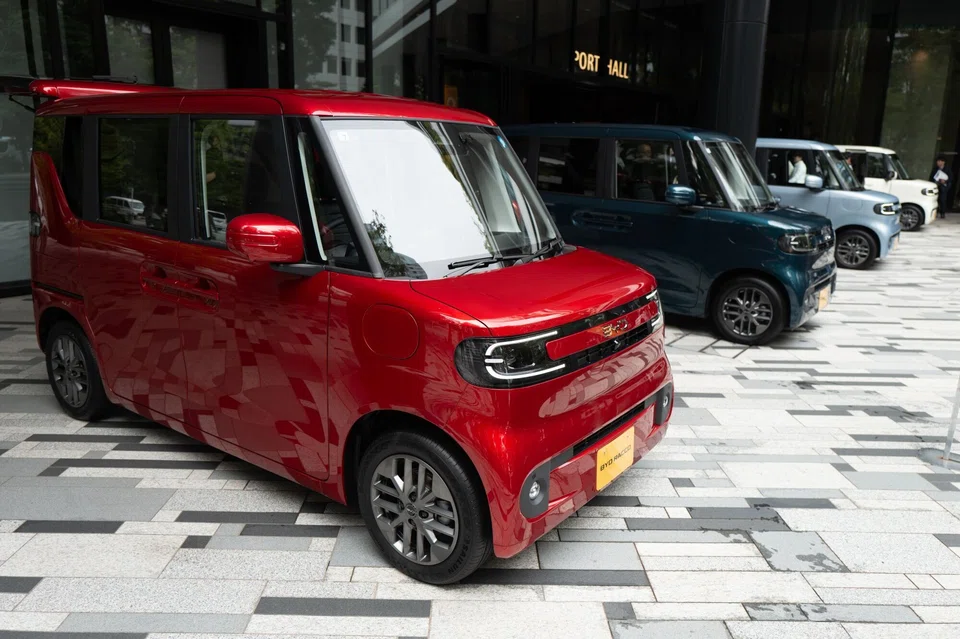
Its international profile is being bolstered by a slew of new models, including right-hand-drive roll-outs of the DM-i 5.0 hybrid tech in the Seal 6 series, a refreshed European electric Seal line-up and a closely watched foray into Japan’s mini “kei car” market with the new electric Racco.




However, BYD’s global expansion is facing risks in Hungary, which serves as the anchor for its European manufacturing strategy.
The company’s flagship factory site under construction in Szeged has come under scrutiny over alleged labour abuses by subcontractors, while a change of government in Budapest has triggered a probe into the massive state subsidies, tax breaks and environmental exemptions previously granted to BYD.
These escalating disputes have directly impacted BYD’s roll-out schedule. The automaker recently confirmed that vehicle assembly at the Szeged plant has been delayed to the fourth quarter of 2026, roughly a year behind its original target. BLOOMBERG, REUTERS
Decoding Asia newsletter: your guide to navigating Asia in a new global order. Sign up here to get Decoding Asia newsletter. Delivered to your inbox. Free.
Share with us your feedback on BT's products and services