

Can Pop Mart keep the Labubu magic alive? Growth slows sharply as bears gather
Firms that surged on social media buzz are finding it harder to sustain consumer interest
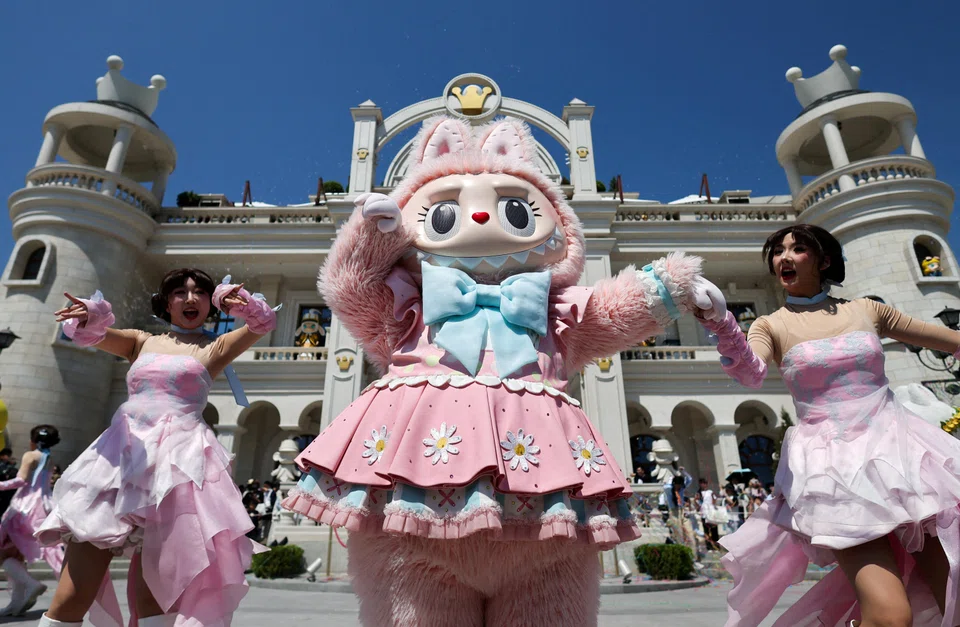
POP MART International Group is poised to report a sharp slowdown in first-half sales growth on Thursday (Aug 20), raising the stakes for a company that has lost roughly US$32 billion in market value since the peak of Labubu mania.
Revenue is expected to rise 44 per cent in the six months ended June from a year earlier, according to analyst estimates compiled by Bloomberg, down from growth of more than 200 per cent in the same period last year.
Bearish bets are also growing that the stock is still over-valued: nearly a quarter of Pop Mart’s shares on the open market are being shorted, according to S3 Partners, which analyses short positioning data.
The first-half numbers are likely to reflect a sobering re-assessment of Pop Mart’s ability to parlay one blockbuster character into a broader entertainment franchise, and underscores a broader problem for once-viral Chinese consumer brands.
From jeweller Laopu Gold to tea chain Chagee Holdings, companies that surged on social media buzz are finding it harder to sustain consumer interest as shoppers become more selective and economic pressures hit discretionary spending.
Some Chinese labels “have achieved much success through social virality and scarcity, but that attracts trend-driven consumers chasing novelty, not loyalty,” said Olivia Plotnick, founder of Shanghai-based marketing consultancy Wai Social. “Once the conversation moves on, so do they.”
While the US remains central to Pop Mart’s expansion, its home market in China provides a more established base of members and stores.
Pop Mart has more than 80 stores in the US and plans to exceed 100 by year-end, compared with more than 400 in mainland China. Domestic revenue is expected to rise roughly 45 per cent in the first half. Sales from the Americas, including the US, is projected to increase about 20 per cent, versus a 1,140 per cent surge a year earlier.
“We think the domestic market is still crucial for Pop Mart as it accounts for more than half of total revenue,” said Morningstar analyst Jeff Zhang, who expects double-digit annual domestic growth over the next five years, supported by rising membership and repeat purchases.




Pop Mart is trying to inspire loyalty by building its characters into broader entertainment franchises. A Labubu movie is in the works with Sony Pictures, and physical experiences including Beijing’s Pop Land theme park and a Pop Bakery concept that recently opened its first international outlet in Singapore are being expanded. A collaboration between its dreamy Dimoo character and Disney’s Pixar was also well received by collectors.
But the company has some way to go before it becomes an intellectual property powerhouse like Disney or Hello Kitty owner Sanrio, whose characters have decades of stories and generational recognition behind them.
Recent data point to weakening demand, with online sales in China down 21 per cent year-on-year in July after a 41 per cent drop in June, according to Deutsche Bank research notes citing third-party data. If the weakness persists, the company faces mounting domestic sales pressure, the bank said.
Morgan Stanley analysts including Dustin Wei expect management to give a cautious second-half outlook, and forecast revenue growth of 1 per cent for 2026 and 14 per cent in 2027.
That gap is reflected in the stock. Pop Mart’s Hong Kong-listed shares have stayed range-bound since first-quarter results triggered a record sell-off and now trade at less than half their peak about a year ago.
Going forward, investors will be looking for signs of re-acceleration in revenue and earnings, especially abroad, said James Ooi, a market strategist at Tiger Brokers. A larger dividend payout could also help restore confidence, he said.
“The bigger lesson is that emotional consumption is highly volatile,” Ooi said. “Sustaining growth requires repeat purchases and a strong pipeline of new IPs, rather than reliance on one blockbuster character.” BLOOMBERG
Decoding Asia newsletter: your guide to navigating Asia in a new global order. Sign up here to get Decoding Asia newsletter. Delivered to your inbox. Free.
Share with us your feedback on BT's products and services
TRENDING NOW

Grab CEO’s wife Chloe Tong on life with Anthony Tan and finding her purpose

Hwa Seng Builder, two China companies win S$1.2 billion Tuas Road Viaduct phase two contracts

Deal between tycoon friends sparks scrutiny of Philippine power sector

Canada is upping oil flows to Asia, but South-east Asia’s refineries aren’t ready to handle them yet

