

Can Labubu and Pop Mart survive the future?
And will your S$3,000 Mega Molly bought on Carousell ever regain its value?

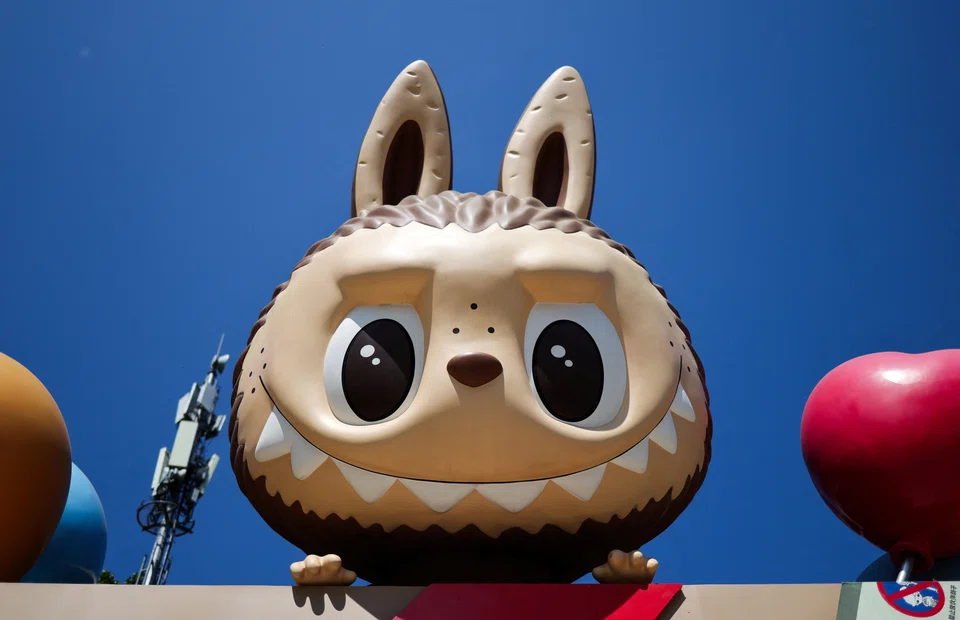
[SINGAPORE] It began, as these things often do, with a queue.
In June, at CJ Hendry’s Flower Market at IMBA Theatre, adults waited up to two hours to enter a room filled with plush flowers. There were more than 30 types, including Singapore-exclusive editions – not surprisingly, those were the ones everyone wanted.
When the doors opened, visitors ran in and scooped up the Singapore-exclusives by the armful. Videos of the chaos spread on social media.
Soon after, the plushies appeared on Carousell. Stalks that originally cost S$7 were being listed for as much as S$70.
Scarcity had done what it always does – turn a cheap object into something people suddenly feel they have to have, simply because not everyone has one.
To some, the whole thing looked ridiculous. But to anyone who had chased after Labubus, it would have felt, well, familiar.
Only two years earlier, similar queues had formed for the cute-ugly plush monsters, as well as Pop Mart’s other collectible toys such as Molly, Crybaby and Hirono.
But unlike CJ Hendry’s Flower Market, Pop Mart is not a touring pop-up. The Chinese company has eight outlets in Singapore and more than 500 stores globally. In 2025, it ramped up production tenfold, opening new factories in Cambodia, Indonesia and Mexico.
Scarcity disappeared. And without scarcity, Pop Mart’s toys began to lose some of their magic.

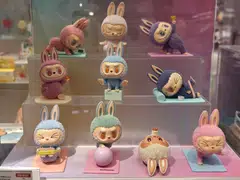

Carousell Singapore’s latest data indicated that Labubu was the most-searched keyword in the toys and games subcategory under hobbies and toys in the fourth quarter of 2024 and Q1 2025.
But by Q2 2025, it had fallen to 47th. By Q3, it was 57th. By Q4, it had dropped out of the top 100 entirely.
Marketplace activity followed the same path. Comparing Q1 2025 with Q1 2026, Labubu listings declined by about 70 per cent, while average listing prices fell by nearly 30 per cent. Successful matches within a week softened from roughly one in five listings to about one in six.
“Search interest in Labubu has moderated from its peak following a prolonged period of intense hype, likely reflecting a stabilisation in resale market demand,” a Carousell spokesperson told The Business Times. “The peak wave of Labubu resale has largely subsided.”
The scarcity trap
For much of its rise, Labubu’s appeal was inseparable from scarcity. Scarcity turned casual shoppers into hunters, and cheap purchases into big victories. But as Pop Mart expanded supply, that psychology has shifted.
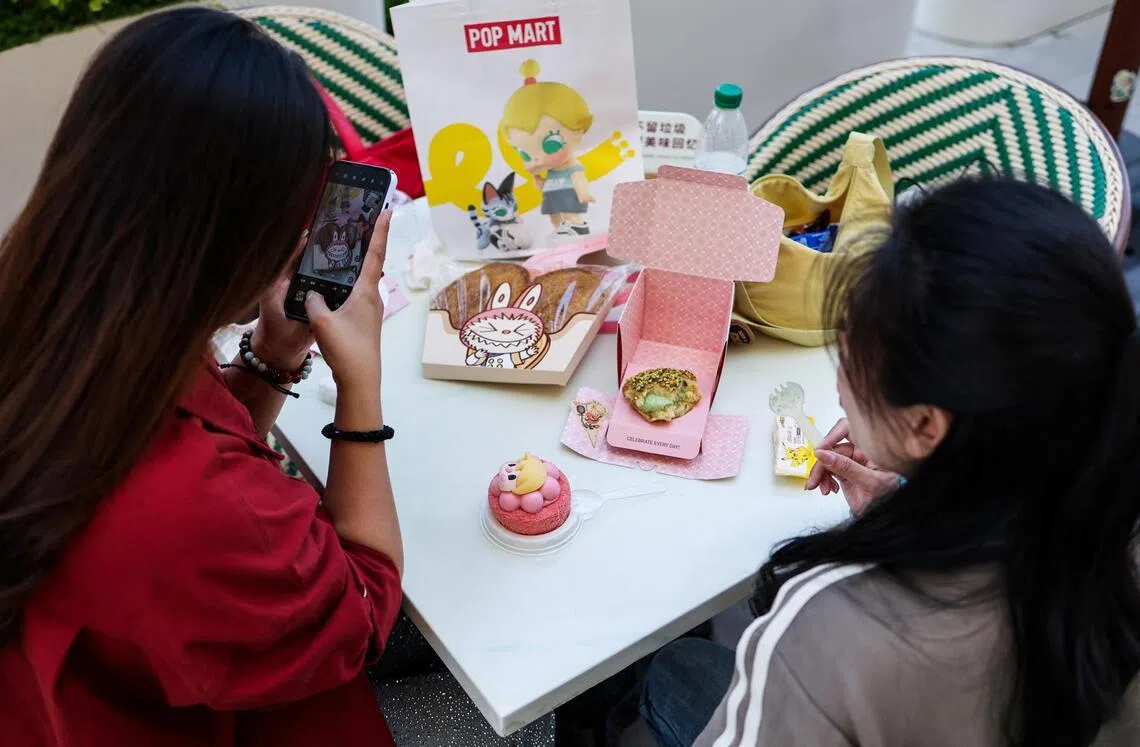
Associate Professor Zhang Yan, who teaches marketing and consumer behaviour at the National University of Singapore (NUS), explained the logic: “If the product requires a lot of effort for me to obtain it – I have to queue up, I have to wait for a long time – then people tend to think the product is valuable...
“Conversely, when the product becomes easy to buy, people will start to think that this is not something special.”
The blind-box format also gave every purchase suspense: the sealed box, the protective foil, the reveal, the chance of a secret edition. Social media turned that suspense into spectacle. On TikTok and Instagram, Labubu was opened, displayed, compared and resold in public.
Pop Mart’s 2025 results were spectacular. Revenue rose 185 per cent to 37.1 billion yuan (US$5.5 billion). Profit attributable to owners rose 308 per cent to 12.8 billion yuan. Labubu alone generated 14.1 billion yuan, up from three billion yuan a year earlier, and accounted for about 38 per cent of group revenue.
But the stock market can be unforgiving.
After Pop Mart reported its 2025 results in March, its Hong Kong-listed shares fell more than 20 per cent. Investors were reacting to the possibility that 2025 had been too extraordinary – and too dependent on one snaggle-toothed monster – to be repeated.
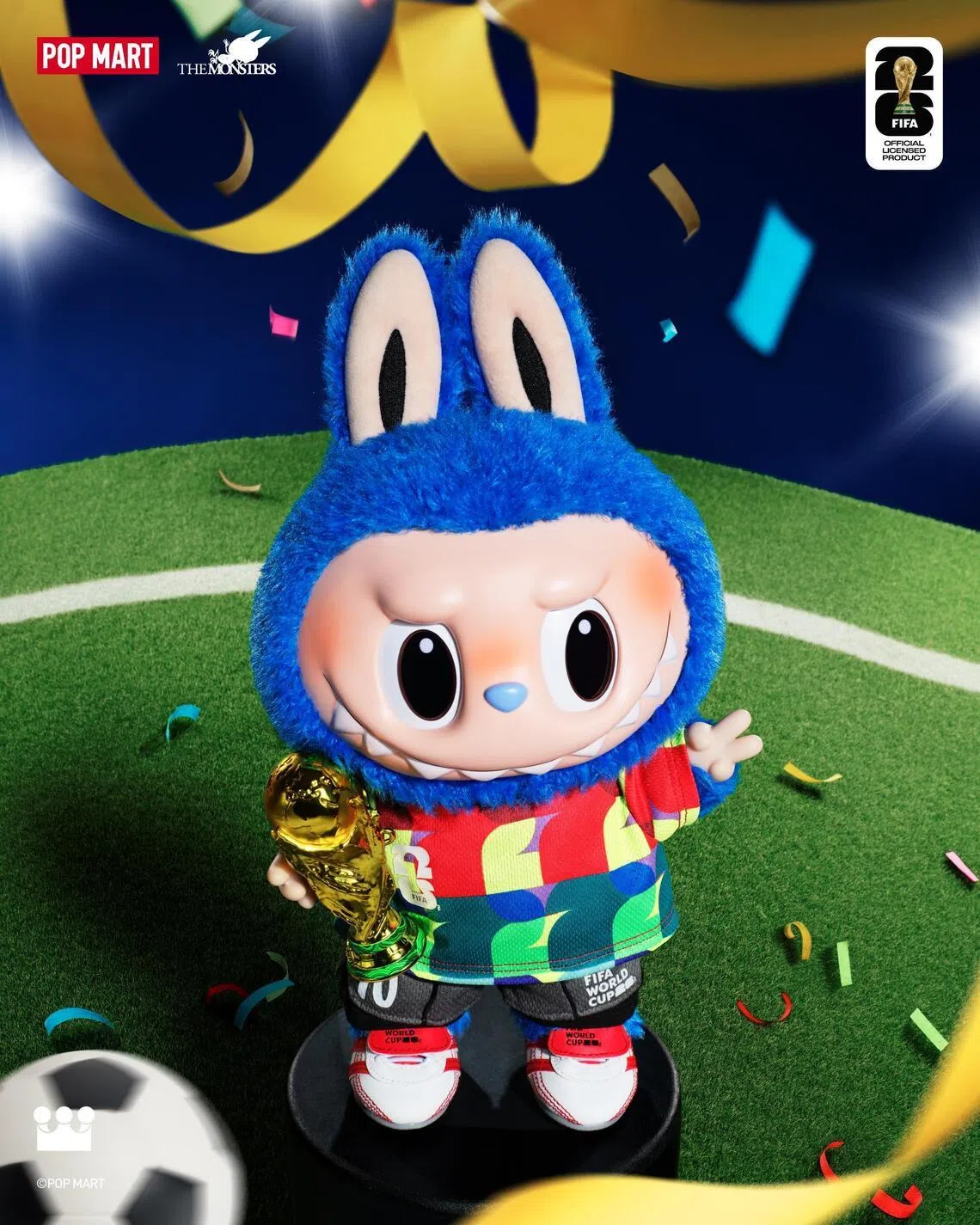
Pop Mart was facing the scarcity trap: to grow, it must supply – but to stay highly desirable, it must withhold.
In 2025, Reuters reported that Pop Mart increased supply of plush toys dramatically by more than 10 times from 2024, with monthly plush output reaching around 30 million units. This was excellent from a profit standpoint, but less so from a collectible standpoint.
Associate Professor Zhang Kuangjie of Nanyang Technological University’s (NTU) Nanyang Business School described the process as having two stages. “At the first stage, it probably helps the company get a lot of sales. The consumers who couldn’t get the products previously would now be able to do so. So they’re happy.”
But over time, consumers realise the product is no longer so difficult to obtain – and the psychology changes. “Consumers start to feel this is no longer hard to get, and they feel less excited about getting it,” he said. “Then the scarcity premium starts to disappear.”
Cooling off is not collapse
Anyone who regularly browses Carousell or toy store Co Play can see that Labubu’s heat has come off – not because affection for the character has disappeared, but because the speculative frenzy around it has cooled.
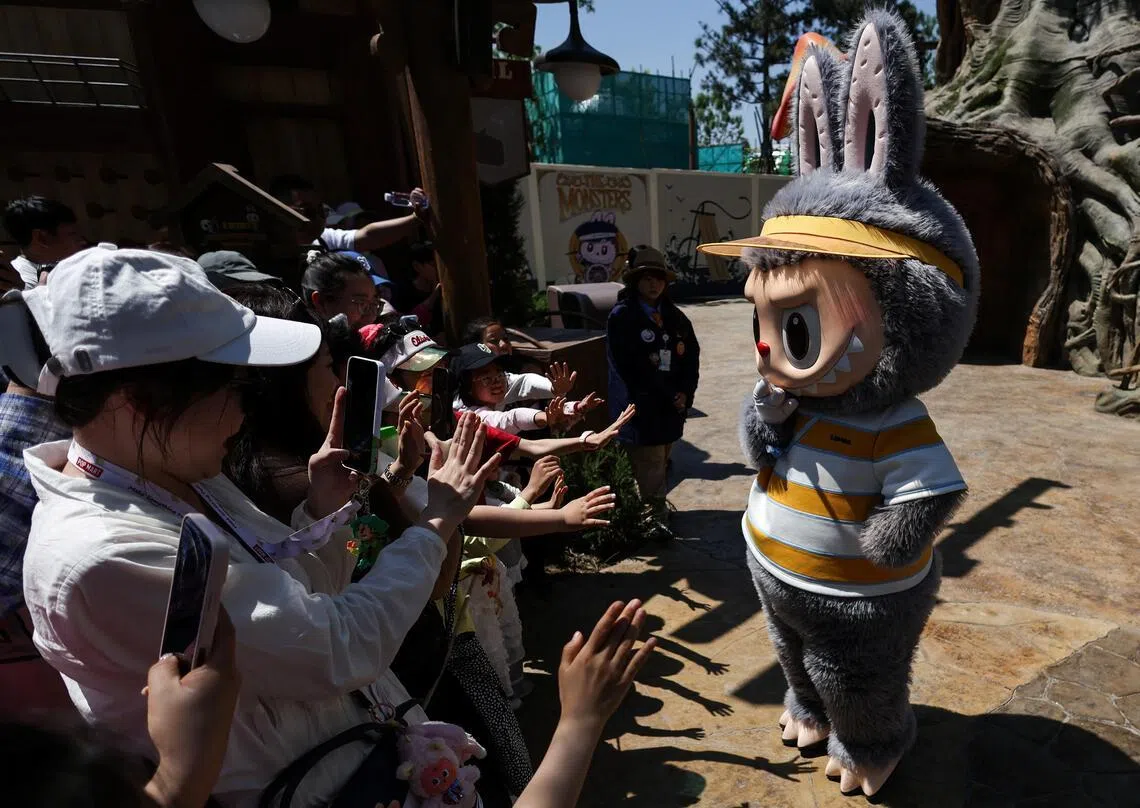
Market intelligence company Euromonitor International said it is important to make that distinction.
“The Labubu craze has clearly cooled – but Pop Mart still ended 2025 with strong momentum,” said Loo Wee Teck, Euromonitor’s global insight manager for toys and games.
Pop Mart’s Q1 2026 business update still showed revenue increasing 75 to 80 per cent year on year, with China up 100 to 105 per cent and Asia-Pacific up 25 to 30 per cent.
“Falling prices in the resale market do not indicate demand collapse, and often reflect supply catching up after a scarcity-driven phase,” Loo added. Lower resale premiums, he said, can point to a shift from speculative buying by resellers to genuine collectors – “which is more sustainable over time”.
In short, Labubu and Pop Mart are not dying. Their markets are simply normalising. People still want the products, but they no longer believe they must pay any price to get it.
The sharpest pain is being felt by flippers and collectors who paid hundreds above retail price when the object felt impossible to obtain. But to the average consumer, this is simply a return to sanity.
In Pop Mart’s case, social media has amplified both the rise and retreat. “In the past, it takes years to accumulate popularity through word of mouth,” said NUS’ Prof Zhang Yan. “Now, everything can seemingly explode within a month or even a week – and seemingly fall in the same time frame.”
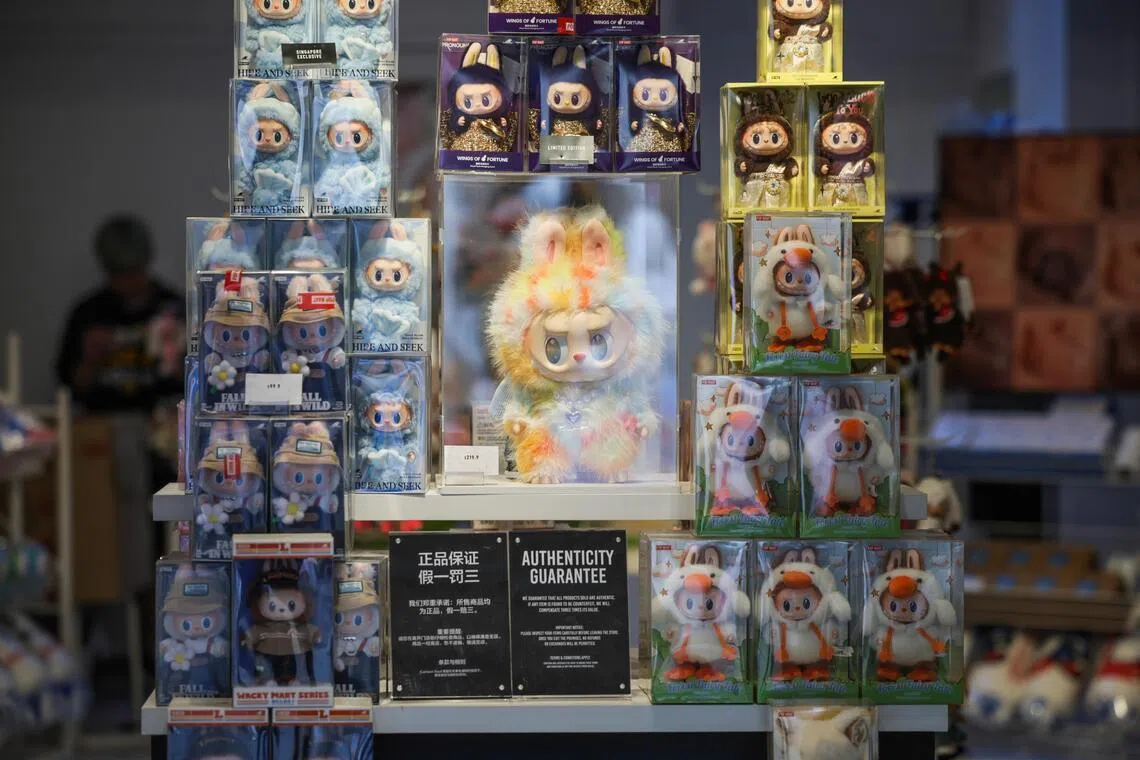
But speed is not the same as collapse. It just means that the same forces that accelerated Labubu’s rise can also make the public tire of it more quickly.
“Hype pushes up resale prices, and rising resale prices intensify the hype,” explained NTU’s Prof Zhang Kuangjie. When one weakens, the other tends to weaken, too.
Carousell’s data suggests that buyers have not abandoned collectible toys. They are simply moving across characters, brands and franchises. Pop Mart’s Crybaby followed a similar trajectory to Labubu, falling out of the top 100 after Q1 2025. But its Twinkle Twinkle broke into the top 10 in Q3 2025 and Q1 2026, while its Skullpanda and Hirono climbed into the top 20 from Q2 2025 till Q1 2026.
In a recent interview with Bloomberg, Pop Mart’s chief operating officer Si De confirmed that non-Labubu characters accounted for about 50 per cent of total revenue in the US in 2025; in Japan, South Korea and South-east Asia, non-Labubu characters already make up the majority of sales.
Beyond Pop Mart’s characters, the pattern is even clearer. On Carousell, “Pokemon” overtook “Labubu” as the most-searched keyword in Q2 2025 and remained among the top 2 till Q1 2026. “Lego” climbed from sixth place in Q4 2024 and Q1 2025 to consistently rank among the top 3 from Q2 2025 till Q1 2026. “Jellycat” remained within the top 10 over the same period.
The lesson is not that scarcity does not matter. It does. But the strongest toy brands eventually learn to survive without depending on it.
What comes next
All that leaves Pop Mart with three possible futures, experts said.
The first is the fad future: Labubu becomes a brilliant but brief phenomenon, remembered as the toy that conquered celebrity culture and the Internet – before both decided to move on.
The second is the franchise future: Labubu becomes something closer to Hello Kitty, Barbie, Lego or Pokemon – a character that survives abundance because its value no longer depends on scarcity alone.
The third, and perhaps most plausible, is the portfolio future. Labubu may never again dominate the way it did in 2025. But Pop Mart does not need it to. Its longer-term success may depend on building its wide universe of characters – each with its own fans, releases, collaborations and reasons to collect.
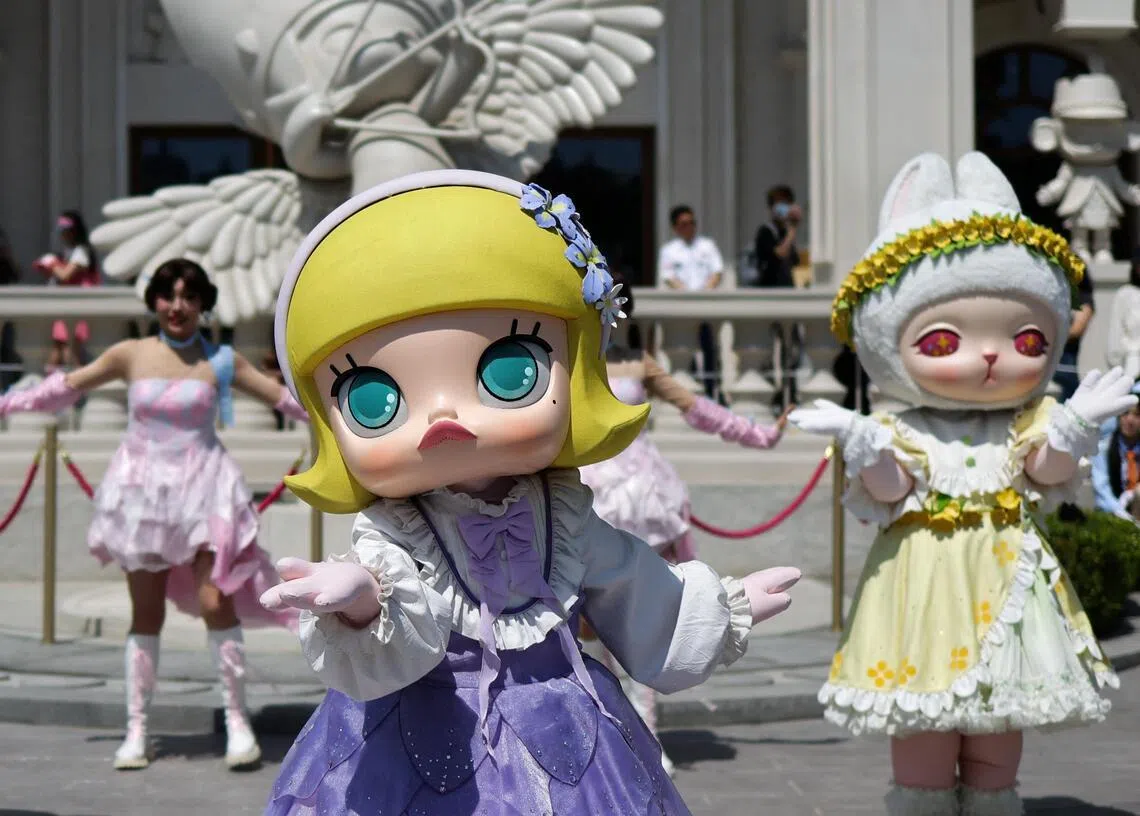
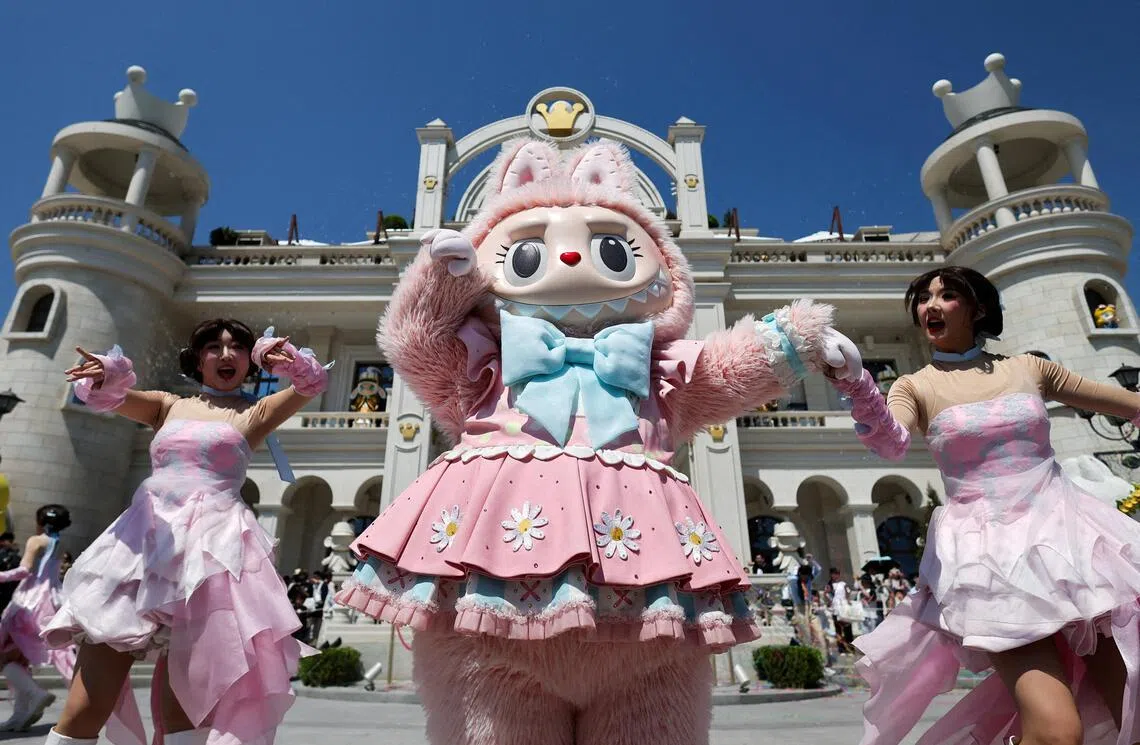
Pop Mart has already pushed into theme parks, entertainment and broader character-building across all its toys. The company is partnering Sony Pictures to produce an animated feature film featuring Labubu, written and directed by Paul King, who helmed Paddington and Wonka.
These moves will shift Labubu from collectible object to living character – from something bought and displayed to something audiences can feel fully emotionally invested in.
But the question still remains: Will anyone who paid S$300 for a secret-edition Labubu or even S$3,000 for a once-rare Mega Molly ever get their money back? Prof Zhang Yan put it plainly: “If Pop Mart maintains the rarity of its products, they might get the money back... But if Pop Mart’s strategy is to make its products affordable for everybody, it’s unlikely.”
Speculation aside, Pop Mart’s future looks more stable than the resale panic suggests. The larger challenge is no longer whether Labubu can stay scarce, but whether it can become meaningful – a character with enough emotional pull and narrative depth to survive beyond the frenzy of 2024 and 2025.
Decoding Asia newsletter: your guide to navigating Asia in a new global order. Sign up here to get Decoding Asia newsletter. Delivered to your inbox. Free.
Copyright SPH Media. All rights reserved.
TRENDING NOW

DBS, OCBC, UOB rout lops billions off STI as inflation, rate concerns spook investors

Grab CEO’s wife Chloe Tong on life with Anthony Tan and finding her purpose

OCBC sheds S$8 billion in value as shares close nearly 6% down; analysts cautious on banks

Deal between tycoon friends sparks scrutiny of Philippine power sector

