Asia markets open higher after Wall Street’s overnight sell-off, tariff news; STI up 1%
The index has regained some ground after it slipped below 5,000 on Nov 20

[SINGAPORE] Asia stock markets opened slightly higher after volatile overnight trade in the US and fresh tariff news, with most regional indices ticking up on Thursday (Nov 26) morning.
Singapore’s benchmark Straits Times Index (STI) rose 1 per cent to 4,981.29 as at 11.33 am. Gainers outweighed losers 307 to 134, after 439.7 million securities valued at S$513.2 million changed hands.
The index has regained some ground after it slipped below 5,000 on Nov 20, in the wake of a broader global tech sell-off.
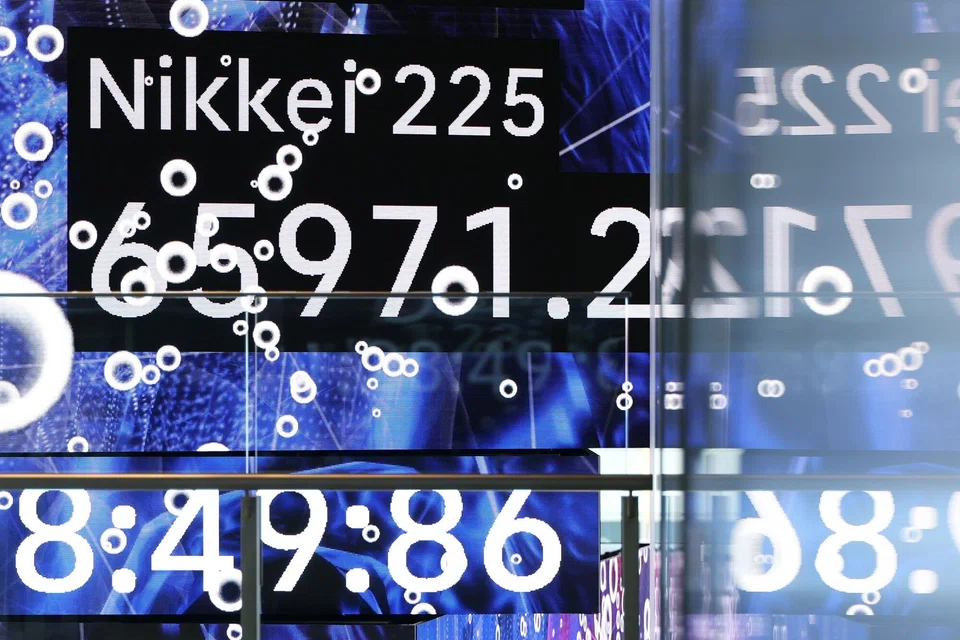
Key Asia indices were positive in early trade as well. The Nikkei 225 in Japan and South Korea’s Kospi were both up 1.8 per cent, while the Hang Seng Index rose 1.3 per cent. The FTSE Bursa Malaysia inched 0.7 per cent higher, while Australia’s ASX was up 0.8 per cent.
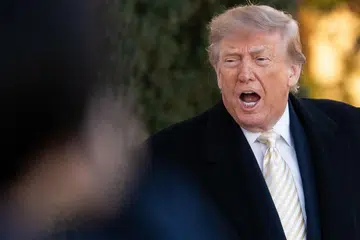
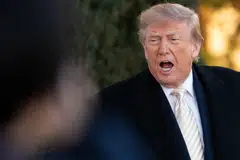
Asia investors woke up to news of yet another round of tariffs slapped on 14 countries, including Singapore, as US President Donald Trump sought to reinforce export controls. This includes new tariffs capped at 20 per cent on China.
On Wednesday, the S&P 500 closed down 0.3 per cent at 7,183.08, while the Nasdaq surfaced flat at the end of the day after recovering from a 5 per cent dive at the open.

On renewed fears of a collapse in the artificial intelligence boom, newly listed Anthropic ended at US$82.79 on Wednesday in the US – below its US$83 initial public offering price.
“Anthropic is a good barometer of how investors feel about the sector. The cost of growth is overshadowing the excitement about what its frontier model can do and how fast the company is growing,” said Ipek Ozkardeskaya, senior analyst from Swissquote, in a Wednesday note.
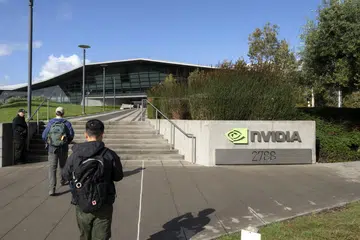
Nvidia shares also finished the session lower at US$149.30, following a tumultuous two weeks of its CEO Jensen Huang’s fall from grace and quick reinstatement soon after an intervention by Trump.
Enrico Chinello, next-generation research analyst at Julius Baer, said Huang’s swift reinstatement shows that the US treats Nvidia as “a strategic asset rather than just a listed company”, and that the US-China AI rivalry is increasingly a contest over access to compute.
He also observed that China is now pushed to stimulate its domestic chip providers to step up and close the gap with US counterparts as quickly as possible.
“These dynamics – US’ push to protect American technology and China’s desire to build up domestic chip manufacturing capabilities – were particularly evident in the recent cancellation of a US$7 billion deal between Tencent and Oracle,” Chinello added.
Caught in the middle of this are perhaps South-east Asia data centre developers, as both the US and China seem to be pushing for domestic capacity.
Still, the Julius Baer analyst is constructive on the cloud computing and AI space, despite a “rising geopolitical risk” to the portions of demand and capacity that rely on cross-border access to compute.
Decoding Asia newsletter: your guide to navigating Asia in a new global order. Sign up here to get Decoding Asia newsletter. Delivered to your inbox. Free.
Copyright SPH Media. All rights reserved.