

European shares close lower as banks drop to 3-month lows, oil prices weigh
ECB policymakers dampen case for further near-term rate hikes
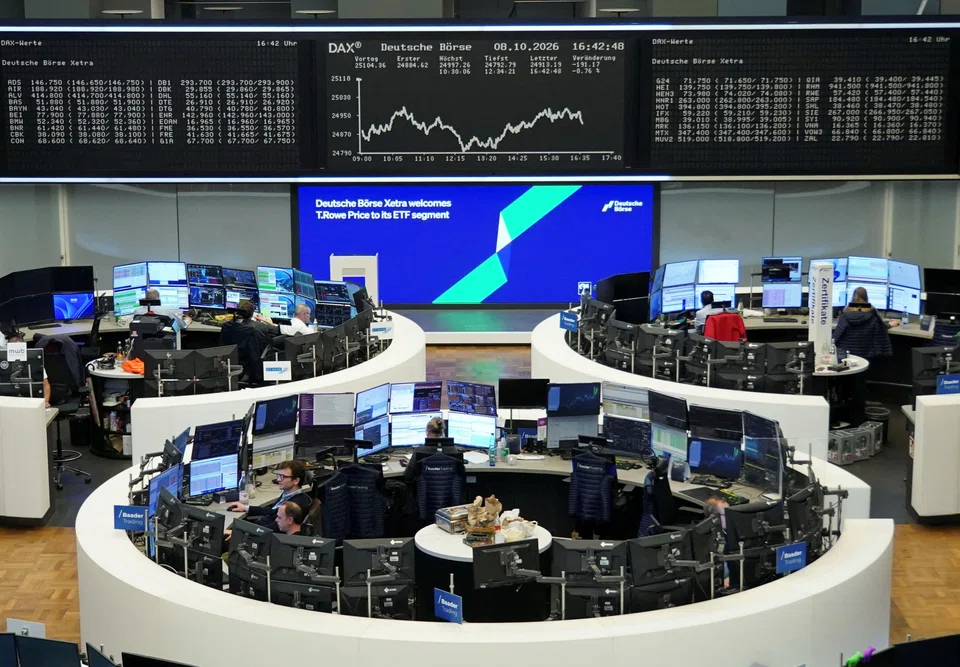
EUROPEAN shares fell on Thursday (Oct 8) as banks slid to a more than three-month low, while a fresh bond sell-off and elevated oil prices stoked fears that higher inflation could hurt economic growth.
The pan-European Stoxx 600 index closed 0.75 per cent lower, at a nearly four-month low.
European banks dropped 2 per cent, with Germany’s Deutsche Bank, Spain’s Banco Santander, France’s Societe Generale and Italy’s UniCredit falling for a second day as euro zone bond yields climbed towards their recent peaks.
“What you see in the European banks is, this growing euro debt crisis is weighing on growth expectations at a time when energy prices are pushing inflation expectations higher and the ECB is not going to be able to step in a way to give relief to the market,” said Ipek Ozkardeskaya, senior analyst at Swissquote.
France’s benchmark CAC 40 fell 0.51 per cent to a more-than-6-month low, with the country at the centre of investor concerns as it struggles to rein in a budget deficit exceeding 5 per cent of GDP.
Bond yield jitters persist
Euro zone bond yields rose sharply on Thursday as rising energy prices added to inflation concerns, while investors continued to dump debt issued by heavily indebted countries such as France and Italy, pushing their borrowing premiums higher.
“When oil prices are above US$100, it is very hard for any developed bond market to perform well, especially those that are highly indebted,” said Kathleen Brooks, research director at XTB.
“France is still on everyone’s radar, and it seems likely that bond yields will continue to rise and remain elevated as the country fails to grapple with its fiscal issues, and as the ECB seems unwilling to step in.”
A broad global bond sell-off, fuelled by expectations of further central bank rate hikes and mounting concerns over government debt burdens, has driven yields across many euro area countries to multi-decade highs.


Most sectors on the Stoxx traded lower. Energy shares were a bright spot as oil prices climbed more than 3 per cent on persistent concerns about supply from the key Middle East producing region.
While minutes from the US Federal Reserve’s latest policy meeting showed officials divided over the case for further rate hikes, ECB policymakers dampened near-term rate hike bets, arguing that underlying inflation trends revealed a more benign picture.
Among individual stocks, Argenx fell 15.8 per cent, marking its biggest daily drop since December 2023, after the Netherlands-based biopharmaceutical company discontinued a Sjogren’s disease trial after an analysis showed it was unlikely to meet its primary aim.
Healthcare stocks were the biggest percentage losers with a 2.5 per cent decline.
London’s Tesco added 5.2 per cent after the food retailer raised the lower end of its full-year profit outlook. REUTERS
Decoding Asia newsletter: your guide to navigating Asia in a new global order. Sign up here to get Decoding Asia newsletter. Delivered to your inbox. Free.
Share with us your feedback on BT's products and services
TRENDING NOW
Prima to move out of historic Keppel Road flour mill building in 2028

Grab CEO’s wife Chloe Tong on life with Anthony Tan and finding her purpose

OCBC sheds S$8 billion in value as shares close nearly 6% down; analysts cautious on banks

As Asia’s food delivery giants rejig the pie, who will win the market?

