Fed signals shift to inflation focus, stoking market concerns
Despite Fed chief Jerome Powell’s denials, stocks drop slightly following the central bank’s policy statement, which was interpreted as a hawkish shift
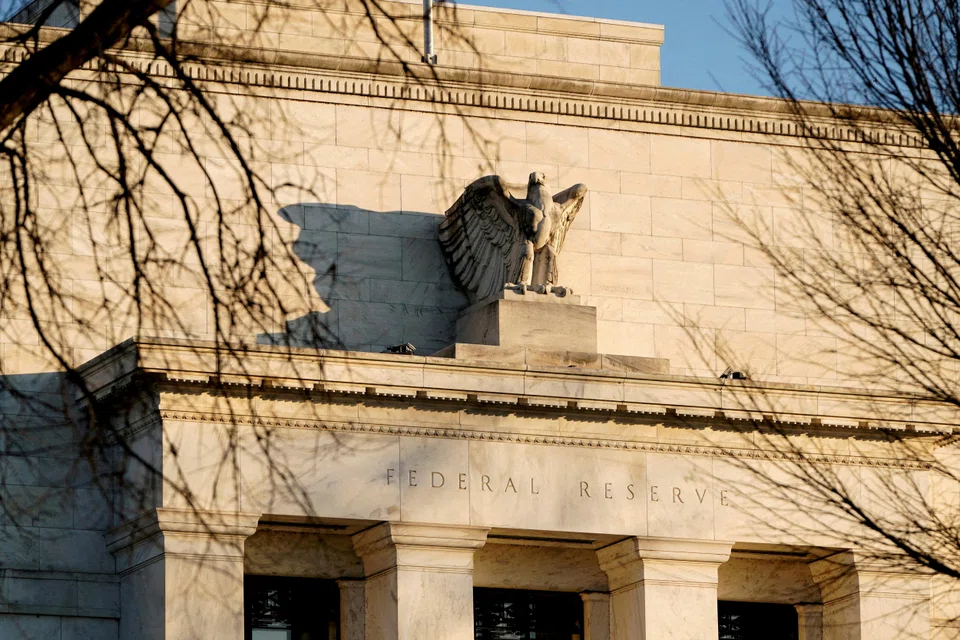
US STOCKS fell after a slight change in the Federal Reserve’s statement on Wednesday (Jan 29) was interpreted as a hawkish shift, despite chairman Jerome Powell’s denials.
While the Fed kept its benchmark rate unchanged between 4.25 and 4.5 per cent, a new tone in the accompanying policy statement stirred market concerns.
The central bank removed a reference to a cooling labour market that had featured in several previous economic updates. In its updated assessment, the Fed said unemployment had “stabilised at a low level”.
In combination with another removed reference, this one to improving inflation, the change appeared to foreshadow a pivot away from rate cutting.
Powell insisted the changed language was for aesthetic rather than policy reasons. The Fed was not trying to send a signal on rates, he said.
In one reassuring moment, Powell said the rate-setting committee unanimously agreed that rates were currently above the neutral rate, the level at which policy is neither constricting nor over-stimulating economic growth.
This was a tacit promise of rate cuts, at some stage. But Powell added that the central bank was in no hurry to cut rates. Since the last Fed meeting, employment and economic data have strengthened, which alleviated the need for rate cuts, while inflation data was a little cooler than anticipated, which took the question of rate hikes off the table.
Powell noted that the labour market appeared to have stabilised, with unemployment flattening after a brief pickup last year. He pointed to the slowdown in migrants crossing the US border as a potential reason, which could create a labour shortage and offset the shrinkage in available jobs.
Waiting on Trump’s policies
Still, he emphasised that the impact of the hardening southern border was not yet clear. The Fed remained in wait-and-see mode, he suggested. Until Trump played his fiscal-policy cards, Powell seemed to imply, there was little point in adjusting monetary policy. Despite a barrage of executive orders, he said, it was too early to forecast the economic effects of President Trump’s domestic policy plans.
“We don’t know what will happen with tariffs with immigration, (with taxes)… with regulatory policy,” Powell said, adding: “We need to see those policies articulated before we make plausible” economic models.”
One policy idea that Powell bristled at was Trump’s suggestion that the president take a more active role in setting interest rates. The Fed chairman vowed the central bank would stick to its knitting and set the policy course based exclusively on readings of economic data and its interpretation of broad economic trends.
Trump’s beloved tariff policy could have a range of impacts, currently impossible to foresee. Some economists warn a blanket tariff could fuel inflation, but the devil would be in the details. Trump could hike tariffs as soon as Feb 1, though he has indicated a gradualist approach rather than immediately boosting duties on Chinese imports, which would have a major impact.
“We don’t know how it will transmit to the consumer,” Powell said. “There are lots of places an increase can show up between the manufacturer and the consumer.”
While the persistent inflation of the last few years might make it easier for some companies to pass on price increases to their customers, Powell said corporate surveys were also showing that consumers were fed up with this tactic.
One strategist said the tariff policy might end up having little effect on either inflation or economic growth, as movements in the US dollar mean that Americans will still pay the same amount for Canadian or Mexican goods, even if those nations raise prices in Canadian dollars and pesos to adjust for tariffs.
Tariff impact and inflation
“There were a lot of doomsayers in 2017, when Trump started instituting steel tariffs all these tariffs, how that ultimately would show up and impact the consumer, and it simply didn’t,” said Eric Marshall, president of Dallas mutual-fund firm Hodges Capital.
Still, Powell said, the central bankers are studying the broad economy in 2018 to see if the tariffs had other effects.
The other factor the Fed is waiting for before cutting rates again is confirmation that inflation is heading toward its 2 per cent target. The current consumer price inflation rate is running at about 2.9 per cent annually. While the Fed doesn’t need it to reach exactly 2 per cent, it wants the recent volatility in the readings to settle down.
Another thing that could prompt the Fed to make an emergency rate cut is a “tightening of financial conditions”.
Powell noted that the recent sell-off triggered by a breakthrough in artificial intelligence technology from Chinese rival DeepSeek did not meet that threshold. Typically, a prolonged stock market sell-off, coupled with significant moves in interest rates and possible bank distress, would be required. Still, Powell said, the central bank is closely monitoring stock-market valuations and the potential for an AI bubble.
Stocks fell slightly following the policy statement, with the broad S&P 500 closing down by 0.5 per cent, but still within 2 per cent of all-time highs.
Picture the Fed as a fortress: on one side, facing the sea, it defends against the Viking marauders of Rising Unemployment, while on the land-facing side, it is vulnerable to the Golden Horde of Inflation sweeping across the steppes. The Rising Unemployment forces can only be repelled with the sharp edge of the Interest Rate weapon, while Inflation is fought off with the opposite end of the same weapon.
For the last several statements, the Fed had indicated that it was dividing its watch between inflation and unemployment because of potential, but relatively minor, threats on both sides.
What the Fed said on Wednesday was that it has removed the night watch from the unemployment side of the fortress, shifting all its focus to inflation, where the weapon of choice is cutting rates. The central bank seems to have returned to inflation watch, which could spell bad news for stock bulls and lead to Treasury yields drifting higher.
Financial conditions could pose a problem before the economic implications of Trump’s policies become clear.