How strong is the Singdollar? These charts show how it is performing against regional currencies
These seven charts track the Singapore dollar against key currencies over the last six months

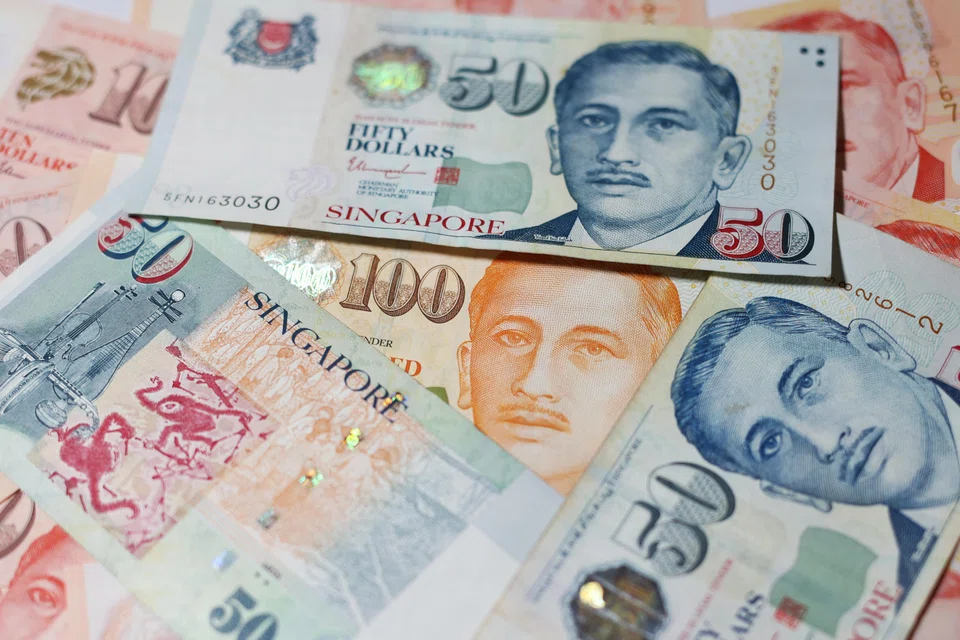
[SINGAPORE] The first month of 2026 has seen a broad shift in foreign exchange trends. The strength of the US dollar has receded, with the greenback trading near 11-year lows against the Singapore dollar.
The Singdollar remains a bastion of stability, but the currencies around it are on the move.
While the softer US dollar is the dominant global theme, the regional story is more nuanced.
These seven charts visualise how the Singdollar has performed against key currencies over the last six months – and what is driving the trend.
The greenback’s dominance has cracked. It slumped to a four-year low after comments from US President Donald Trump accelerated a “sell America” sentiment across global markets. It has since recovered slightly, however.
It only added to the list of investors’ concerns, which already include risks of a government shutdown, uncertain Trump policies (including renewed trade and tariff risks) and speculation of US-Japan joint FX intervention in US dollar devaluation.
SGD/USD has reached heights not seen since 2014. With the Monetary Authority of Singapore (MAS) keeping its appreciation policy unchanged in January, the divergence between a softening US Federal Reserve and a steady MAS has pushed the SGD/USD rate on a decisive upward trend.
As at Monday (Feb 2), with the currency pair trading at 0.7857, its year-to-date return stands at 1 per cent.
The ringgit is Asia-Pacific’s breakout star, clawing back significant ground from the historic lows of 2024.
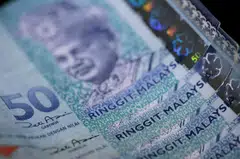

Its relentless rally is being driven by a range of structural factors beyond the US dollar’s broad weakness. Strengthening economic fundamentals, such as rising investment flows and growth that’s exceeded expectations, are proving to be more durable tailwinds for the currency.
Optimism surrounding the Johor-Singapore Special Economic Zone has translated into real capital flows, with over RM68 billion in investments locked in during the last nine months alone.
Coupled with robust foreign direct investment in data centres and tech, the ringgit has found a new structural floor, offering Singaporeans slightly less “bang for their buck” across the Causeway than before.
The currency pair was trading at 3.0979 at 1.47 pm on Monday, with a year-to-date loss of 1.8 per cent for the Singdollar.
Despite rumours of intervention which stabilised the currency slightly, the yen remains the undisputed bargain of Apac, pinned near multi-decade lows against the Singdollar.
The intervention speculation came after renewed weakness in the yen, as the currency and Japanese government bonds endured sharp volatility following Japanese Prime Minister Sanae Takaichi’s decision to call snap elections and pledge tax cuts.
The currency pair was trading at 121.6675 on Monday, translating to a 0.2 per cent year-to-date loss on the Singdollar.
The Australian dollar has turned its fortunes around over the last few years. It surged to its strongest position against the greenback in over two years, and is getting increasingly expensive against the Singdollar.
Australia’s currency is being boosted by a softer US dollar and strong commodity prices, as well as domestic factors that make an earlier rate hike in February likely.
The pair was trading at 1.1351 on Monday, with the Singdollar losing 2.6 per cent year to date.
After facing a period of weakness in mid-January, the won has started to snap back against the Singdollar again.
South Korean President Lee Jae-myung explicitly forecasted the currency to strengthen in the coming months, aiming for the 1,400-level against the greenback.
Since late last year, South Korean authorities have rolled out various policy measures to support the currency, which was hovering around 16-year lows.
Lee said domestic policies alone would not be sufficient to reverse the recent depreciation in the won, as it was somewhat correlated with weakness in the Japanese yen, but added that South Korea’s currency was faring comparably better.
SGD/KRW was trading at 1,147.058 on Monday, with the Singdollar gaining 4.9 per cent year to date.
The Thai baht has been surging against the Singdollar and the greenback, decoupling from regional peers due to aggressive repatriation flows from gold exporters.
However, a stronger currency risks hurting the country’s key export and tourism sectors.
With bullion prices hitting record highs, the resulting currency spike threatens to derail an export sector that just recorded a 16.8 per cent rise in December, beating forecasts.
In a bid to stem volatility, the Bank of Thailand introduced new capital controls, whereby traders with annual transaction volumes exceeding 10 billion baht (S$403.8 million) must now report data to the central bank, alongside new caps on online trading activities.
The currency pair traded at 24.8304 on Monday, bringing the Singdollar a 1.33 per cent year-to-date gain.
The yuan strengthened in late 2025, signalling China’s comfort with further currency appreciation.
The currency pair has been volatile in early 2026 (trading near 5.51) due to renewed tariff threats from the US.
Despite that, analysts believe there could be more appreciation ahead for the yuan, supported by foreign capital inflow, expectation of growth recovery and tech optimism.
On Monday, the currency pair traded at 5.462, bringing a 0.3 per cent year-to-date gain for the Singdollar.
Decoding Asia newsletter: your guide to navigating Asia in a new global order. Sign up here to get Decoding Asia newsletter. Delivered to your inbox. Free.
Copyright SPH Media. All rights reserved.