India explores steps to mobilise US dollar inflows as rupee slides, sources say
The currency is down by 5.5% in 2026, sliding to an all-time low of 95.33 per US dollar on Apr 30
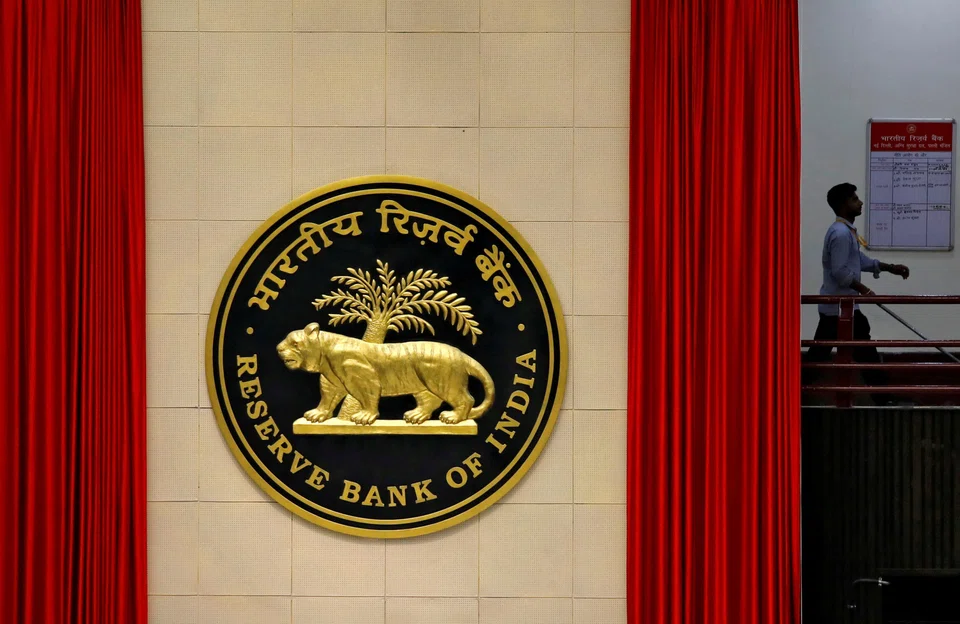
[MUMBAI] India’s central bank is studying ways to mobilise US dollar inflows to bolster its foreign-exchange buffers and cushion rising pressure on the rupee from a spike in oil prices driven by the Iran war, three sources told Reuters.
The currency has slumped 5.5 per cent in 2026, sliding to an all-time low of 95.33 per US dollar last Thursday (Apr 30).
Meanwhile, foreign-exchange reserves have fallen from a peak of US$728.5 billion, and equity outflows have hit US$19 billion in March and April alone.
The Reserve Bank of India (RBI) has maintained it is comfortable with its reserves, enough to cover 11 months of imports, but the latest policy discussions underscore the fresh urgency to bolster defences amid capital outflows.
The discussions at the central bank have not been previously reported, though analysts have speculated about the way authorities might resurrect elements of their crisis-era playbook.
Among the steps being considered is reviving a mechanism last used in 2013 to draw in US dollar deposits from non-resident Indians, two of these sources said.
A second option being discussed is eliminating withholding tax on overseas government-bond investors to encourage flows, the sources added.
No final decision has been taken, and any move would be made in consultation with the government, the third source said.
Reuters could not establish the date the decision would be taken.

“Both (options) are under serious consideration,” the source added, noting that the final decision on taxation rests with India’s federal finance ministry.
The sources declined to be identified, since they are not authorised to speak to the media.
RBI and the federal finance ministry did not respond to queries.
The war between the US, Israel and Iran – now into its third month – has weakened the Indian currency, adding to a near 5 per cent fall in 2025.
The two measures under consideration could facilitate inflows of US dollars from overseas.
The deposit scheme was used to stabilise the rupee in 2013 and brought in about US$26 billion – at a time when US interest rates were close to zero.
Back then, the central bank allowed banks to swap US dollars raised via such deposits at concessional rates.
The second option under discussion is removing a 5 per cent withholding tax charged to foreign investors in Indian government bonds, which could encourage inflows, the sources said.
Foreign investors were net buyers of Indian government bonds in 2025, investing about US$6.5 billion.
However, that momentum has cooled in 2026, with inflows of only around US$1.1 billion so far this year – as sentiment turned more cautious after the Iran conflict.
Equity outflows have accelerated, taking cumulative 2026 withdrawals to about US$20.6 billion – exceeding outflows for all of 2025.
The measures will primarily enable the bolstering of foreign-exchange reserves and steady the rupee as well, one of the sources said.
The central bank has already clamped down on arbitrage trades by banks, while nudging oil companies to reduce US dollar purchases in the spot market to support the rupee.
However, its performance is in line with oil-importing Asian peers.
Pressure on forex reserves
India has more than doubled its foreign-exchange reserves since 2013, when its currency came under pressure along with other emerging markets – after the US Federal Reserve announced plans to taper its quantitative easing programme.
India’s reserves are currently at US$698 billion, which RBI governor Sanjay Malhotra described as “adequate” in a speech over the weekend.
Reserves, however, have fallen from a peak of US$728.5 billion, and analysts cautioned that the headline figure overstates the RBI’s immediate firepower, given its US$104 billion in short US dollar forward commitments.
The RBI has intervened heavily in the spot and forward FX market to slow the decline in the rupee.
Vivek Kumar, economist at Mumbai-based QuantEco Research, said that the share of gold in forex reserves has also risen, reducing the available foreign currency assets.
“The effective holding of foreign currency assets stood at US$449 billion in March (2026),” he said.
“Persistence of the Middle East crisis could further dent the import cover,” he added, noting that this could require policy measures to reduce the trade deficit and encourage capital inflows. REUTERS
Decoding Asia newsletter: your guide to navigating Asia in a new global order. Sign up here to get Decoding Asia newsletter. Delivered to your inbox. Free.
Share with us your feedback on BT's products and services